ISO Mandatory Signs
Blue circular signs communicate an action, such as wearing eye protection or following a specified procedure.
ISO mandatory action signs tell people what they must do: wear eye protection, wear a harness, disconnect before maintenance, wash your hands. Most of the family is personal protective equipment (PPE), but it also covers procedures such as ventilating a confined space before entry.
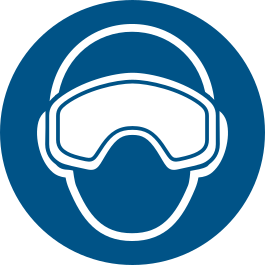
A mandatory sign states the requirement, not the specification. M004 says eye protection must be worn; it does not say whether that means safety spectacles, goggles, or a filter shade for welding. The grade of protection comes from the task risk assessment and the PPE selection rules that apply on site.
A pictogram does not select the grade of PPE or explain a complete procedure. Use the task-specific instructions.
No symbols match. Try another word or clear the search.
General instructions


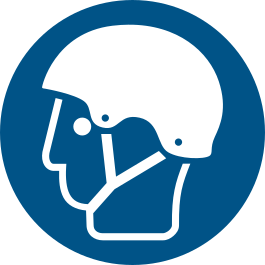
Eye, face and head protection


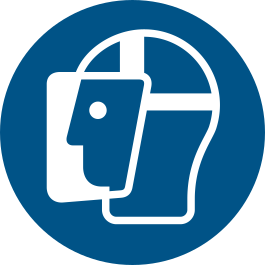
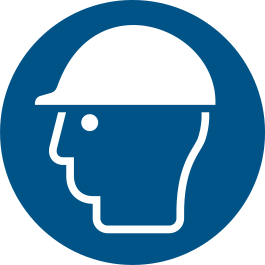
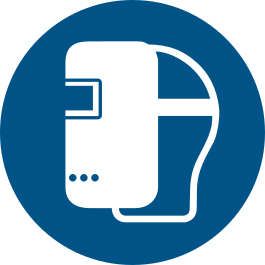
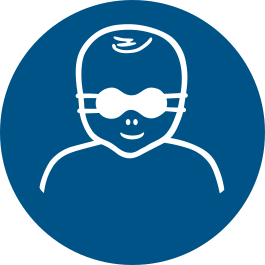
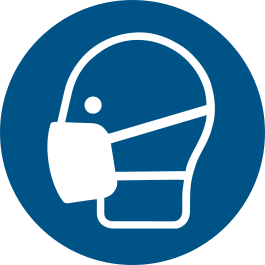
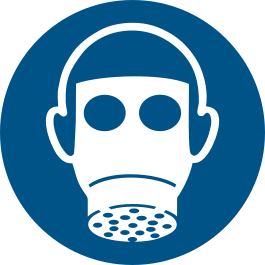
Hearing and breathing protection

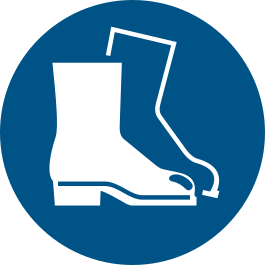
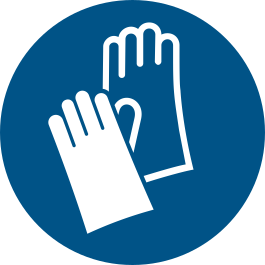
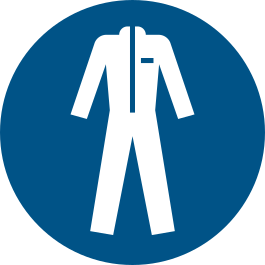
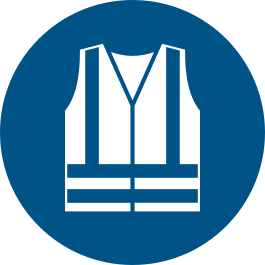
Body, hand and foot protection

Working at height
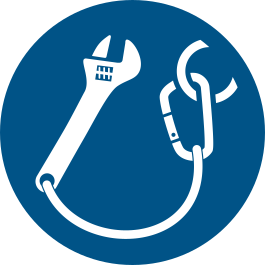
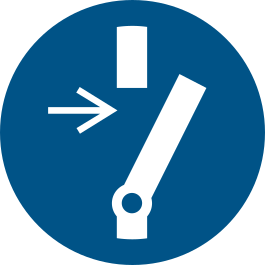
Machinery and electrical safety

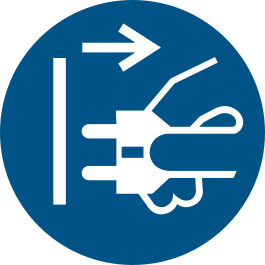

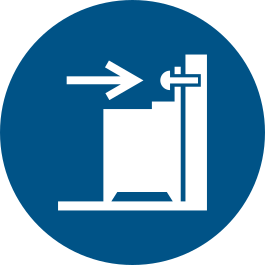
Hygiene and decontamination
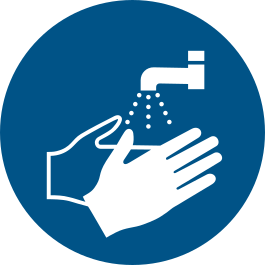


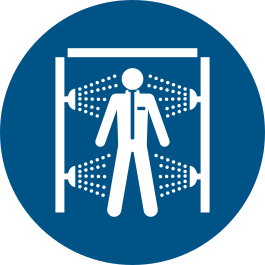
Routes, access and confined spaces
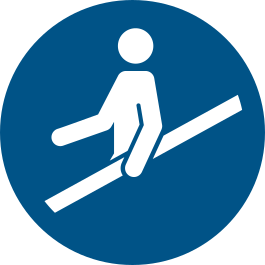


Public areas and leisure
Where mandatory signs come from
ISO 7010 registers the pictograms; ISO 3864-1 sets the colors, shapes, and layout rules they are drawn to. In the EU, Directive 92/58/EEC sets minimum requirements for safety signs at work, and its annex requires the blue to cover at least half of a mandatory sign's area. The UK implements the same requirements through the Health and Safety (Safety Signs and Signals) Regulations 1996, and both markets publish ISO 7010 as EN ISO 7010.
In the United States, OSHA 29 CFR 1910.145 and the ANSI Z535 series govern accident-prevention signs. ISO pictograms are widely used inside ANSI Z535 layouts, but the ANSI format adds signal words and text panels that an ISO sign does not carry. Australia uses AS 1319. Always check the rules for the site where the sign will be installed.
Frequently asked questions
What does a blue circle sign mean?
A blue circle with a white pictogram is an ISO 7010 mandatory action sign. You must do what the pictogram shows, for example wear ear protection (M003) or a safety harness (M018). M001, the exclamation mark, is the general mandatory sign and needs supplementary text.
Does a PPE sign tell me which PPE to use?
No. The sign only says that a type of protection is required. The correct product, rating, and fit come from the risk assessment, the manufacturer's data, and the PPE rules for your jurisdiction, such as OSHA 1910 Subpart I in the US or the PPE at Work Regulations in the UK.
Can several mandatory signs be combined on one panel?
Yes. Combined PPE panels showing, for example, head, eye, hearing, and foot protection are common at site entrances. Each pictogram keeps its own blue circle, and the panel should only show the requirements that actually apply in that area.
What is the difference between a mandatory sign and a warning sign?
A warning sign (yellow triangle) identifies a hazard. A mandatory sign (blue circle) gives the action that controls it. A noisy area might carry a warning about the noise source and the M003 sign requiring ear protection.