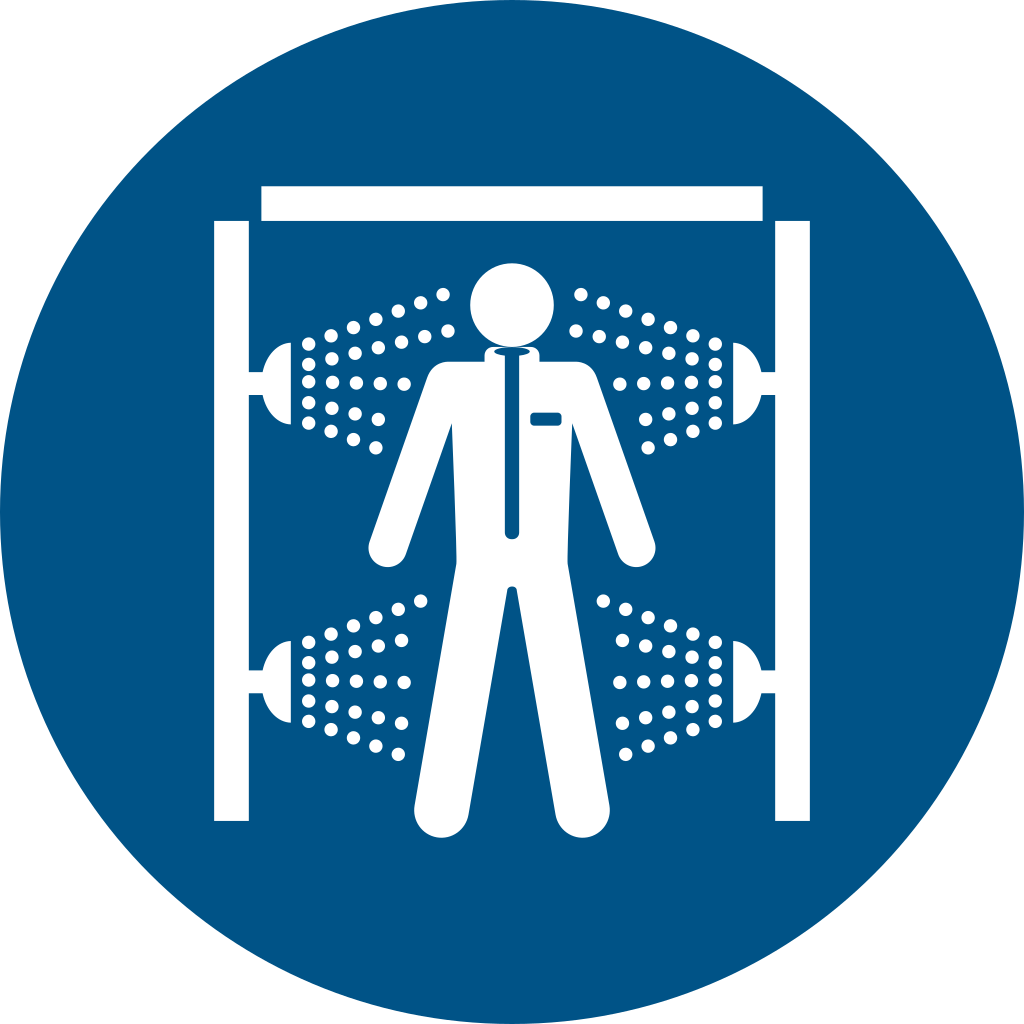
Use decontamination shower
Instructs the reader to use a decontamination shower.
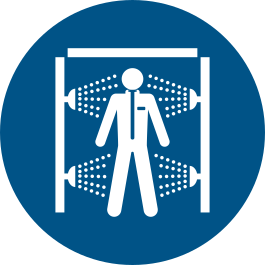
Understanding this sign
Blue circular signs communicate an action, such as wearing eye protection or following a specified procedure.
A pictogram does not select the grade of PPE or explain a complete procedure. Use the task-specific instructions.
A Procedural Shower, Not an Emergency One
M072 mandates use of a decontamination shower — a planned, procedural wash-down that removes contamination from a person, their suit, or their equipment as a required step in a work sequence. That framing is the key to reading the sign correctly: M072 marks a hygiene control built into how the job is done every time, exiting the contaminated zone through the shower whether or not anything went wrong.
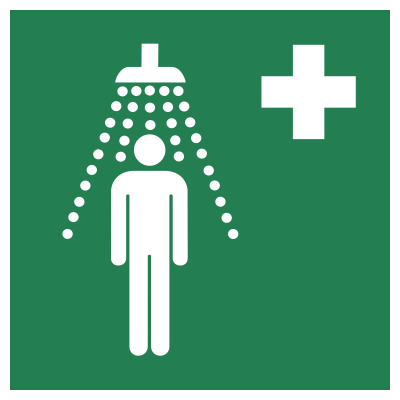
This is what separates it from E012, the green safety-shower sign. E012 identifies emergency equipment — the drench shower a splashed worker runs to for immediate first aid. M072, in mandatory blue, instructs behavior: passing through this point requires showering. A chemical plant can legitimately display both, meters apart, meaning entirely different things, which is why substituting one for the other is a genuine signage error rather than a stylistic choice.
Decon Lines, Suit Doffing, and Hazmat Corridors
The sign's natural home is the decontamination corridor. Hazmat response and chemical-protective-suit work sequence the exit from a hot zone through stations: gross wash of the encapsulating suit while still sealed, then staged doffing so that the wearer never touches the contaminated exterior. M072 marks the shower stations in that line, telling suited personnel the wash is a mandated gate between zones, not an optional rinse. Fixed industrial versions appear at pesticide formulation plants, agrochemical handling, and pharmaceutical containment suites.
Licensed asbestos removal offers the most institutionalized example: workers leave the enclosure through a hygiene unit whose airlocked compartments include a mandatory shower between the dirty and clean ends, so fibers never travel out on skin or underclothes. Radiological work applies the same architecture, with contamination monitoring after the shower confirming the wash achieved what the sign demanded.
Placement Logic and Program Context
M072 belongs at the transition the shower controls: the exit side of the contaminated zone, on the shower enclosure itself, and along the decon line where the suited worker — vision restricted, hearing muffled — needs unambiguous station marking. Arrows and floor routing often accompany it, because a decon corridor only works if it is traversed in order and in one direction. Posting the sign at the entrance to the clean side reinforces the rule from both approaches.
Behind the sign sits a program, not just plumbing: wastewater from decontamination showers is typically contaminated and needs captured drainage, procedures define wash duration and detergents, and exposure-control rules for substances such as lead and asbestos require hygiene facilities and decontamination practices to stop take-home contamination. As with all mandatory signs, M072 documents an obligation the written procedure must already define — who showers, when, for how long, and what verification follows.
Where you will see M072
Its natural home is the decontamination corridor of hazmat response and chemical-protective-suit work, marking the shower stations that gate the exit from a hot zone. Licensed asbestos removal posts it in hygiene units whose airlocked compartments include a mandatory shower between the dirty and clean ends, and fixed installations appear at pesticide formulation plants, agrochemical handling, pharmaceutical containment suites, and radiological work with contamination monitoring after the wash.
Common questions about M072
What is the difference between M072 and the E012 emergency shower sign?
M072 is a blue mandatory sign requiring people to use a decontamination shower as a routine, planned step of the work procedure — for example when exiting a hot zone or asbestos enclosure. E012, in the green safe-condition format, locates emergency drench-shower equipment for immediate first aid after an accidental splash. One commands a scheduled behavior; the other points to rescue equipment.
Where are decontamination showers required?
Wherever the work plan requires washing contamination off people or suits before they cross into a clean area: hazmat decon corridors, chemical-protective-suit doffing lines, licensed asbestos removal hygiene units, radiological controlled areas, pesticide and agrochemical plants, and pharmaceutical or biological containment suites. The exact trigger comes from the substance-specific regulations and the site's exposure-control plan rather than from the sign itself.
What does a decontamination procedure behind an M072 sign typically involve?
A staged, one-direction sequence: gross wash-down of the still-sealed suit or outer layer, systematic doffing so the wearer avoids touching contaminated surfaces, a personal shower, and then dressing in clean clothing on the clean side. Programs add specifics — wash duration, detergents or neutralizers, capture of contaminated wastewater, and in radiological or asbestos work, monitoring to verify the person is actually clean.
Why is the decontamination shower mandatory even when no exposure incident happened?
Because the contamination M072 targets is assumed, not observed. Fibers, dusts, pesticides, and radionuclides travel invisibly on suits, skin, and hair, and take-home contamination has historically exposed workers' families through clothing and vehicles. Making the shower an unconditional exit step removes the judgment call — nobody has to notice contamination for the control to work.
Reference details
| Symbol code | M072 |
|---|---|
| Sign family | ISO Mandatory Signs |
| Standard reference | ISO 7010:2019 / ISO 3864-1 ISO Online Browsing Platform: M072 |
| Screen color reference | #0000FF. Screen colors are not a production color specification. |
| Download formats | SVG reference artwork; a 1024 × 1024 pixel PNG conversion on a white canvas. |
| Record date | · How to interpret our dates |
| Page updated |
Choosing a physical sign size
Download dimensions are not installation dimensions. Select sign size, material, placement, and lighting using the applicable standard and the actual viewing conditions. Chemical label sizing follows its own rules. Read the artwork and sizing guide.
Sources and artwork credits
- Artwork source
- Wikimedia Commons file page
- Creator credited by source
- Clemenspool
- License
- CC0
- Source metadata checked
SVG files are local reference copies. PNG files are raster conversions. Check the linked file history and license terms before reuse; a source-metadata check is not certification of the artwork or a workplace installation.
Report a correction to this reference