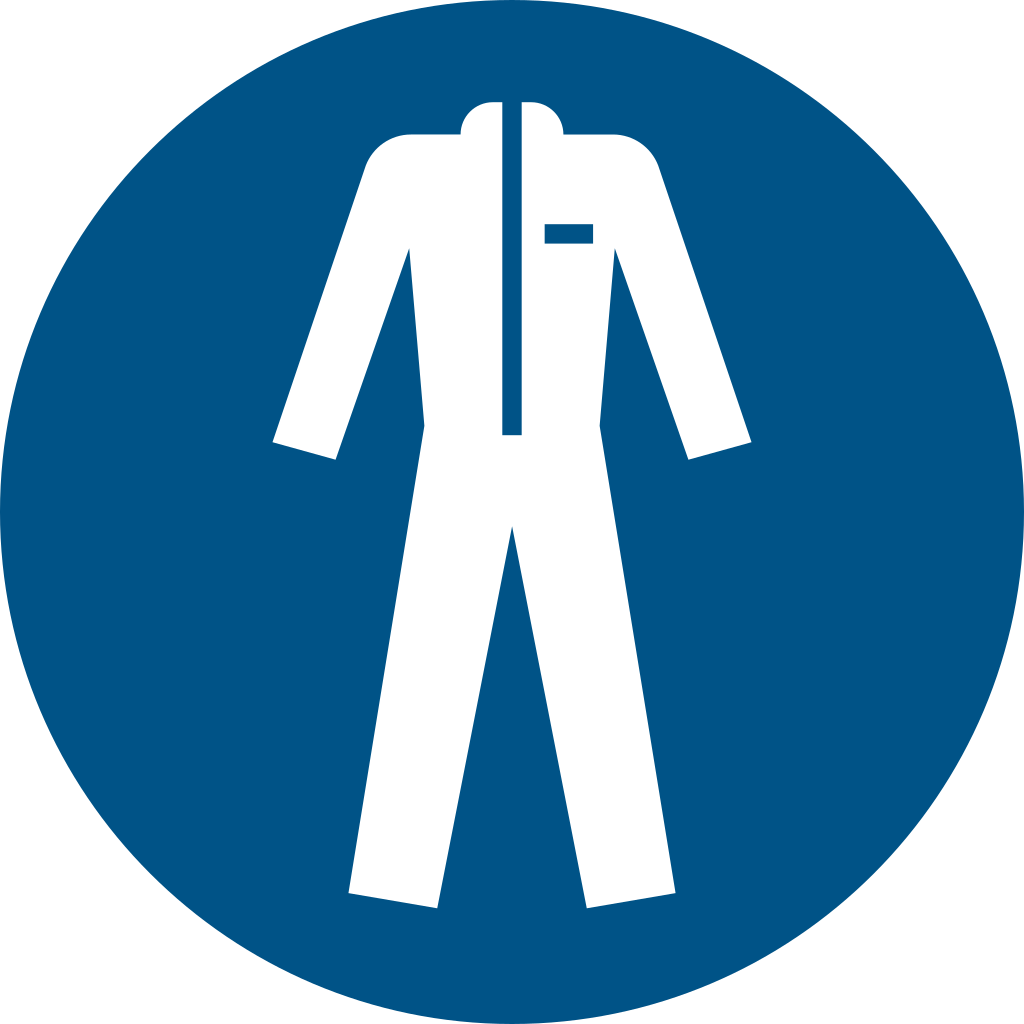
Wear protective clothing
Instructs the reader to wear protective clothing.

Understanding this sign
Blue circular signs communicate an action, such as wearing eye protection or following a specified procedure.
A pictogram does not select the grade of PPE or explain a complete procedure. Use the task-specific instructions.
What M010 Requires
M010 instructs everyone in the marked area or performing the marked task to put on protective clothing covering the body — a deliberately broad instruction, because body-protecting garments range from a simple coverall to an encapsulating chemical suit. The pictogram shows a person wearing a one-piece garment on the blue mandatory disc, and it says nothing about material, rating, or coverage. Those details come from the hazard analysis behind the sign, which is why M010 is almost always displayed with text or a site PPE matrix naming the exact garment.
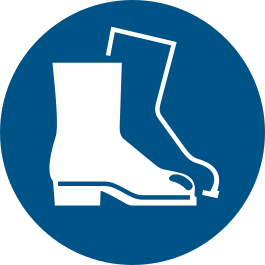
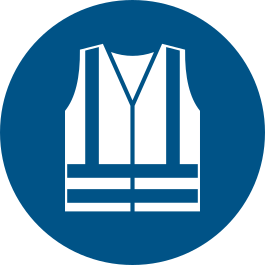
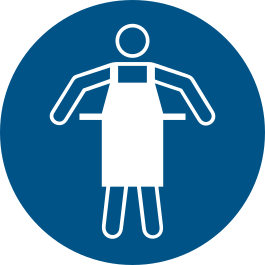
Protective clothing is distinct from the PPE items that have their own ISO 7010 codes. Gloves (M009), safety footwear (M008), high-visibility garments (M015), aprons (M026), and laboratory coats (M059) all carry separate signs. M010 is the right choice when the torso, arms, and legs themselves need a protective layer: against chemicals, heat and flame, molten metal splash, electric arc, cold, or contamination in either direction.
Garment Types Behind One Symbol
Chemical protection is the most common driver. European chemical protective clothing is classified by type according to how liquid reaches the wearer — from gas-tight suits down to limited splash protection, where EN 13034 covers garments for light spray and mist. Pesticide mixing areas, dip tanks, phenol handling, and tanker loading racks are typical M010 zones of this kind, and the garment named under the sign might be anything from a disposable Type 5/6 coverall to a reusable suit worn with a respirator.
Thermal and electrical hazards drive a second family. Foundries and casting bays require clothing rated for molten metal splash; hot work areas use flame-resistant garments so sparks cannot ignite what the welder is wearing; and electrical workers exposed to arc flash wear arc-rated clothing selected under the NFPA 70E framework in North American practice. Cold stores, meanwhile, post M010 for insulated suits — a reminder that protective clothing is not only about aggressive substances.
Specifying the Garment on the Sign
A bare M010 disc is genuinely ambiguous in a way most mandatory signs are not, since a cotton coverall and a gas-tight suit both count as protective clothing. Good practice is to add a supplementary panel below the symbol stating the garment class, for example the coverall type for chemical work or the arc rating category for electrical tasks, so that a contractor arriving at the boundary knows whether their own kit qualifies. Sites running multiple garment levels often colour-code changing areas and reference that scheme on the sign.
Placement follows the donning point rather than the hazard point. Because full-body PPE is put on in a changing room or at a gowning bench, M010 belongs at that transition — the entry to the chemical handling suite, the gowning line into a spray booth, the door of the cold store — with a repeat at the hazard itself only as reinforcement. Marking a boundary people cross while already committed to entering defeats the purpose of a garment that takes minutes to put on.
Compliance Context
In the United States, the general PPE standard at 29 CFR 1910.132 obliges employers to assess workplace hazards and provide appropriate protective equipment for the body, and to verify that assessment in writing. Where the hazard is a specific substance or process, more targeted rules apply on top — for example, OSHA's substance-specific standards prescribe protective clothing for certain chemicals, and shipyard and construction rules carry their own body-protection clauses.
In the European Union, employers select body protection under the PPE-at-work framework, and the garments themselves undergo conformity assessment against PPE Regulation (EU) 2016/425 before they can be CE-marked and sold. Signage prescribing their use follows Directive 92/58/EEC, whose round blue pictogram format M010 implements. Keeping the garment certificates, the hazard assessment, and the posted sign consistent with each other is the audit point inspectors check most often.
Where you will see M010
For chemical protection it stands at pesticide mixing areas, dip tanks, phenol handling stations, and tanker loading racks, while foundries and casting bays require it for molten-metal-rated clothing and hot work areas for flame-resistant garments. Placement follows the donning point — the entry to a chemical handling suite, the gowning line into a spray booth, or the cold store door — usually with a supplementary panel naming the exact garment class.
Common questions about M010
What does the ISO 7010 M010 sign mean?
It means protective clothing must be worn before entering the area or starting the task — a body-covering garment such as a coverall, chemical suit, flame-resistant or arc-rated clothing, or an insulated cold-store suit. The symbol itself does not specify which garment, so sites normally add text naming the required type and rating.
Does M010 cover gloves, boots, and hard hats too?
No. ISO 7010 assigns each PPE item its own mandatory sign: M009 for gloves, M008 for safety footwear, M014 for head protection, M015 for high-visibility clothing, M026 for aprons, and M059 for laboratory coats. M010 addresses only the protective garment on the body. Areas requiring several items display the signs together, often on a combined PPE station board.
What kind of protective clothing is required for chemical work?
It depends on how the chemical can reach you. Full immersion or pressurised jets call for high-integrity suits, while light spray and mist can be covered by limited splash protection garments — EN 13034 is the European standard for that lowest liquid-protection tier. The safety data sheet and the site's exposure assessment determine the type; the M010 sign should then state it.
Is a supplementary text panel required under an M010 sign?
Not legally in most jurisdictions, but it is strongly advisable. Because 'protective clothing' spans everything from disposable coveralls to encapsulating suits, a bare symbol leaves the most important decision to the viewer. Adding the garment type, standard, or site clothing category under the pictogram removes that ambiguity, especially for contractors and visitors.
Reference details
| Symbol code | M010 |
|---|---|
| Sign family | ISO Mandatory Signs |
| Standard reference | ISO 7010:2019 / ISO 3864-1 ISO Online Browsing Platform: M010 |
| Screen color reference | #0000FF. Screen colors are not a production color specification. |
| Download formats | SVG reference artwork; a 1024 × 1024 pixel PNG conversion on a white canvas. |
| Record date | · How to interpret our dates |
| Page updated |
Choosing a physical sign size
Download dimensions are not installation dimensions. Select sign size, material, placement, and lighting using the applicable standard and the actual viewing conditions. Chemical label sizing follows its own rules. Read the artwork and sizing guide.
Sources and artwork credits
- Artwork source
- Wikimedia Commons file page
- Creator credited by source
- ISO
- License
- Public domain
- Source metadata checked
SVG files are local reference copies. PNG files are raster conversions. Check the linked file history and license terms before reuse; a source-metadata check is not certification of the artwork or a workplace installation.
Report a correction to this reference