Slippery Surface
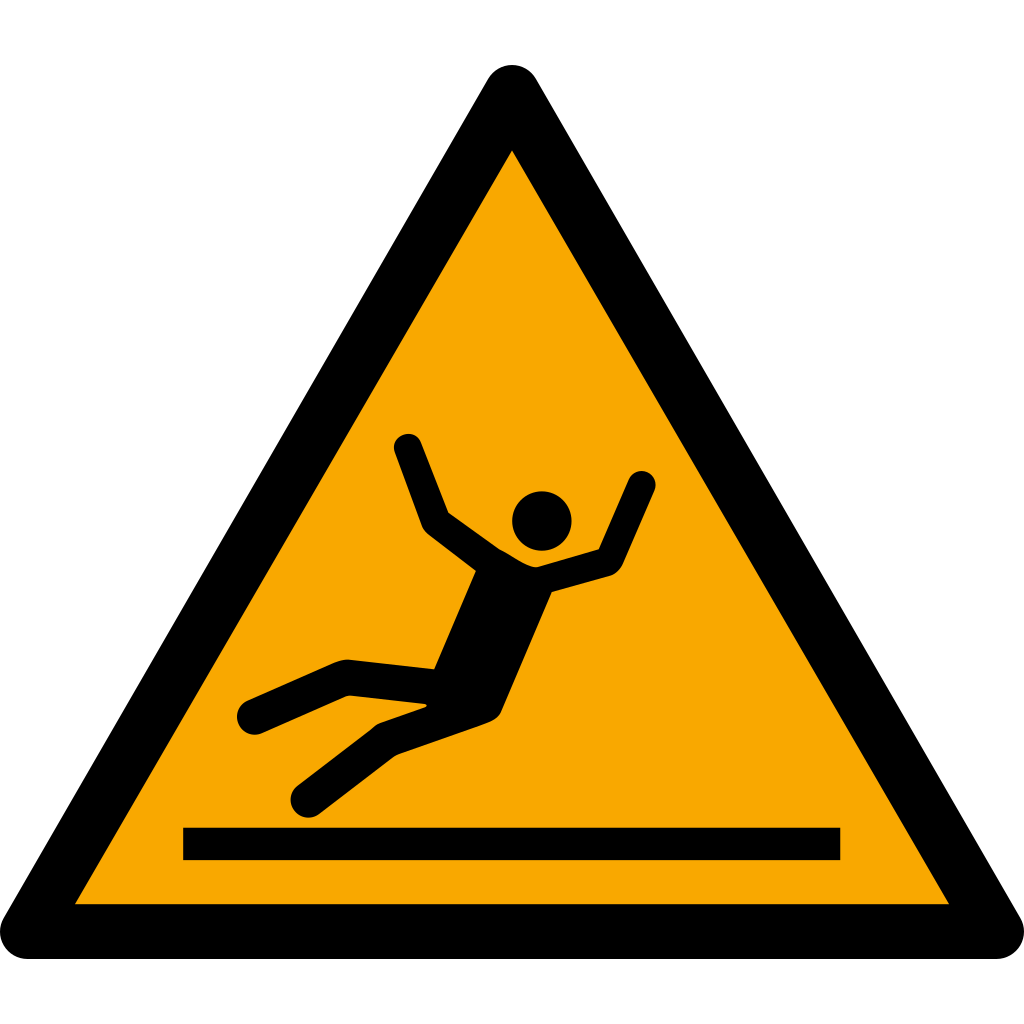
Warns of a slippery surface.
Understanding this sign
Yellow triangular signs draw attention to a hazard, such as electricity, moving machinery, or a hot surface.
A warning pictogram does not state the severity, safe distance, or protective measures. Read the accompanying instructions.
What ISO 7010 W011 Warns About
W011 warns of a slippery surface. The pictogram shows a figure losing footing on a sloping line, drawn in black inside the ISO 3864-1 warning triangle on a yellow field. It tells people that the floor or walking surface ahead offers reduced traction and that they should adjust how they move — slow down, take shorter steps, and use handrails where available. Slips are among the most common causes of workplace injury, and the sign exists to prompt that change in behaviour before a person commits their weight to an unreliable surface.
The sign warns of the condition but does not name its cause. A floor can be slippery from spilled water, oil or grease, ice, process residue, loose material, or wet cleaning in progress, and W011 covers all of them without specifying which applies. Where the cause matters to the response — for example a chemical spill rather than plain water — supplementary text or a more specific sign is added. On its own the pictogram simply says the surface cannot be trusted for normal walking speed.
When and Why It Is Used
W011 is used both for routine conditions and for temporary ones. Some areas are predictably slippery — food-production floors subject to washdown, entrances that collect rainwater, cold rooms that form condensation or frost, and chemical-transfer zones — and warrant permanent signage. Others become slippery briefly, such as during and after cleaning, and are managed with portable A-frame signs that are put out while the hazard exists and removed once the floor is dry. The two uses call for different sign formats but the same warning message.
Signage is a control of last resort, not a substitute for fixing the problem. Preventing the slip — through drainage, anti-slip flooring, prompt spill clean-up, and appropriate footwear — protects people more reliably than a sign does, and safety management approaches generally place engineering and housekeeping controls above warnings. W011 is most defensible when it accompanies genuine efforts to reduce the hazard, and least defensible when a permanent slippery-floor sign is used to normalise a problem that should have been engineered out.
Placing the Slippery-Surface Sign
Position W011 so it is seen before a person reaches the slippery zone, giving them time to slow down and change their footing rather than discovering the problem underfoot. At building entrances that means placing it on the approach in wet weather; at a spill, it means bracketing the affected area rather than marking only its centre. On stairs and ramps, where a slip is more likely to cause serious injury, the warning should be positioned at the top of the descent where the reader still has control.
For temporary hazards, discipline about removal matters as much as placement. A wet-floor sign left standing long after the floor has dried teaches people to walk past it, so that the one occasion it marks a real hazard is also ignored. Portable signs should be deployed the moment cleaning or a spill creates the risk and collected as soon as the surface is safe. Where slippery conditions recur in the same place, pairing signage with anti-slip treatment or matting addresses the cause rather than relying on the warning alone.
Related Signs and Complementary Measures
W011 is often used alongside other warnings for the same route. Where a slippery floor is also a spillage of a hazardous substance, a chemical or corrosive warning may be added so responders treat the liquid correctly, not just the traction risk. Where the surface leads to a change in level or a step, a separate warning for that hazard is appropriate, since a slip near an edge or drop has more serious consequences than one on level ground.
The most effective complement to W011 is mandatory footwear signage where anti-slip shoes are required, and physical measures such as drainage channels, grated flooring, absorbent mats, and grit or anti-slip coatings on ramps and stairs. Investigations of slip incidents commonly consider the surface, footwear, contamination, and cleaning regime together, so the warning sign is best treated as one visible element of a broader slip-management approach rather than the whole answer to a persistently slippery area.
Where you will see W011
Used at washdown areas, food production floors, stair approaches, loading bays, building entrances, chemical transfer areas, cold rooms, and maintenance zones where housekeeping conditions can temporarily or routinely reduce traction.
Common questions about W011
What does the slippery surface warning sign mean?
The figure slipping on a sloped line in a yellow triangle is ISO 7010 W011, warning that a walking or working surface offers reduced traction. Causes include water, oil, ice, process residue, or wet cleaning. The sign prompts people to slow down, take shorter steps, and use handrails before reaching the affected area.
When should I put out a wet-floor sign?
Deploy a portable W011 sign the moment a spill or cleaning creates a slip hazard, and position it so people see it before they reach the wet area. Remove it as soon as the surface is dry and safe. Leaving wet-floor signs standing after the hazard has gone trains people to ignore them, weakening the warning when it genuinely matters.
Is a slippery-floor sign enough to meet my safety duties?
Usually not on its own. Signage is a lower-tier control; preventing the slip through drainage, anti-slip flooring, prompt spill clean-up, and suitable footwear protects people more reliably. W011 is most defensible when it accompanies genuine efforts to reduce the hazard, rather than being used to normalise a floor that should be engineered to be safer.
Reference details
| Symbol code | W011 |
|---|---|
| Sign family | ISO Warning Signs |
| Standard reference | ISO 7010:2019 / ISO 3864-1 ISO Online Browsing Platform: W011 |
| Screen color reference | #FFCC00. Screen colors are not a production color specification. |
| Download formats | SVG reference artwork; a 1024 × 1024 pixel PNG conversion on a white canvas. |
| Record date | · How to interpret our dates |
| Page updated |
Choosing a physical sign size
Download dimensions are not installation dimensions. Select sign size, material, placement, and lighting using the applicable standard and the actual viewing conditions. Chemical label sizing follows its own rules. Read the artwork and sizing guide.
Sources and artwork credits
- Artwork source
- Wikimedia Commons file page
- Creator credited by source
- MaxxL
- License
- Public domain
- Source metadata checked
SVG files are local reference copies. PNG files are raster conversions. Check the linked file history and license terms before reuse; a source-metadata check is not certification of the artwork or a workplace installation.
Report a correction to this reference