Explosive Material
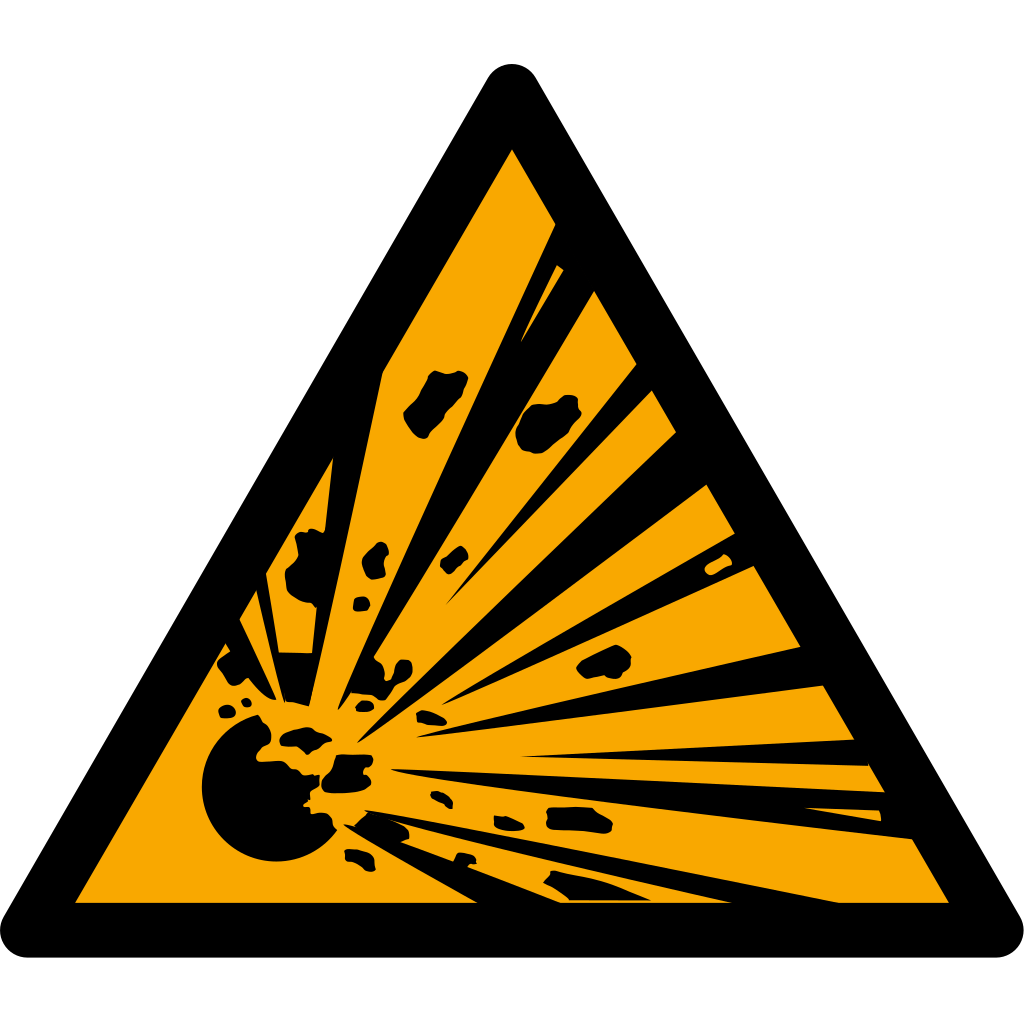
Warns of explosive material.
Understanding this sign
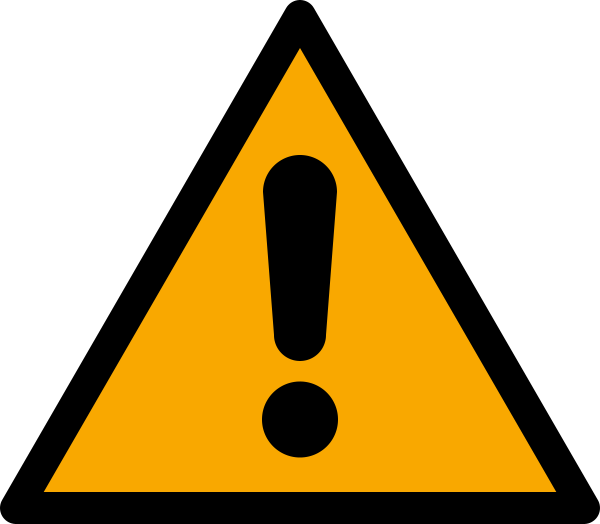
Yellow triangular signs draw attention to a hazard, such as electricity, moving machinery, or a hot surface.
A warning pictogram does not state the severity, safe distance, or protective measures. Read the accompanying instructions.
What W002 Warns About
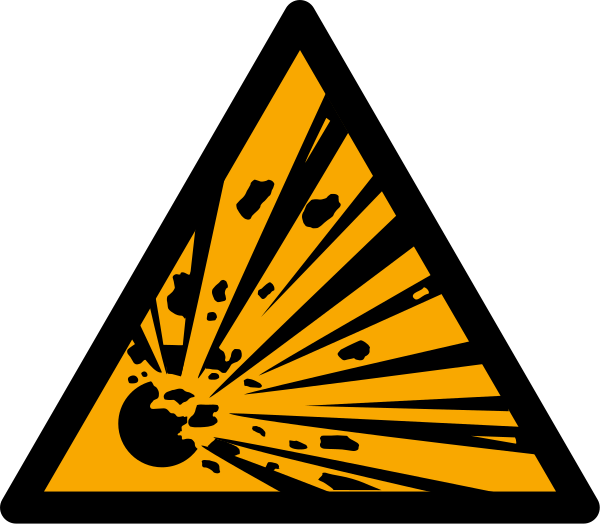
W002 warns that explosive material is present and that the area demands strict control of ignition sources, impact, friction, heat, and static discharge. The pictogram shows an exploding bomb inside the yellow triangle format defined by ISO 3864-1. Unlike a container label, the sign marks a location: a magazine, a workroom, a test cell, or any zone where energetic materials are stored or handled and where a single careless act could initiate a violent event.
The hazard here is stored chemical energy, not merely fire. Explosives, propellants, pyrotechnic compositions, and blasting agents can detonate or deflagrate from stimuli that would leave ordinary flammables unaffected — a dropped tool, a static spark from synthetic clothing, or radio-frequency energy near electric detonators. W002 tells everyone approaching that the normal rules of a flammable store are not sufficient and that site-specific handling discipline applies.
W002, GHS01, and the ATEX EX Sign
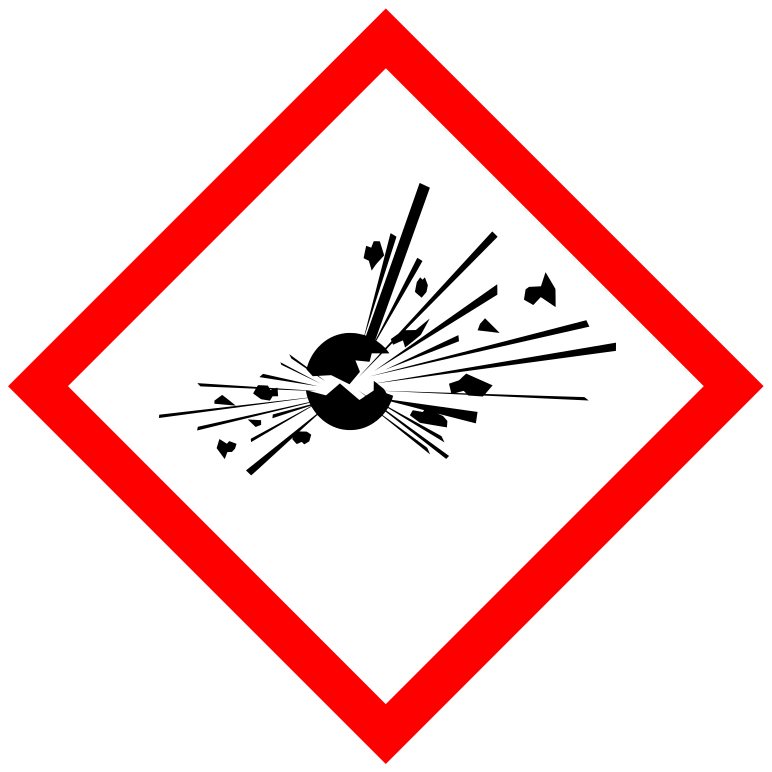
Three explosion-related symbols get confused with each other, and they do different jobs. W002 is workplace area signage under ISO 7010: it is posted on doors, fences, and walls. GHS01, the exploding bomb in a red diamond, is a hazard communication pictogram under the Globally Harmonized System: it belongs on packages, drums, and safety data sheets for explosive substances, not on a building. A crate of detonators carries GHS01; the magazine that stores the crate displays W002.
The third symbol covers explosive atmospheres rather than explosive materials. Under the EU ATEX workplace directive (1999/92/EC), entry points to zones where flammable gas, vapor, mist, or dust clouds may form must carry the distinctive black-on-yellow "EX" sign specified in that directive. A grain silo or solvent mixing room is ATEX territory; W002 is reserved for energetic substances such as blasting explosives, propellants, and pyrotechnics.
Where the Sign Is Posted
Typical W002 locations include licensed explosives magazines, blasting supply stores on mining and quarrying sites, fireworks and pyrotechnic workrooms, ammunition storage, propellant handling bays, airbag inflator production, and laboratories that synthesize or test energetic compounds. Construction blasting operations post it around temporary day-boxes and detonator storage, and demolition contractors use it to cordon charged structures before a shot.
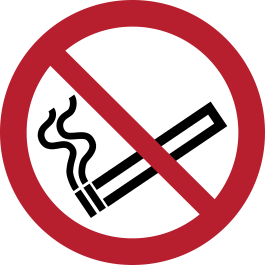
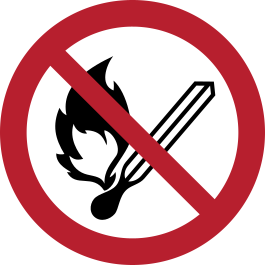
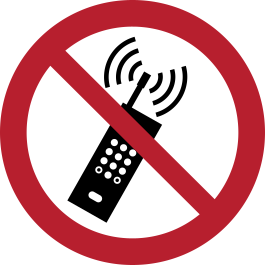
Position matters as much as presence. The sign should be readable before a person reaches the point where their behavior can create a stimulus — at the perimeter fence, at the access road, and again at the door — so that prohibited items such as lighters, matches, and transmitting devices are surrendered before entry. Most sites pair W002 with prohibition signs like P003 (no open flame or smoking) and P013 (no activated mobile phone) to convert the warning into enforceable rules.
Compliance Context
In EU member states, Directive 92/58/EEC requires warning signs to follow the triangular yellow-and-black convention, and its "explosive material" entry corresponds to the W002 design, so the ISO symbol satisfies the directive across the single market. Explosives storage itself is separately licensed almost everywhere — through national explosives legislation, ATF regulation in the United States, or equivalent regimes — and those licenses frequently dictate placarding, quantity-distance rules, and access control that go far beyond a single sign.
A recurring audit finding is W002 posted where GHS01 or the ATEX EX sign was actually required, or vice versa. Get the referent right: label the container under GHS, mark the gas or dust zone under ATEX, and reserve W002 for physical explosive material. Using the wrong symbol can mislead emergency responders about what they will encounter behind the door.
Where you will see W002
Posted at blasting stores, pyrotechnic workrooms, explosives magazines, energetic-material test cells, propellant handling areas, and specialist laboratories where access, ignition control, and handling discipline are tightly managed.
Common questions about W002
What is the difference between ISO 7010 W002 and the GHS01 exploding bomb pictogram?
They look similar but serve different systems. W002 is an area warning sign posted on doors, fences, and walls where explosive material is present. GHS01 is a supply-and-labeling pictogram that appears in a red diamond on packages and safety data sheets for explosive substances and articles. The storeroom gets W002; the drum or crate inside it gets GHS01.
Should I use W002 or the ATEX EX sign for an explosive atmosphere?
Use the EX sign. Explosive atmospheres — flammable gas, vapor, or dust clouds in air — are marked at zone entrances with the black-on-yellow EX sign required by EU Directive 1999/92/EC. W002 refers to explosive material itself, such as blasting explosives, detonators, propellants, or pyrotechnics. A flour mill or paint mixing room needs EX zoning; an explosives magazine needs W002.
Where must explosive material warning signs be placed?
At every point where a person could enter the controlled area: perimeter fencing, access roads, and each door to magazines, workrooms, or test cells. The sign must be legible before the viewer can introduce an ignition stimulus, which is why sites post it well outside the hazard boundary and repeat it at entry, usually alongside no-smoking, no-open-flame, and no-phone prohibition signs.
Does a W002 sign satisfy explosives storage regulations on its own?
No. Explosives storage is a licensed activity in virtually every jurisdiction, with requirements covering construction of the magazine, separation distances, inventory records, security, and transport. Signage is one small element of that regime. W002 communicates the hazard to people approaching, but the license conditions and national explosives law define what compliance actually requires.
Reference details
| Symbol code | W002 |
|---|---|
| Sign family | ISO Warning Signs |
| Standard reference | ISO 7010:2019 / ISO 3864-1 ISO Online Browsing Platform: W002 |
| Screen color reference | #FFCC00. Screen colors are not a production color specification. |
| Download formats | SVG reference artwork; a 1024 × 1024 pixel PNG conversion on a white canvas. |
| Record date | · How to interpret our dates |
| Page updated |
Choosing a physical sign size
Download dimensions are not installation dimensions. Select sign size, material, placement, and lighting using the applicable standard and the actual viewing conditions. Chemical label sizing follows its own rules. Read the artwork and sizing guide.
Sources and artwork credits
- Artwork source
- Wikimedia Commons file page
- Creator credited by source
- Maxxl2
- License
- Public domain
- Source metadata checked
SVG files are local reference copies. PNG files are raster conversions. Check the linked file history and license terms before reuse; a source-metadata check is not certification of the artwork or a workplace installation.
Report a correction to this reference