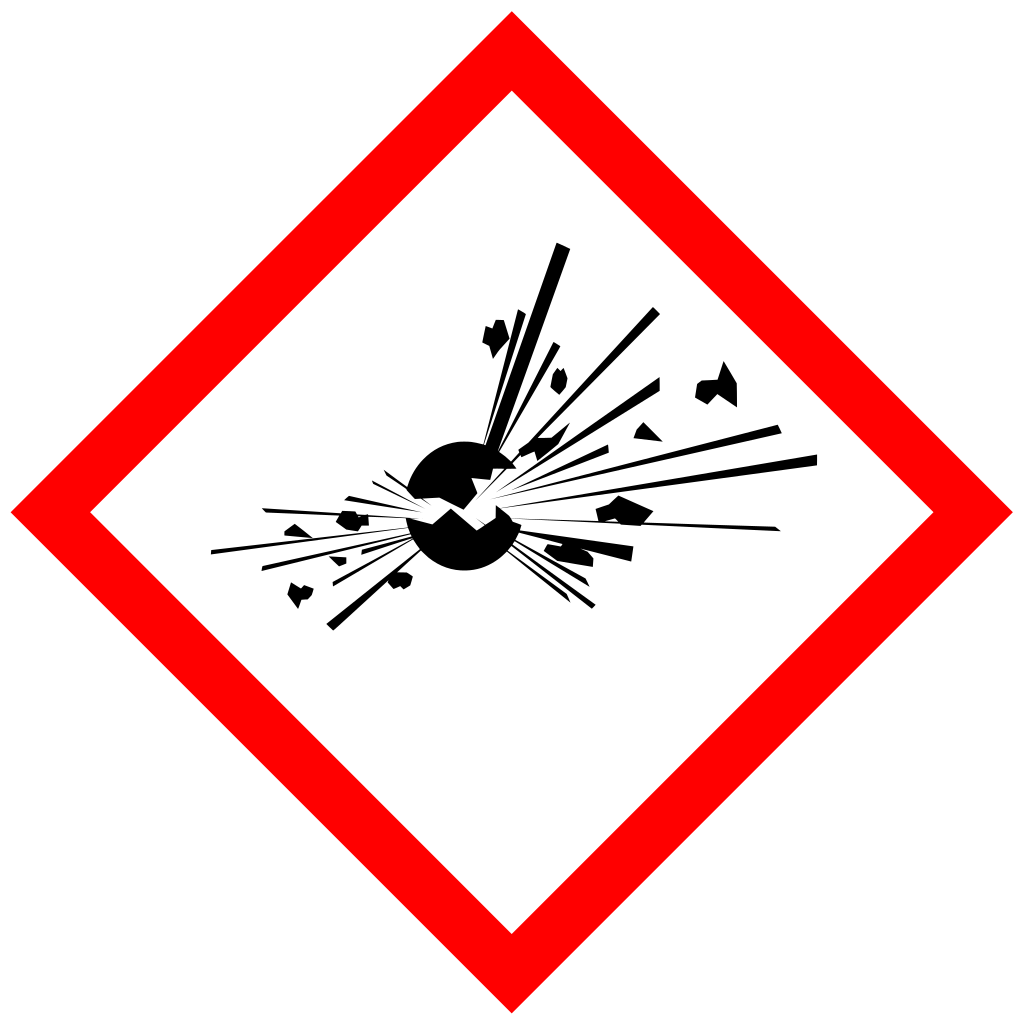
Exploding Bomb
The exploding bomb pictogram identifies certain explosive hazards, including specified categories of explosives, self-reactive substances, and organic peroxides.
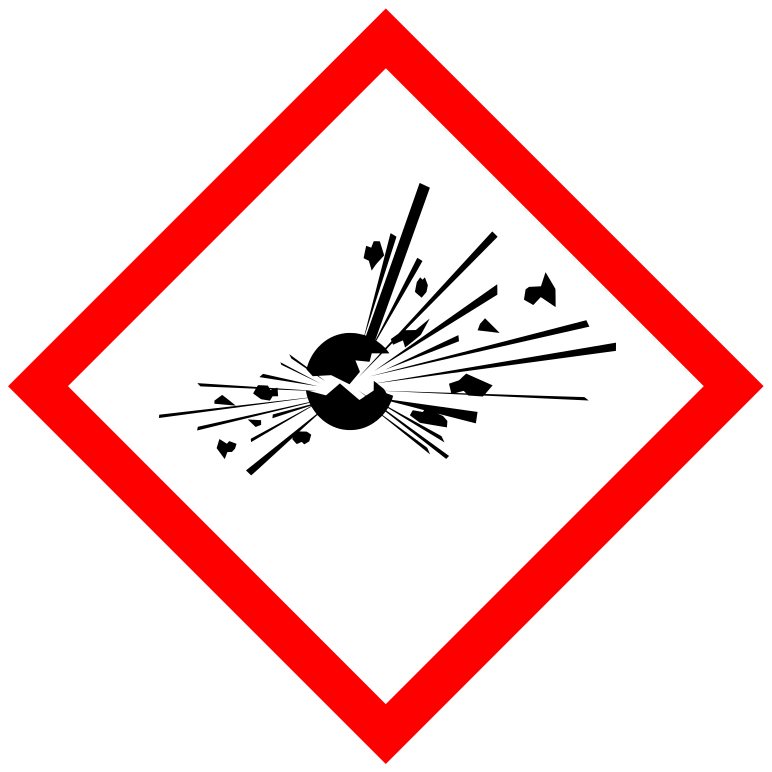
Understanding this sign
GHS pictograms use a black symbol on white within a red diamond border to communicate chemical hazard classes.
Read the whole label and safety data sheet. A pictogram can cover several hazards and does not specify controls by itself.
Hazard Classes That Carry the Exploding Bomb
GHS01 is assigned to three hazard classes in the UN GHS (the Purple Book): explosives, self-reactive substances and mixtures, and organic peroxides. For explosives, it appears on unstable explosives and on Divisions 1.1 through 1.4 — materials with a mass explosion hazard, a projection hazard, a fire hazard with minor blast or projection effects, or a hazard confined largely to the package. Divisions 1.5 and 1.6 are still classified as explosives but do not carry the pictogram on the supply label.
For self-reactive substances and organic peroxides, GHS01 marks the most energetic types. Type A materials, which can detonate or deflagrate rapidly as packaged, carry the exploding bomb alone; Type B materials carry both GHS01 and the GHS02 flame, reflecting a combined thermal-explosion and fire hazard. Types C through F drop the bomb and use the flame only, so the presence of GHS01 on a peroxide drum signals a genuinely detonable material, not just a fire risk.
Signal Words and H-Statements
Almost every GHS01 assignment pairs with the signal word Danger. Unstable explosives carry H200 (unstable explosive), Division 1.1 carries H201 (explosive; mass explosion hazard), 1.2 carries H202 (severe projection hazard), and 1.3 carries H203 (fire, blast or projection hazard). The one exception is Division 1.4, which keeps the exploding bomb but downgrades to the signal word Warning with H204 (fire or projection hazard).
Type A self-reactive substances and organic peroxides carry H240 (heating may cause an explosion), while Type B carries H241 (heating may cause a fire or explosion). These statements matter operationally: an H240 material demands strict temperature control, often with a defined self-accelerating decomposition temperature (SADT) on the safety data sheet, and contamination or confinement can turn a storage problem into a detonation. Reading the H-statement alongside the pictogram tells you which failure mode the classifier expects.
GHS01 Under OSHA HazCom and EU CLP
In the United States, OSHA's Hazard Communication Standard (29 CFR 1910.1200) adopts the GHS explosive, self-reactive, and organic peroxide classes, and its 2024 update aligned the rule primarily with GHS Revision 7. Shipped-container labels for these materials must show the red-framed exploding bomb together with the signal word, hazard statements, and precautionary statements. Manufacturers of commercial explosives should also note that many downstream storage and transport requirements sit with ATF and DOT, outside HazCom itself.
In the EU, the CLP Regulation (EC) No 1272/2008 assigns GHS01 through its Annex I classification tables and defines the pictogram artwork in Annex V. CLP retains the division-based explosives scheme even though recent GHS revisions restructured the explosives chapter into new categories, so European labels continue to reflect Divisions 1.1 to 1.4. CLP also sets minimum pictogram size: at least one fifteenth of the minimum label area and never smaller than one square centimetre.
How GHS01 Relates to Transport Labels and Other Symbols
The exploding bomb has a close transport counterpart: the orange Class 1 diamond used under the UN Model Regulations and, in the US, DOT's hazmat rules. GHS allows the supply pictogram to be omitted from outer packaging when the transport label for the same hazard is already present, and for Division 1.4 goods in transport packagings the 1.4 transport label commonly stands in for GHS01. Inside the workplace, once the material is decanted or the transport packaging is opened, the GHS label applies.
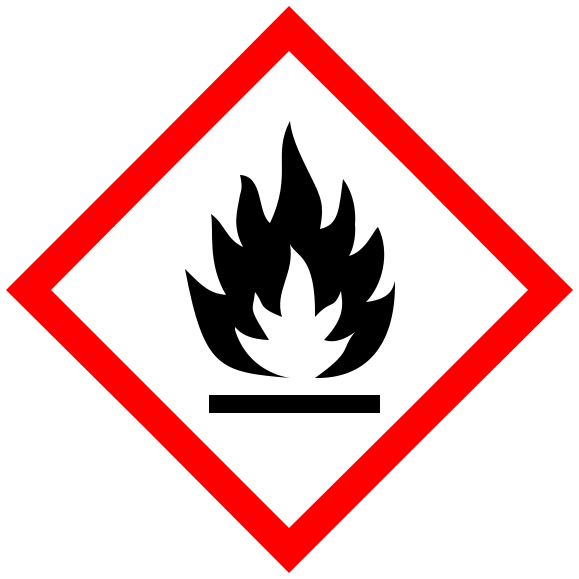
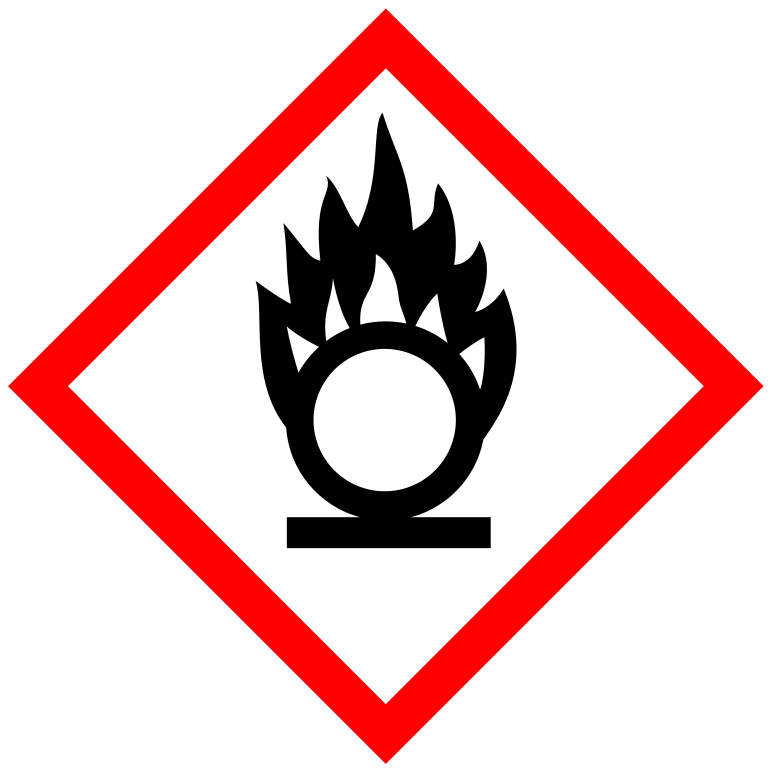
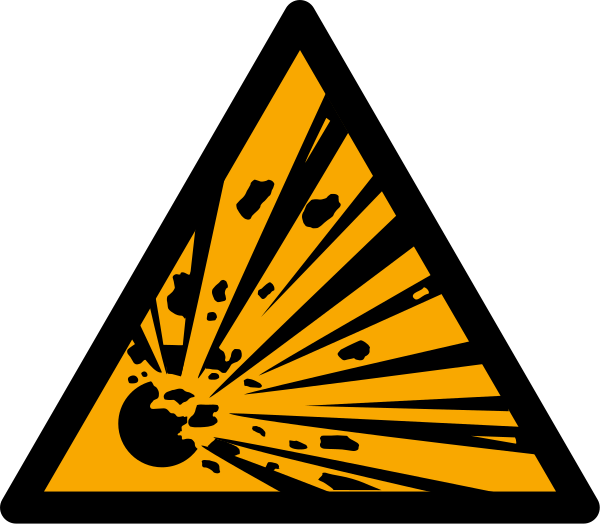
Do not confuse GHS01 with GHS02: the flame covers materials that ignite and burn, while the bomb covers materials that can detonate or deflagrate with blast and projection effects. A drum showing both pictograms is a Type B self-reactive substance or organic peroxide. The ISO 7010 W002 warning sign (explosive material) serves a different purpose entirely — it marks areas and installations, whereas GHS01 belongs on the chemical container and its safety data sheet.
Reading the exploding bomb pictogram
The exploding bomb appears for specified explosive, self-reactive, and organic peroxide classifications. The applicable category determines its use; the picture alone is not an instruction for handling, transport, or storage.
What to check alongside it
Compare it with the flame pictogram: some self-reactive substances and organic peroxides use the flame, and some classifications use both. Read the hazard statements rather than selecting a pictogram from the material name.
The application notes above were checked against the linked public sources on . Jurisdiction-specific notes are identified in the text.
Where you will see GHS01
Used on explosive intermediates, peroxide initiator containers, pyrotechnic stores, blasting-agent documentation, energetic test materials, and tightly controlled process areas where shock-sensitive or thermally unstable substances require unmistakable hazard communication.
Common questions about GHS01
What does the exploding bomb pictogram mean on a chemical label?
It means the substance or mixture is classified as an explosive (unstable or Divisions 1.1 to 1.4), a Type A or B self-reactive substance, or a Type A or B organic peroxide. In practical terms, the material can detonate, deflagrate, or decompose violently when exposed to heat, shock, friction, or contamination, and it requires quantity limits, temperature control, and strict segregation from incompatible materials.
Why do some organic peroxides show GHS01 and others only the flame?
Organic peroxides are ranked from Type A (can detonate as packaged) down to Type G. Types A and B carry the exploding bomb because they present an explosion hazard; Types C through F present mainly a fire hazard and carry only the GHS02 flame. The type assignment comes from UN test series results, so two products with the same active peroxide can be labeled differently depending on concentration and formulation.
Do fireworks and ammunition carry the GHS01 pictogram?
When they are supplied as workplace chemicals, classified explosives in Divisions 1.1 to 1.4 carry GHS01 on the supply label. However, many consumer articles are handled under transport and consumer-product rules instead, and goods already bearing the orange Class 1 transport diamond on their outer packaging generally do not need to duplicate the GHS pictogram there.
What is the difference between GHS01 and the ISO 7010 explosive warning sign?
GHS01 is a container-label pictogram governed by GHS, OSHA HazCom 2012, and EU CLP; it travels with the chemical. ISO 7010 W002 is a triangular workplace warning sign posted on rooms, magazines, and areas where explosive atmospheres or materials are present. A facility storing GHS01-labeled materials will often need both: labels on the containers and area signage on the store.
Reference details
| Symbol code | GHS01 |
|---|---|
| Sign family | GHS Chemical Pictograms |
| Standard reference | UN GHS Revision 11 (2025); local implementation varies UN GHS Revision 11 (2025) |
| Screen color reference | #FF0000. Screen colors are not a production color specification. |
| Download formats | SVG reference artwork; a 1024 × 1024 pixel PNG conversion on a white canvas. |
| Record date | · How to interpret our dates |
| Page updated |
Choosing a physical sign size
Download dimensions are not installation dimensions. Select sign size, material, placement, and lighting using the applicable standard and the actual viewing conditions. Chemical label sizing follows its own rules. Read the artwork and sizing guide.
Sources and artwork credits
- UN GHS Revision 11 (2025)
- OSHA hazard communication pictograms
- OSHA 1910.1200 Appendix C: allocation of label elements (US)
- Artwork source
- Wikimedia Commons file page
- Creator credited by source
- Unknown author
- License
- Public domain
- Source metadata checked
SVG files are local reference copies. PNG files are raster conversions. Check the linked file history and license terms before reuse; a source-metadata check is not certification of the artwork or a workplace installation.
Report a correction to this reference