Health Hazard
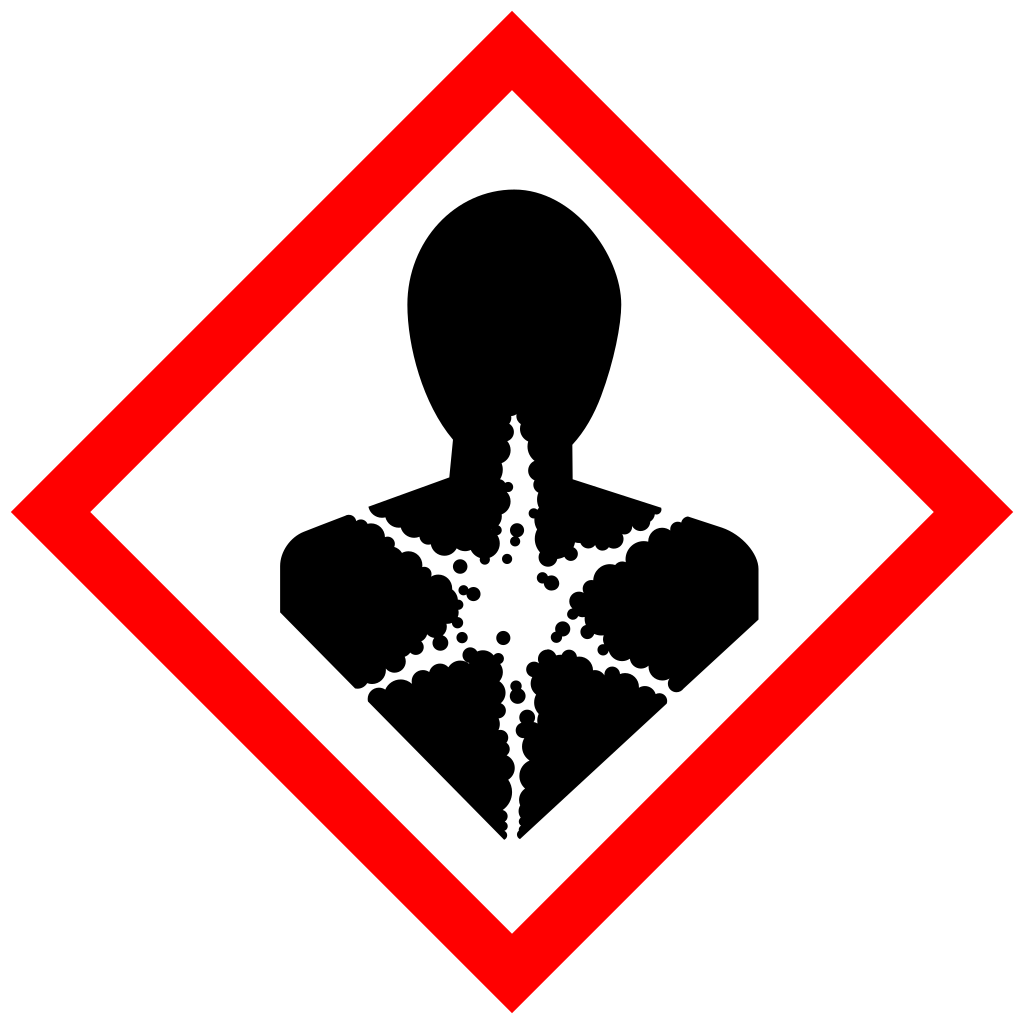
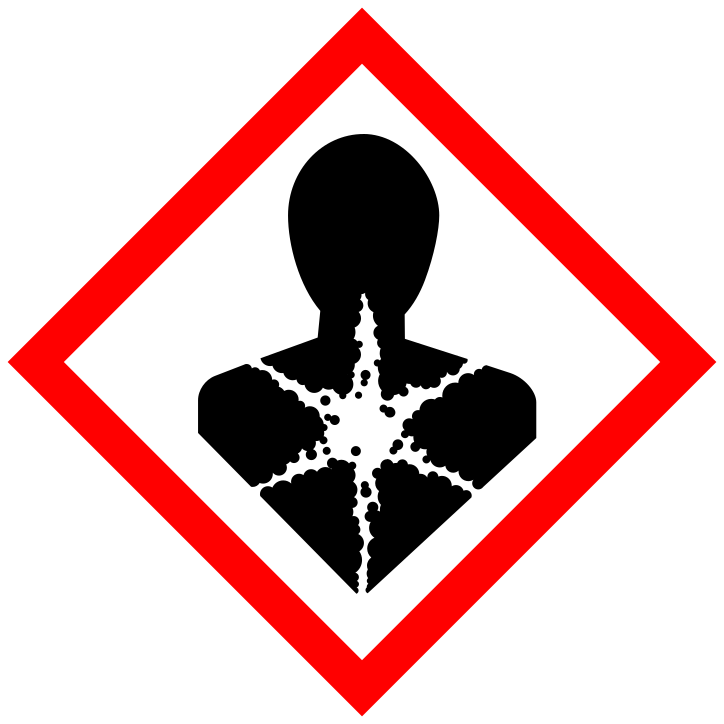
The health hazard pictogram identifies specified chronic or serious health hazards, including carcinogenicity, germ cell mutagenicity, reproductive toxicity, respiratory sensitization, target-organ toxicity, and aspiration hazard.
Understanding this sign
GHS pictograms use a black symbol on white within a red diamond border to communicate chemical hazard classes.
Read the whole label and safety data sheet. A pictogram can cover several hazards and does not specify controls by itself.
Seven Hazard Classes Behind the Silhouette
GHS08 — a human torso with a white starburst across the chest — is the pictogram for serious and mostly long-term health effects. It is assigned to respiratory sensitization Category 1, germ cell mutagenicity Categories 1A, 1B, and 2, carcinogenicity Categories 1A, 1B, and 2, reproductive toxicity Categories 1A, 1B, and 2, specific target organ toxicity after single exposure (STOT SE) Categories 1 and 2, specific target organ toxicity after repeated exposure (STOT RE) Categories 1 and 2, and aspiration hazard Category 1.
The unifying theme is damage that outlasts the exposure: tumours that appear decades later, asthma that persists after removal from the workplace, organ injury that accumulates silently across a career, or chemical pneumonitis from a single aspirated mouthful of hydrocarbon. Familiar carriers include benzene (H350), toluene diisocyanate (H334), lead compounds (H360), methanol (H370), and lamp oils and lubricant base oils (H304). None of these hazards is visible at the moment of exposure, which is precisely why the classification system exists.
Decoding the H-Statements and Signal Words
The signal word tracks the category: Danger for Category 1A and 1B carcinogens, mutagens, and reproductive toxicants, for STOT Category 1, for respiratory sensitizers, and for aspiration hazard; Warning for the Category 2 entries. The statements are the most informative in the GHS lexicon: H334 (may cause allergy or asthma symptoms or breathing difficulties if inhaled), H340 and H341 for genetic defects, H350 and H351 for cancer, H360 and H361 for fertility and the unborn child, H370 through H373 for organ damage, and H304 (may be fatal if swallowed and enters airways).
The wording encodes evidence strength deliberately: may cause cancer (H350) reflects known or presumed human carcinogenicity, while suspected of causing cancer (H351) reflects more limited evidence. STOT statements can also name the affected organ and route — for example, causes damage to the central nervous system through prolonged inhalation — which turns the label into a genuinely useful exposure-control document. Aspiration hazard is the outlier in this group: an acute physical-chemical effect grouped under GHS08 because of its severity.
What GHS08 Triggers Under OSHA and CLP
Under 29 CFR 1910.1200, a GHS08 classification puts a chemical squarely into the territory of OSHA's most demanding programs: carcinogen-specific standards where they exist (benzene, formaldehyde, methylene chloride, hexavalent chromium), exposure monitoring, and medical surveillance. HazCom itself requires the pictogram, signal word, and statements on every shipped container, and employers must fold the chronic-hazard information into training — a point OSHA inspectors check because chronic hazards are the ones workers most often cannot perceive directly.
Under EU CLP (EC) No 1272/2008, GHS08 classifications carry unusually heavy downstream consequences. Category 1A and 1B carcinogens, mutagens, and reproductive toxicants (CMRs) are barred from consumer supply under REACH restrictions, trigger substitution obligations under the Carcinogens, Mutagens and Reprotoxic Substances Directive, and drive candidate-listing as substances of very high concern. Respiratory sensitizers classified with H334 feed into national occupational exposure limit-setting. For many products, GHS08 on the label is the visible tip of a much larger compliance structure.
GHS08 Versus GHS07 and the Skull
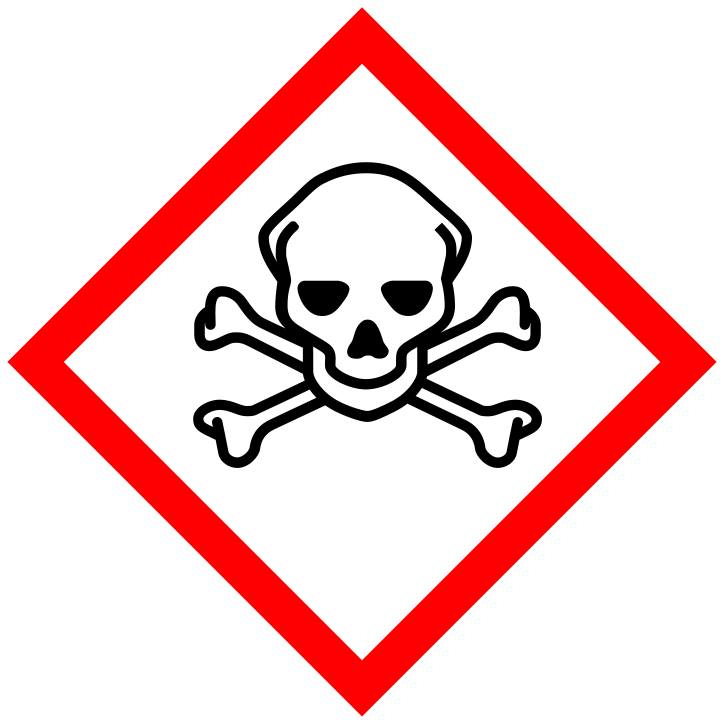
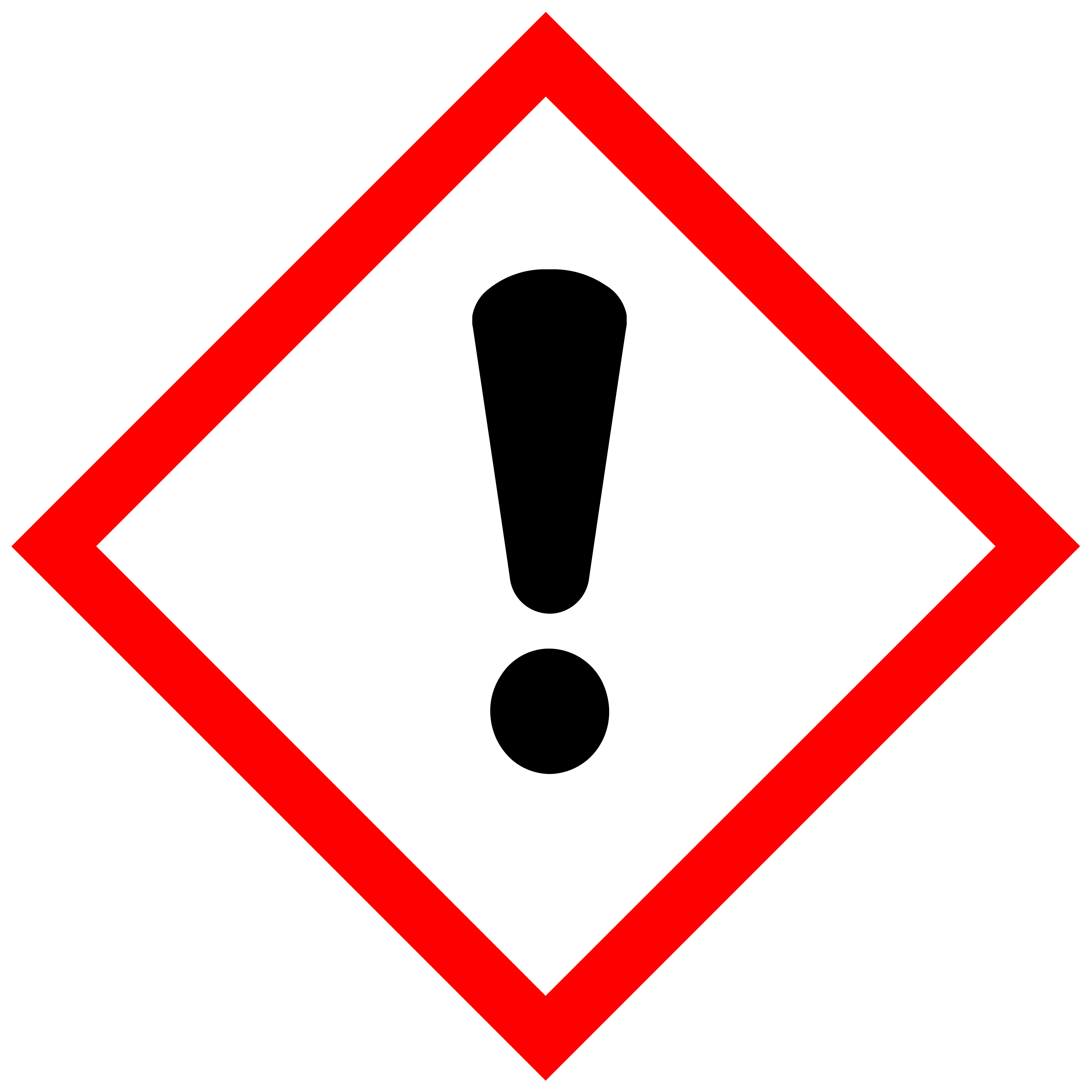
People routinely conflate the silhouette with the exclamation mark, and the distinction is worth stating bluntly: an exclamation-mark hazard usually resolves once exposure stops, whereas a silhouette hazard can be permanent, progressive, or fatal long after exposure ends. One precedence rule links them — a respiratory-sensitization classification under GHS08 pushes the exclamation mark off the label for skin sensitization and for skin or eye irritation. The skull and crossbones is different again: GHS06 means single-dose lethality, and a chemical can legitimately carry both GHS06 and GHS08.
GHS08 has no transport counterpart at all. The UN Model Regulations classify goods by acute transport risk, so a pure carcinogen with no acute toxicity, flammability, or corrosivity may ship without any hazard diamond while wearing GHS08 on its supply label. That asymmetry catches receiving teams out: an unplacarded pallet can still contain the most chronically hazardous chemicals on site. Checking supply labels and safety data sheets at goods-in, not just transport paperwork, closes the gap.
Reading the health hazard pictogram
The silhouette with a star-like chest mark can communicate carcinogenicity, germ-cell mutagenicity, reproductive toxicity, respiratory sensitization, specific target-organ toxicity, or aspiration hazard in the applicable classifications.
What to check alongside it
It does not mean that every listed hazard applies to that product. Read the specific hazard statement. For respiratory sensitization, OSHA precedence rules also affect use of the exclamation mark for skin sensitization and skin or eye irritation.
The application notes above were checked against the linked public sources on . Jurisdiction-specific notes are identified in the text.
Where you will see GHS08
Used on carcinogenic or sensitizing raw materials, specialty solvents, fuels, isocyanates, process intermediates, laboratory substances, and maintenance chemicals where inhalation, aspiration, or chronic-exposure controls must be communicated before work starts.
Common questions about GHS08
What does the GHS08 pictogram with the person and starburst mean?
It marks chemicals classified for serious health effects: cancer (carcinogenicity), genetic damage (mutagenicity), harm to fertility or the unborn child (reproductive toxicity), allergic asthma from inhalation (respiratory sensitization), damage to specific organs from single or repeated exposure, or fatal aspiration into the lungs. These are mostly chronic or irreversible outcomes, which is why the pictogram is commonly called the health hazard or serious health hazard symbol.
What is the difference between GHS08 and GHS07?
GHS07 (exclamation mark) covers milder, mostly reversible endpoints: irritation, harmful Category 4 acute toxicity, skin allergy, and narcotic effects. GHS08 (silhouette) covers grave and typically long-term outcomes: cancer, mutations, reproductive harm, allergic asthma, organ damage, and fatal aspiration. A product can carry both when it has hazards in each group, but for respiratory sensitizers the silhouette displaces the exclamation mark for skin sensitization and irritation.
Why does lamp oil carry the same pictogram as a carcinogen?
Because aspiration hazard Category 1 (H304, may be fatal if swallowed and enters airways) is assigned to GHS08. Low-viscosity hydrocarbons like lamp oil and some lubricants can flow into the lungs if swallowed and vomited, causing chemical pneumonitis. The shared pictogram signals severity, not mechanism — reading the H-statement tells you whether the hazard is aspiration, cancer, or organ damage.
Does GHS08 mean I need special exposure monitoring?
Often, yes. In the US, several GHS08 substances fall under OSHA substance-specific standards with mandated air monitoring and medical surveillance, and the general duty to control exposures applies to the rest. In the EU, CMR classifications trigger substitution and exposure-minimization duties under the Carcinogens, Mutagens and Reprotoxic Substances Directive. The label is the prompt; the SDS exposure-control section and applicable occupational exposure limits define the program.
Reference details
| Symbol code | GHS08 |
|---|---|
| Sign family | GHS Chemical Pictograms |
| Standard reference | UN GHS Revision 11 (2025); local implementation varies UN GHS Revision 11 (2025) |
| Screen color reference | #FF0000. Screen colors are not a production color specification. |
| Download formats | SVG reference artwork; a 1024 × 1024 pixel PNG conversion on a white canvas. |
| Record date | · How to interpret our dates |
| Page updated |
Choosing a physical sign size
Download dimensions are not installation dimensions. Select sign size, material, placement, and lighting using the applicable standard and the actual viewing conditions. Chemical label sizing follows its own rules. Read the artwork and sizing guide.
Sources and artwork credits
- UN GHS Revision 11 (2025)
- OSHA hazard communication pictograms
- OSHA 1910.1200 Appendix C: allocation of label elements (US)
- Artwork source
- Wikimedia Commons file page
- Creator credited by source
- Unknown author
- License
- Public domain
- Source metadata checked
SVG files are local reference copies. PNG files are raster conversions. Check the linked file history and license terms before reuse; a source-metadata check is not certification of the artwork or a workplace installation.
Report a correction to this reference