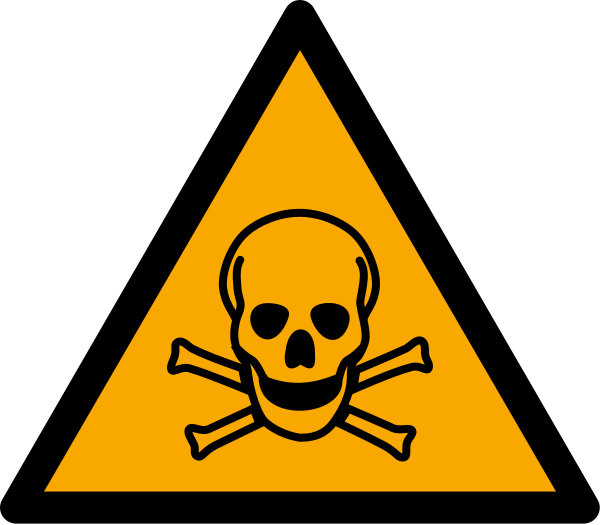
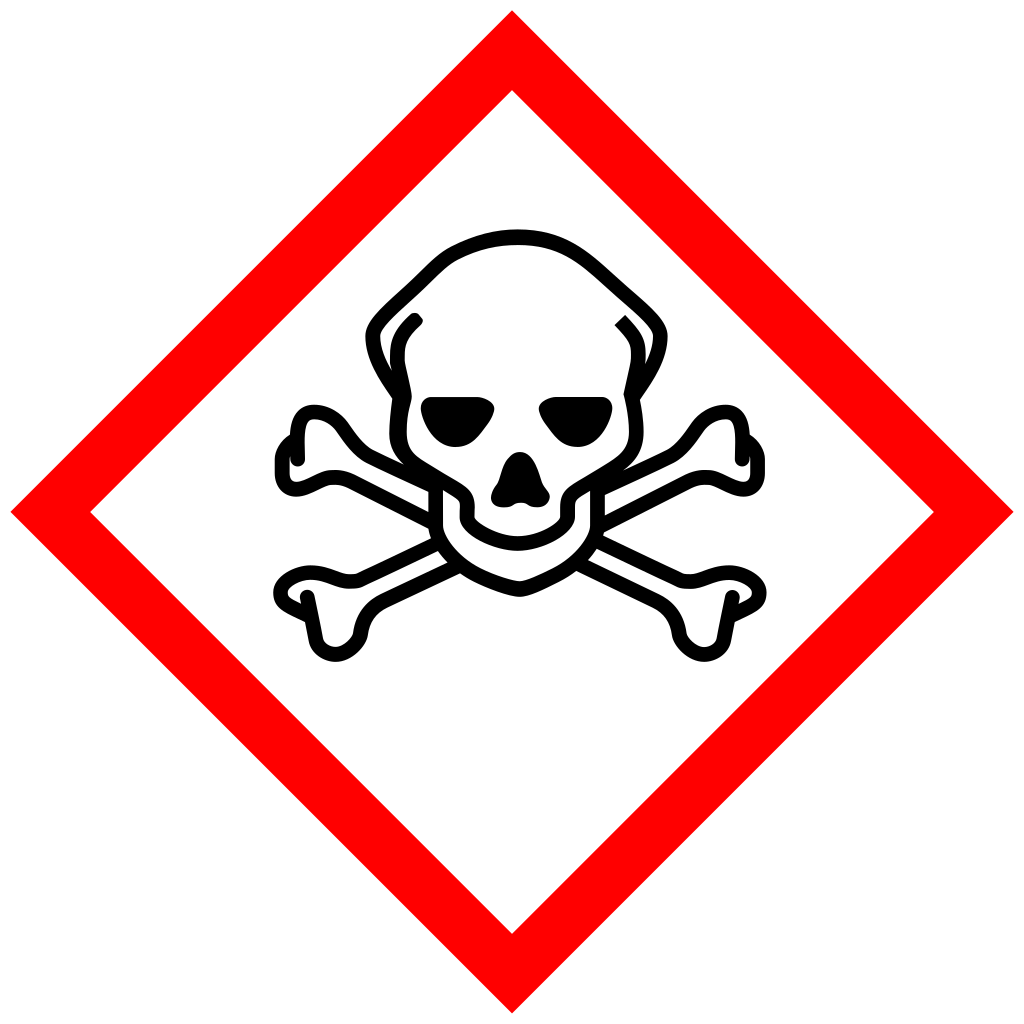
Toxic
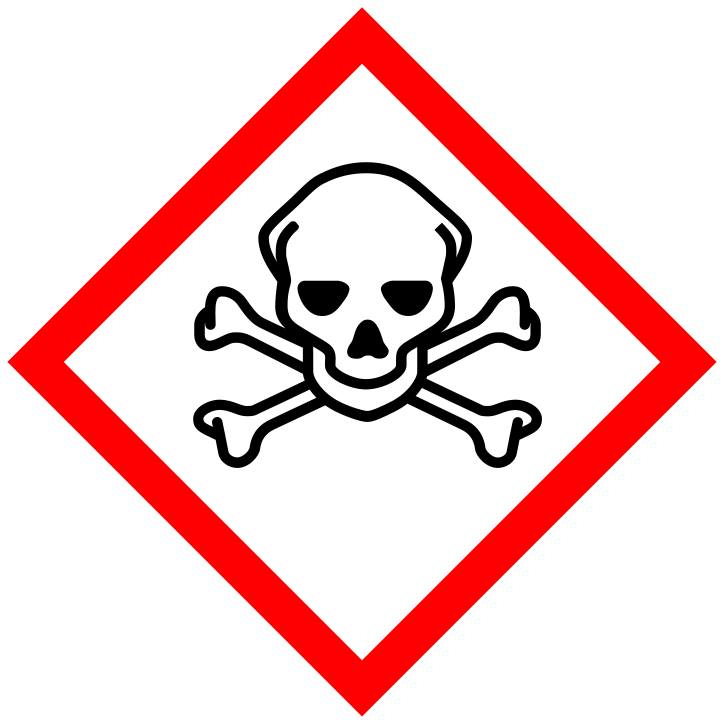
The skull and crossbones identifies acute toxicity in the more severe categories. The label states the relevant exposure route and hazard.
Understanding this sign
GHS pictograms use a black symbol on white within a red diamond border to communicate chemical hazard classes.
Read the whole label and safety data sheet. A pictogram can cover several hazards and does not specify controls by itself.
Reserved for Acute Toxicity Categories 1 to 3
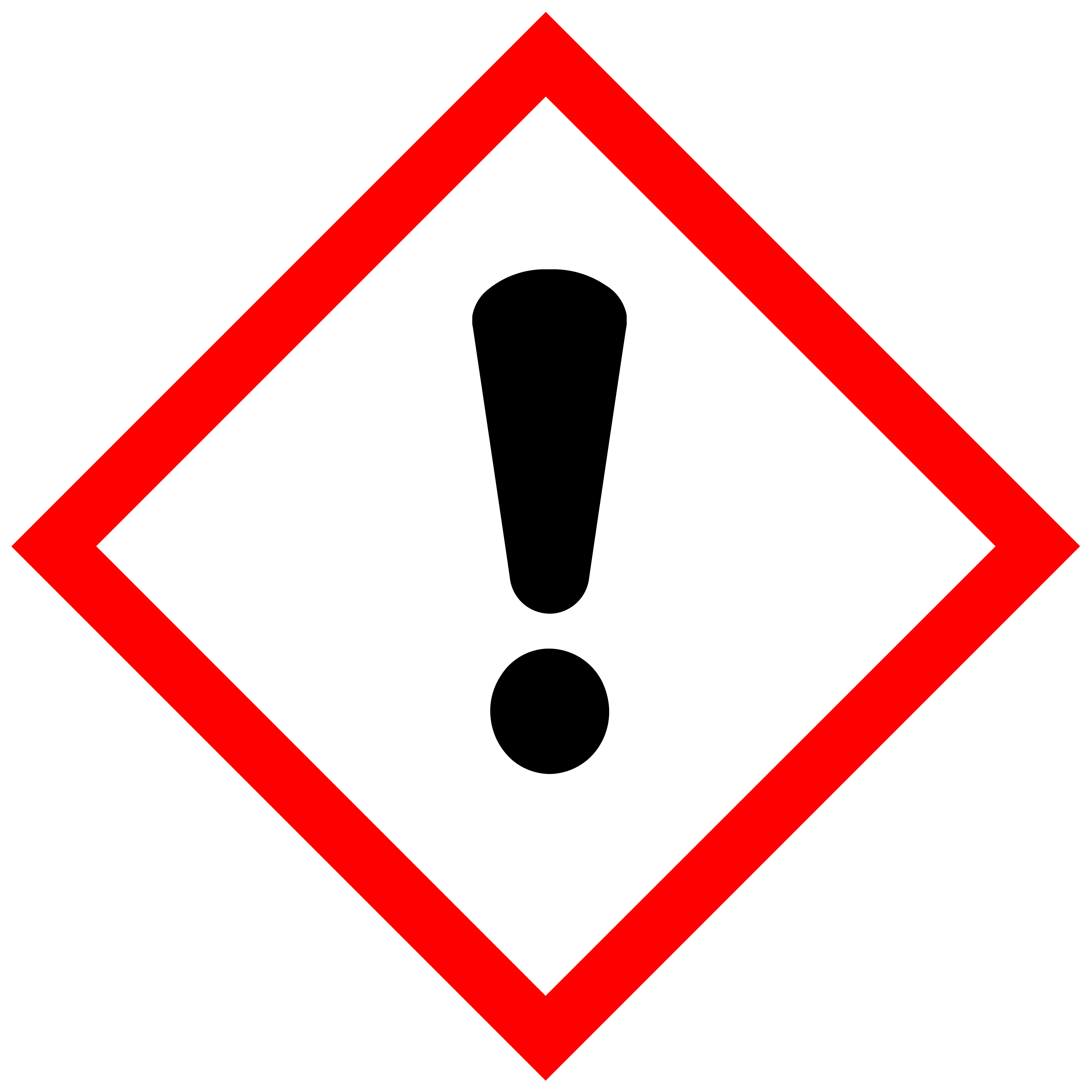
The skull and crossbones has the narrowest assignment of any GHS pictogram: acute toxicity Categories 1, 2, and 3, by the oral, dermal, or inhalation route. Nothing else earns it. Category boundaries are set by lethal-dose data — for the oral route, Category 1 covers LD50 values up to 5 mg/kg, Category 2 up to 50 mg/kg, and Category 3 up to 300 mg/kg — so GHS06 identifies substances where a single exposure, sometimes a very small one, can kill. Category 4 acute toxicity falls to the GHS07 exclamation mark instead.
Because the criteria are route-specific, the pictogram can reflect danger by one route only. Hydrogen sulfide and chlorine earn it through inhalation lethality; sodium cyanide through ingestion; some organophosphate pesticides through skin absorption, which is easy to underestimate because dermal exposure produces no immediate warning sensation. Section 2 of the safety data sheet lists the classified routes, and the H-statement on the label names the most relevant ones.
Signal Word Danger and the H300-Series Statements
Every GHS06 assignment carries the signal word Danger. The hazard statements step down by category and route: H300 (fatal if swallowed) for oral Categories 1 and 2, H301 (toxic if swallowed) for Category 3; H310 and H311 for the dermal route; H330 (fatal if inhaled) and H331 (toxic if inhaled) for inhalation. Combined statements such as H300 + H310 + H330 appear on substances lethal by multiple routes, which is a strong signal to escalate controls beyond routine chemical handling.
The precautionary statements attached to these classifications are among the most operationally demanding in GHS: P280 for protective equipment, P284 for respiratory protection where ventilation is inadequate, and route-specific response statements including P310 (immediately call a poison center or doctor). Several acutely toxic substances also have antidote or specific-treatment notes in SDS Section 4 — cyanides and hydrofluoric acid are the classic examples — so emergency planning for GHS06 materials should be substance-specific, not generic.
Precedence Rules and Regulatory Framework
GHS, OSHA HazCom (29 CFR 1910.1200), and EU CLP (EC) No 1272/2008 all apply the same precedence rule: if the skull and crossbones appears, the exclamation mark must not appear for acute toxicity. A product acutely toxic at Category 3 by inhalation and Category 4 orally shows GHS06 only for those endpoints. GHS06 frequently shares label space with GHS08, however, because acute lethality and chronic effects are independent classifications — many carcinogenic or organ-toxic substances are also acutely toxic.
In the EU, CLP Annex VI harmonizes the classification of many acutely toxic substances, and GHS06 materials commonly intersect with other regimes: strict storage and access rules for toxic products, and in several member states, poison-register or training requirements for handling T-classified chemicals carried over from earlier law. In the US, an acute toxicity classification feeds OSHA's substance-specific standards where they exist and drives inclusion thresholds under EPA's Risk Management Program for certain toxic gases.
What GHS06 Does Not Cover
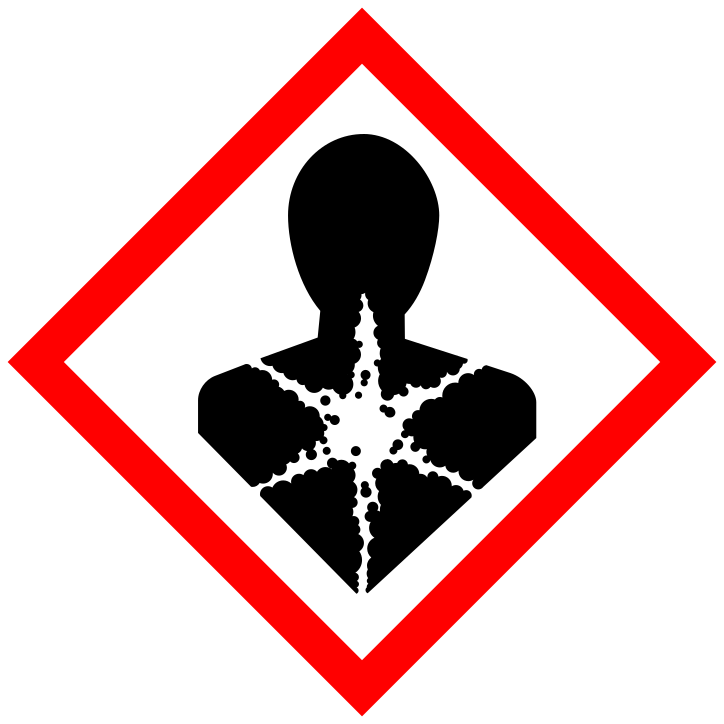
The skull and crossbones is often assumed to flag every seriously dangerous chemical, and it does not. Carcinogens, mutagens, reproductive toxicants, and organ-damage hazards from repeated exposure carry the GHS08 silhouette, not the skull — benzene, for instance, shows GHS08 for carcinogenicity even though its acute toxicity classification sits below the GHS06 threshold. A label without GHS06 therefore says nothing about long-term danger. Conversely, GHS06 says nothing about chronic effects; it is strictly a single-exposure lethality mark.
In transport, acutely toxic materials move as Division 6.1 under a white diamond bearing the same skull symbol, and toxic gases as Division 2.3. As with other pictogram pairs, the transport label on outer packaging can stand in for the GHS pictogram covering the same hazard. The skull also survives in non-GHS contexts — poison-control consumer marks and legacy signage — but on a modern chemical label its meaning is precise: classified acute toxicity, Categories 1 to 3, by at least one exposure route.
Reading the skull and crossbones pictogram
The skull and crossbones identifies the more severe acute-toxicity categories, 1 through 3, for the applicable exposure route. Acute toxicity category 4 uses the exclamation mark instead.
What to check alongside it
The absence of a skull does not establish that a chemical is safe. Long-term health effects can use the health-hazard silhouette. OSHA rules suppress the exclamation mark when it would otherwise indicate acute toxicity and the skull is present.
The application notes above were checked against the linked public sources on . Jurisdiction-specific notes are identified in the text.
Where you will see GHS06
Used on toxic chemical containers, poison gas cabinets, controlled laboratory storage, pesticide handling areas, fume hood notices, toxic waste accumulation points, and transfer equipment for materials classified for acute toxicity.
Common questions about GHS06
What does the skull and crossbones mean on a chemical label?
It identifies acute toxicity in Category 1, 2, or 3 — a material capable of causing death or severe poisoning from a single exposure by swallowing, skin contact, or inhalation. The pictogram is always paired with the signal word Danger and an H300-series statement identifying the dangerous route, such as H301 (toxic if swallowed) or H330 (fatal if inhaled).
Why do some very hazardous chemicals not have the skull pictogram?
Because GHS06 covers only acute, single-exposure lethality. Chronic hazards — cancer, genetic damage, reproductive harm, and organ damage from repeated exposure — are assigned the GHS08 health hazard silhouette instead. A carcinogen like benzene or a sensitizer like an isocyanate can be extremely dangerous over a working lifetime without meeting the acute-toxicity cut-offs that trigger the skull.
What is the difference between GHS06 and GHS07 for toxicity?
Category. Acute toxicity Categories 1 to 3 take the skull and crossbones with Danger; Category 4, where larger doses are needed to cause harm, takes the exclamation mark with Warning and statements like H302 (harmful if swallowed). The two never appear together for acute toxicity — the skull takes precedence and the exclamation mark is dropped for that hazard.
Does the skull and crossbones appear on pesticide labels in the US?
Pesticide labeling is regulated by EPA under FIFRA, which uses its own signal words (Danger, Warning, Caution) and, for the most acutely toxic products, the word Poison with a skull symbol. OSHA HazCom labeling applies to workplace chemicals, and EPA-registered pesticide labels are exempt from HazCom label requirements, so the GHS pictogram set appears on the safety data sheet and workplace documentation rather than the registered product label.
Reference details
| Symbol code | GHS06 |
|---|---|
| Sign family | GHS Chemical Pictograms |
| Standard reference | UN GHS Revision 11 (2025); local implementation varies UN GHS Revision 11 (2025) |
| Screen color reference | #FF0000. Screen colors are not a production color specification. |
| Download formats | SVG reference artwork; a 1024 × 1024 pixel PNG conversion on a white canvas. |
| Record date | · How to interpret our dates |
| Page updated |
Choosing a physical sign size
Download dimensions are not installation dimensions. Select sign size, material, placement, and lighting using the applicable standard and the actual viewing conditions. Chemical label sizing follows its own rules. Read the artwork and sizing guide.
Sources and artwork credits
- UN GHS Revision 11 (2025)
- OSHA hazard communication pictograms
- OSHA 1910.1200 Appendix C: allocation of label elements (US)
- Artwork source
- Wikimedia Commons file page
- Creator credited by source
- Unknown author
- License
- Public domain
- Source metadata checked
SVG files are local reference copies. PNG files are raster conversions. Check the linked file history and license terms before reuse; a source-metadata check is not certification of the artwork or a workplace installation.
Report a correction to this reference