Biohazard
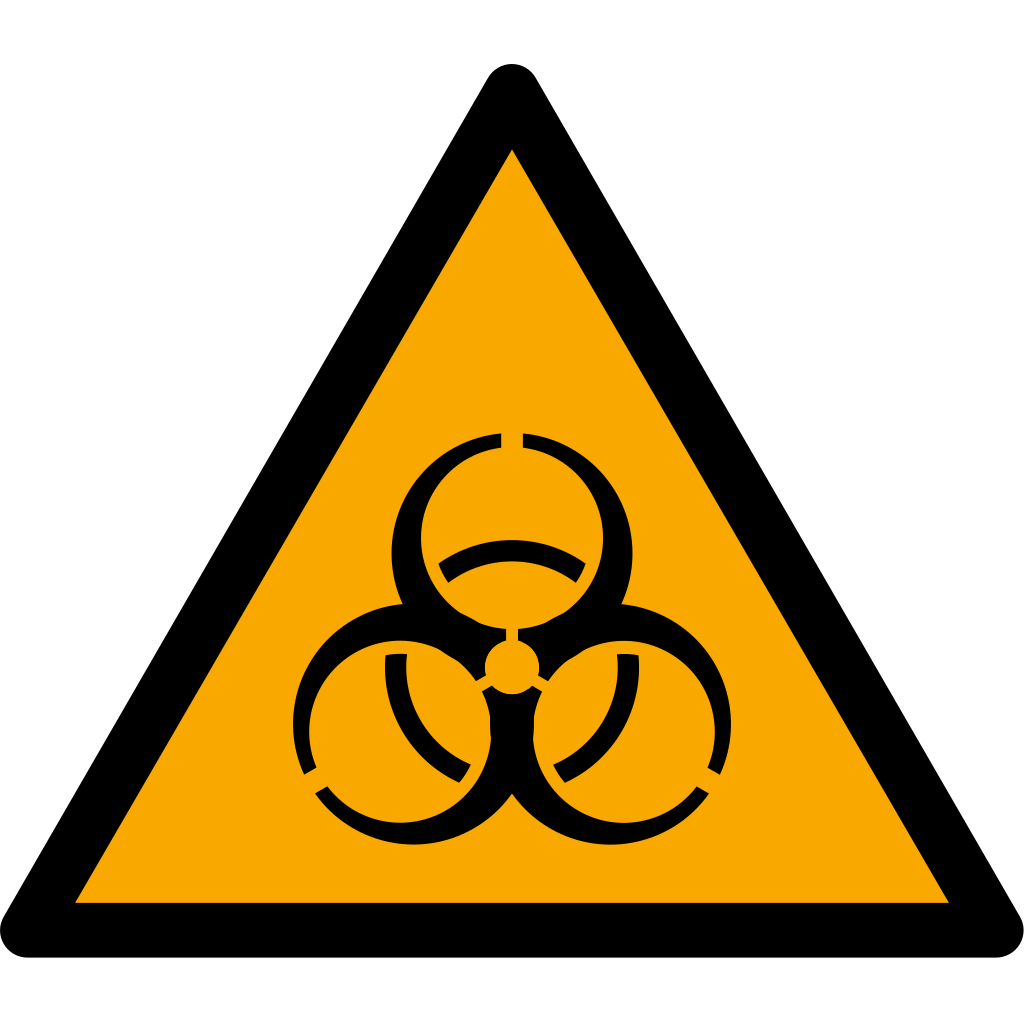
Warns of a biological hazard.
Understanding this sign
Yellow triangular signs draw attention to a hazard, such as electricity, moving machinery, or a hot surface.
A warning pictogram does not state the severity, safe distance, or protective measures. Read the accompanying instructions.
What ISO 7010 W009 Warns About
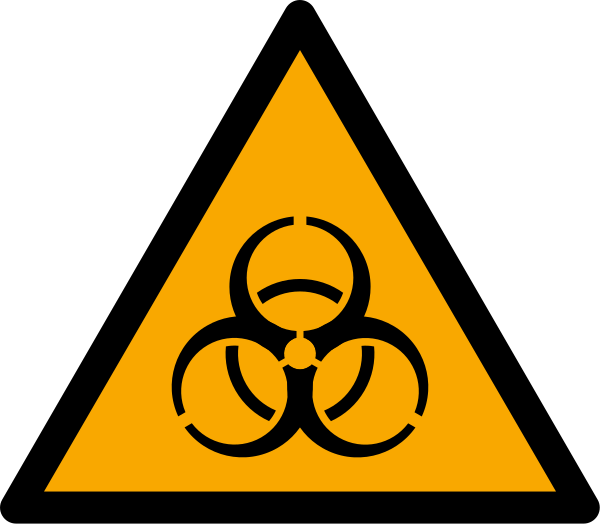
W009 warns of a biological hazard. It places the internationally recognised biohazard trefoil — three interlocking circular arcs around a central ring — in black inside the ISO 3864-1 warning triangle on a yellow field. The sign tells anyone approaching that biological agents capable of causing disease may be present: infectious microorganisms, contaminated materials, clinical specimens, cell cultures, or regulated biological waste. It is an alert to apply the appropriate containment, hygiene, and access controls before entering or handling anything in the area.
The trefoil communicates the type of hazard, not its severity. W009 does not distinguish between a low-risk teaching laboratory and a high-containment facility handling dangerous pathogens; both may display it. That is why the sign is normally accompanied by information identifying the specific agents, the biosafety level in force, the responsible person, and the emergency contact. On its own the pictogram signals "biological risk here"; the surrounding text and procedures define what that risk actually is.
Biohazard Signage and US Regulation
In the United States, one of the main drivers of biohazard signage is OSHA's Bloodborne Pathogens standard, 29 CFR 1910.1030. It requires warning labels bearing the biohazard legend on containers of regulated waste, refrigerators and freezers holding blood or other potentially infectious materials, and containers used to store, transport, or ship such materials. The standard specifies that the label be fluorescent orange or orange-red with contrasting lettering and the biohazard symbol — a colour scheme distinct from the yellow-and-black ISO 7010 W009 safety sign.
Laboratory work is additionally organised around the biosafety level (BSL) system described in the CDC/NIH publication Biosafety in Microbiological and Biomedical Laboratories. BSL-1 through BSL-4 define escalating containment, practices, and facility design according to the risk of the agents handled, and entrances to BSL-2 and higher areas are posted with biohazard signage plus agent-specific information. The W009 trefoil is the pictogram people recognise at those doors, while the posted text conveys the containment level and entry requirements.
Where the Biohazard Sign Belongs
Display W009 at the entrances to laboratories and containment areas, on biological safety cabinets, and on refrigerators, freezers, and incubators holding infectious or potentially infectious material. It also belongs on sharps containers, clinical and regulated waste bins, autoclave staging areas where contaminated loads await decontamination, and transport containers moving biological samples between locations. In healthcare settings it marks isolation rooms and specimen-handling points where staff and visitors need to recognise the containment requirement immediately.
Placement should let a person recognise the hazard before they can contact it. On a door, that means the sign is visible from the approach, not only once inside; on a container, it must survive the environment it lives in, including cold storage and repeated cleaning. Entrance signage is most useful when it carries the supporting detail — the biosafety level, the agents in use, required PPE, and a name and number to call — so that emergency responders and maintenance staff understand the risk without having to enter first.
Reading and Distinguishing the Trefoil
The biohazard trefoil is one of the most recognised hazard symbols in the world, but the same shape appears in more than one signage context, and the differences matter. The ISO 7010 W009 version is black on a yellow triangle and is a workplace safety sign. The OSHA bloodborne-pathogens label uses the same trefoil on a fluorescent orange or orange-red field and is a container and equipment label with its own regulatory wording. Choosing the right colour and format keeps the sign compliant with the rule that actually applies.
W009 should not be treated as interchangeable with chemical or radiation warnings. Biological, chemical, and radiological hazards each have distinct pictograms and distinct control regimes, and a space may need more than one. Where genetically modified organisms, human pathogens, or animal-derived materials are handled, national rules may add specific signage or notification requirements on top of the generic trefoil, so the W009 sign is best regarded as the visible entry point to a documented biosafety programme rather than the whole of it.
Where you will see W009
Used on laboratory entrances, biological safety cabinets, specimen refrigerators, sharps disposal points, clinical waste containers, autoclave staging areas, isolation rooms, and biosafety-controlled work zones.
Common questions about W009
What does the biohazard symbol on a door mean?
The black trefoil in a yellow triangle is ISO 7010 W009, warning that biological hazards may be present — infectious agents, contaminated materials, specimens, or regulated biological waste. On a laboratory or isolation-room door it signals that containment and access controls apply, and it is usually accompanied by text stating the biosafety level, the agents in use, and who to contact.
Why are some biohazard labels orange instead of yellow?
Because they follow different rules. The yellow-and-black trefoil is the ISO 7010 W009 workplace safety sign. The fluorescent orange or orange-red label is the format required by OSHA's Bloodborne Pathogens standard, 29 CFR 1910.1030, for containers of regulated waste, refrigerators holding infectious materials, and similar equipment. Both use the same trefoil but satisfy different regulatory formats.
What is the difference between the biohazard sign and a biosafety level?
The W009 sign is the pictogram that warns of a biological hazard. A biosafety level (BSL-1 to BSL-4) defines the containment, practices, and facility requirements for the agents being handled, as set out in the CDC/NIH Biosafety in Microbiological and Biomedical Laboratories guidance. Entrances to BSL-2 and higher areas display the biohazard sign together with the applicable containment level.
Where is a biohazard sign required?
Common locations include laboratory and containment-area entrances, biological safety cabinets, refrigerators and freezers holding infectious material, sharps and regulated-waste containers, autoclave staging areas, and transport containers for biological samples. In the US, OSHA's Bloodborne Pathogens standard specifically requires the biohazard legend on regulated-waste containers and storage equipment for potentially infectious materials.
Reference details
| Symbol code | W009 |
|---|---|
| Sign family | ISO Warning Signs |
| Standard reference | ISO 7010:2019 / ISO 3864-1 ISO Online Browsing Platform: W009 |
| Screen color reference | #FFCC00. Screen colors are not a production color specification. |
| Download formats | SVG reference artwork; a 1024 × 1024 pixel PNG conversion on a white canvas. |
| Record date | · How to interpret our dates |
| Page updated |
Choosing a physical sign size
Download dimensions are not installation dimensions. Select sign size, material, placement, and lighting using the applicable standard and the actual viewing conditions. Chemical label sizing follows its own rules. Read the artwork and sizing guide.
Sources and artwork credits
- Artwork source
- Wikimedia Commons file page
- Creator credited by source
- MaxxL
- License
- Public domain
- Source metadata checked
SVG files are local reference copies. PNG files are raster conversions. Check the linked file history and license terms before reuse; a source-metadata check is not certification of the artwork or a workplace installation.
Report a correction to this reference