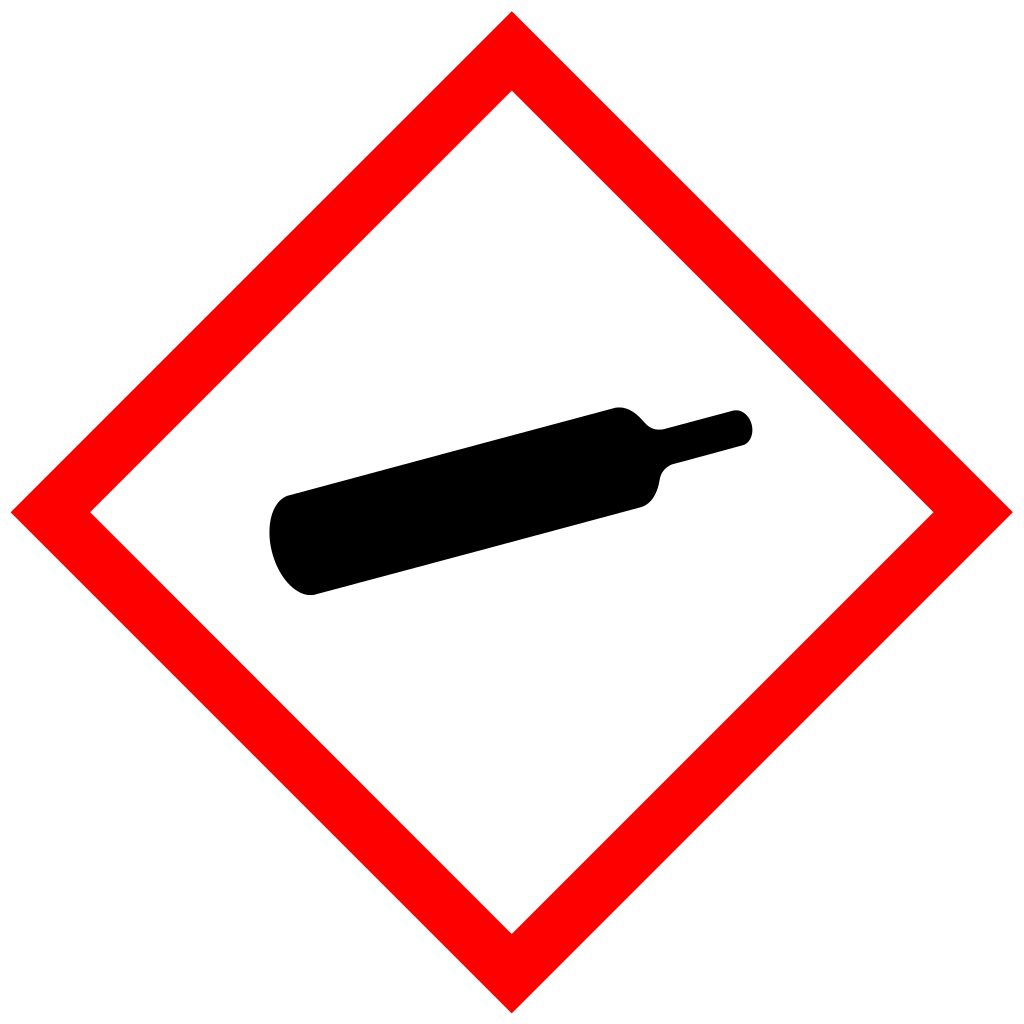
Gas Cylinder
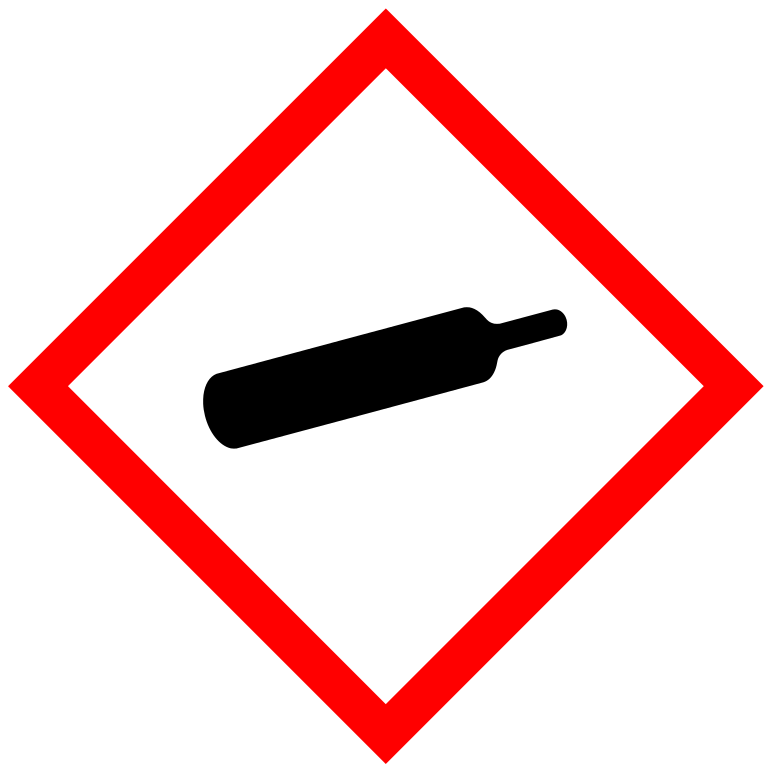
The gas cylinder pictogram identifies specified gases under pressure and chemicals under pressure. Read the hazard statement for the particular pressure or refrigerated-gas hazard.
Understanding this sign
GHS pictograms use a black symbol on white within a red diamond border to communicate chemical hazard classes.
Read the whole label and safety data sheet. A pictogram can cover several hazards and does not specify controls by itself.
Gases Under Pressure: The Four Groups
GHS04 belongs to a single hazard class — gases under pressure — which GHS divides into four groups rather than numbered severity categories. Compressed gases (nitrogen, argon, oxygen) remain entirely gaseous when packaged under pressure. Liquefied gases (propane, ammonia, chlorine) are partially liquid at ordinary temperatures. Refrigerated liquefied gases (liquid nitrogen, liquid oxygen, LNG) are kept liquid by low temperature. Dissolved gases, in practice acetylene dissolved in a solvent, form the fourth group. All four display the same gas cylinder pictogram.
The pictogram communicates the physical hazards of pressurization itself, independent of the gas's chemistry: catastrophic rupture or rocketing of a heated cylinder, violent energy release from damaged valves, and cold burns or embrittlement from expanding or cryogenic gas. That is why an inert gas like argon still carries GHS04 — the cylinder is the hazard. Asphyxiation risk in confined spaces is a related but separately communicated danger; it is not what GHS04 formally classifies.
Signal Word and Hazard Statements
Uniquely among the classes that assign a pictogram, gases under pressure use the signal word Warning across all four groups. Compressed, liquefied, and dissolved gases carry H280 (contains gas under pressure; may explode if heated). Refrigerated liquefied gases instead carry H281 (contains refrigerated gas; may cause cryogenic burns or injury), shifting the emphasis from heat-driven rupture to cold contact — liquid nitrogen at minus 196 °C destroys tissue on contact and embrittles many materials.
The precautionary statements are equally specific: P410 + P403 (protect from sunlight; store in a well-ventilated place) for H280 gases, and P282 (wear cold insulating gloves and face protection) plus P336 and P315 first-aid guidance for cryogenic materials. Newer GHS revisions also added a separate chemicals-under-pressure class for liquids and solids expelled by a propellant gas, which combines the gas cylinder with the flame pictogram for its flammable categories.
How OSHA and CLP Handle the Cylinder Pictogram
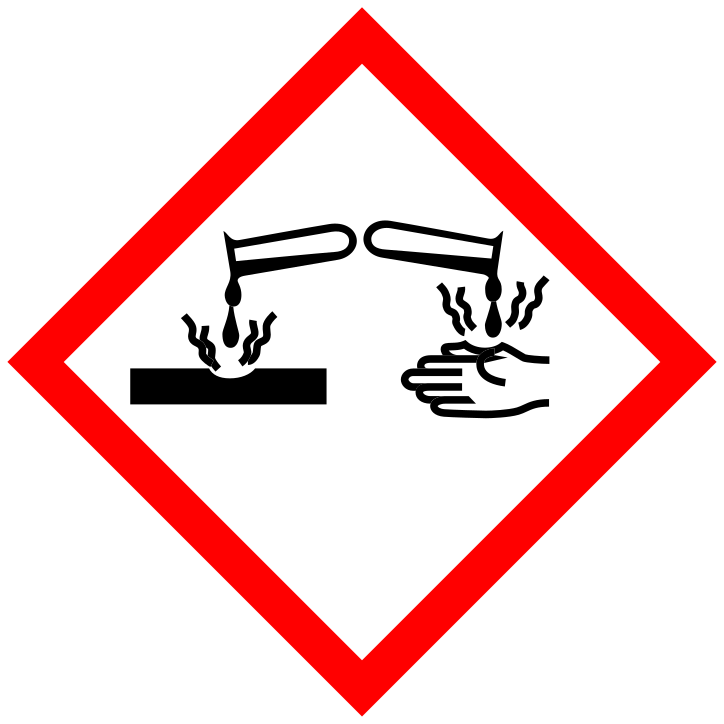
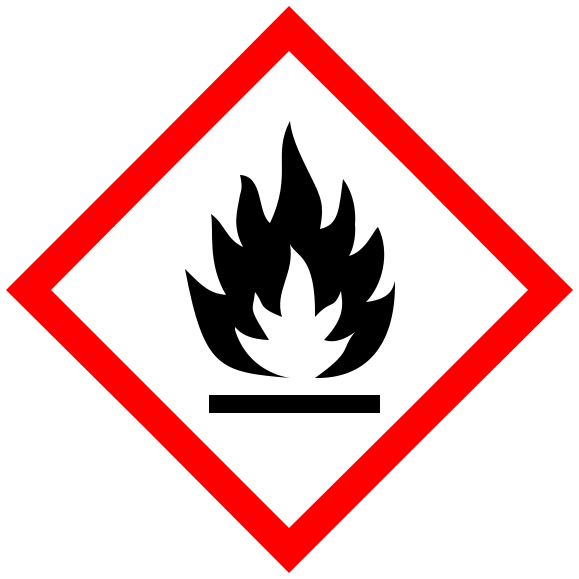
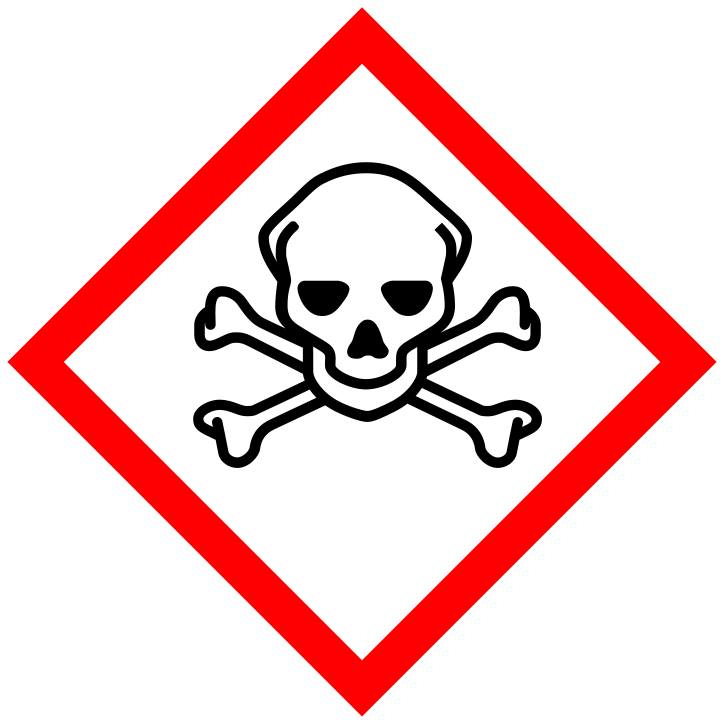
Under 29 CFR 1910.1200, gas suppliers must label cylinders with GHS04 and the applicable additional pictograms — GHS02 for flammable gases like hydrogen, GHS03 for oxidizers like oxygen, GHS06 for toxic gases like chlorine. OSHA permits practical labeling accommodations for cylinders, and workplace requirements interact with 29 CFR 1910.101 and Compressed Gas Association practices for handling and storage. The label is only part of cylinder identification: the stamped markings and the supplier's cylinder color scheme carry complementary information.
Under the EU CLP Regulation (EC) No 1272/2008, the same class and groups apply, with Annex I allowing reduced labeling formats for cylinders below 150 litres. CLP also contains a notable precedence rule: where the GHS02 flame or GHS06 skull and crossbones appears on a gas label, the GHS04 pictogram becomes optional, on the logic that those gases are self-evidently packaged under pressure. Many European suppliers nevertheless keep the cylinder symbol for clarity.
Reading GHS04 Alongside Transport Labels
Gas cylinders move under transport rules as Class 2, but transport has no equivalent of GHS04. Instead, the transport diamond communicates the gas's chemical hazard division: red flame for 2.1 flammable gases, green for 2.2 non-flammable non-toxic gases, white skull for 2.3 toxic gases. A cylinder in circulation therefore typically shows both systems — the GHS supply label with GHS04 for workplace users, and the Class 2 diamond for carriage. Neither replaces the other, because they answer different questions.
Two boundary cases cause recurring confusion. Aerosol cans are pressurized but are classified in the aerosols class, not gases under pressure, so they never carry GHS04. And GHS applies a pressure threshold for the class — gases packaged below roughly 200 kPa and neither liquefied nor refrigerated fall outside it — which is why some low-pressure gas products carry no cylinder pictogram. When GHS04 is absent from a pressurized-looking package, check the label's H-statements before assuming an error.
Reading the gas cylinder pictogram
The gas cylinder identifies applicable gases-under-pressure and chemicals-under-pressure classifications. It does not, by itself, say whether the contents are flammable, toxic, or chemically inert.
What to check alongside it
A cylinder symbol is not a complete cylinder-handling procedure. Other pictograms and hazard statements may apply to the contents. Check the label for the pressure-related hazard and the safety data sheet for precautions.
The application notes above were checked against the linked public sources on . Jurisdiction-specific notes are identified in the text.
Where you will see GHS04
Used on compressed-gas cylinders, cryogenic dewars, gas manifolds, welding gases, laboratory supply lines, medical-gas storage, and process-gas cabinets where pressure, projectile, or cold-contact hazards must be recognized before handling.
Common questions about GHS04
Why does an inert gas like nitrogen carry a hazard pictogram?
GHS04 classifies the physical hazard of pressurization, not chemical toxicity. A nitrogen cylinder at around 200 bar stores enough mechanical energy to rupture violently if heated or to become a projectile if the valve shears off, and released gas can displace oxygen in enclosed spaces. The pictogram with H280 warns of the pressure hazard; asphyxiation precautions come through the safety data sheet and workplace controls.
What is the difference between H280 and H281?
H280 (contains gas under pressure; may explode if heated) applies to compressed, liquefied, and dissolved gases and points to heat-driven rupture. H281 (contains refrigerated gas; may cause cryogenic burns or injury) applies to refrigerated liquefied gases such as liquid nitrogen and liquid oxygen, where the dominant risk is severe cold injury and material embrittlement rather than heating.
Do aerosol cans get the GHS04 gas cylinder pictogram?
No. GHS deliberately keeps aerosol dispensers out of the gases-under-pressure class and classifies them under the separate aerosols class, so the can shows the GHS02 flame for Categories 1 and 2 and nothing for Category 3. The pressurized-container warnings for aerosols arrive instead through precautionary statements such as protecting the can from sunlight and temperatures above 50 °C.
Is GHS04 ever optional on a label?
Under EU CLP, yes: when the label already carries the GHS02 flame or the GHS06 skull and crossbones, the gas cylinder pictogram may be omitted. There is no such written exemption in OSHA's HazCom standard, so US labels for flammable or toxic gases normally show GHS04 alongside the other pictograms.
Reference details
| Symbol code | GHS04 |
|---|---|
| Sign family | GHS Chemical Pictograms |
| Standard reference | UN GHS Revision 11 (2025); local implementation varies UN GHS Revision 11 (2025) |
| Screen color reference | #FF0000. Screen colors are not a production color specification. |
| Download formats | SVG reference artwork; a 1024 × 1024 pixel PNG conversion on a white canvas. |
| Record date | · How to interpret our dates |
| Page updated |
Choosing a physical sign size
Download dimensions are not installation dimensions. Select sign size, material, placement, and lighting using the applicable standard and the actual viewing conditions. Chemical label sizing follows its own rules. Read the artwork and sizing guide.
Sources and artwork credits
- UN GHS Revision 11 (2025)
- OSHA hazard communication pictograms
- OSHA 1910.1200 Appendix C: allocation of label elements (US)
- Artwork source
- Wikimedia Commons file page
- Creator credited by source
- Unknown author
- License
- Public domain
- Source metadata checked
SVG files are local reference copies. PNG files are raster conversions. Check the linked file history and license terms before reuse; a source-metadata check is not certification of the artwork or a workplace installation.
Report a correction to this reference