General Prohibition
Indicates a prohibition. Read the accompanying information to identify the prohibited action.
Understanding this sign
Red circular signs with a diagonal bar identify an action that must not be taken in the marked area.
Check what object or action the symbol prohibits. A prohibition sign does not identify all the hazards in an area.
The Empty Prohibition Circle
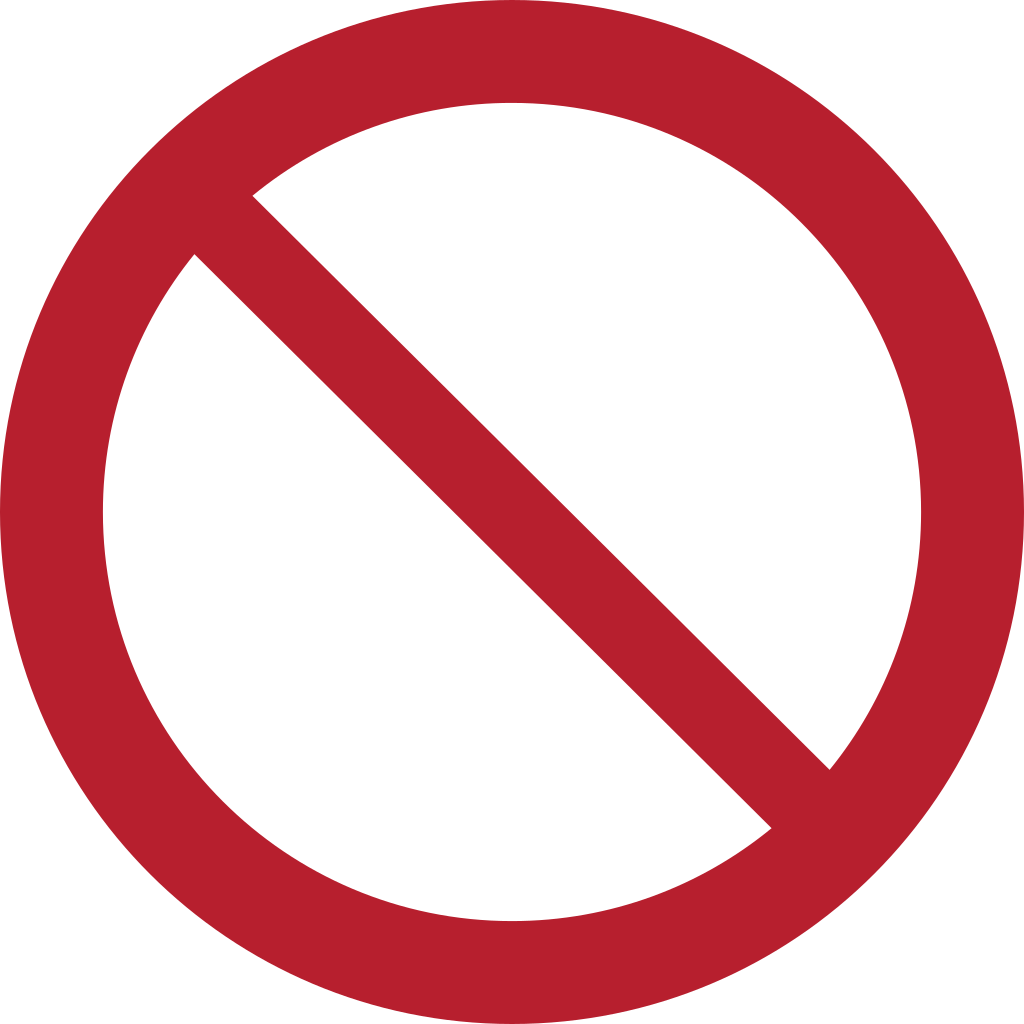
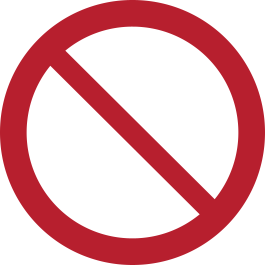
P001 is the general prohibition sign: the red circular band with a 45-degree diagonal bar on a white field, containing no pictogram at all. In ISO 3864-1's grammar the red circle-and-bar means "forbidden," and P001 is that meaning stripped of any subject. It exists for prohibitions that have no registered symbol — every specific P-series sign, from no smoking to no access, is this frame with a pictogram inside it.
An empty frame forbids nothing by itself, so P001 is only meaningful as a combination sign: the circle plus a supplementary text panel naming the banned action, such as "No drones," "No unauthorized adjustments to this machine," or "Do not operate crane while dock doors are open." Displayed bare, it reads as decoration or an unfinished order, and it gives an inspector nothing enforceable. The rule of use is simple: if you cannot write the text panel, you do not yet know what you are prohibiting.
Design Requirements Worth Getting Right
The format is precisely specified. ISO 3864-1 defines the geometry of the circular band and diagonal bar, the safety red (RAL 3001 is a close practical match, though many suppliers print brighter reds), and the proportion rules; under the EU safety signs directive 92/58/EEC, prohibition signs must be round with black pictogram on white and the red parts must make up at least 35 percent of the sign's area. Thin, stylish rings on custom signs commonly fail that proportion test.
When text is added to a bespoke prohibition, put it on the supplementary panel below or beside the circle, not inside it. Cramming words into the disc shrinks them to illegibility and breaks the standardized geometry that makes the shape recognizable at distance. The diagonal bar should also run from upper left to lower right; mirrored versions circulate in clip art and undermine the consistency that shape-coding depends on.
Legitimate Uses for a Generic Ban
P001's territory is the site-specific and the temporary. Contractor control boards use it for local rules — no work without a permit, no entry during lifting operations, no parking in fire lanes without a dedicated sign. Maintenance and lockout scenarios use it on temporary barriers and tags where the prohibition exists only for the duration of the job. Facilities also reach for it to ban activities too new or too unusual to have a registered symbol, from drone flights to charging unauthorized e-scooters indoors.
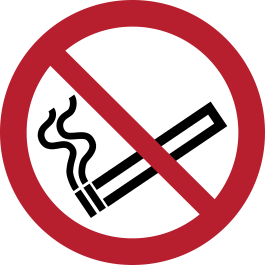
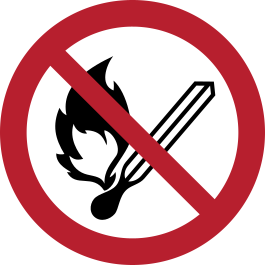
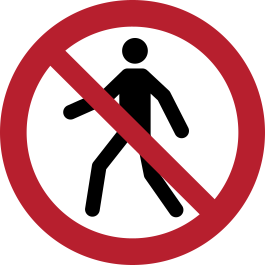
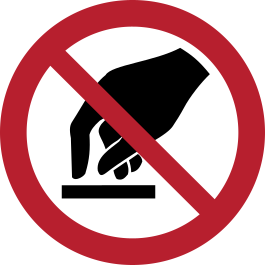
The discipline is to treat P001 as a fallback, not a default. ISO 7010 registers a specific prohibition for most recurring bans, and the specific sign always communicates faster, works across languages, and is harder to misread. Before ordering a P001 combination sign, check the current P-series register; if a matching symbol exists — no smoking (P002), no open flame (P003), no thoroughfare (P004), do not touch (P010) — the registered sign should be used instead.
Reading P001 Beside Its Siblings
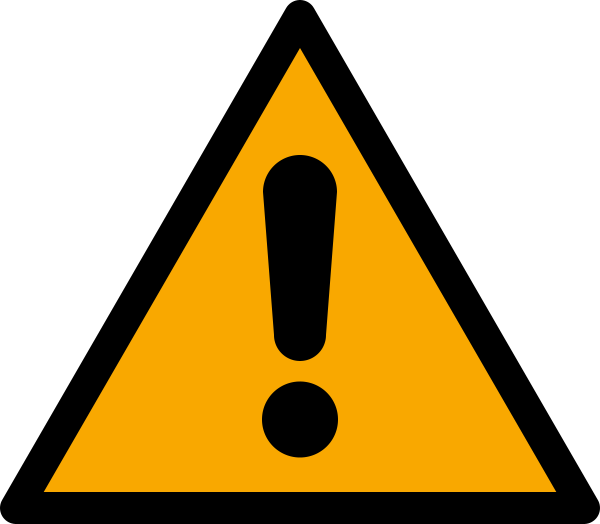
ISO 7010's trio of general signs divides all safety messages among themselves. Red P001 forbids, blue M001 obliges, and yellow W001 warns. The choice is determined by the verb in the message: a rule people must not break is P001 territory, a required behavior belongs on M001, and a condition to be careful of belongs on W001. Putting a prohibition on yellow, a common improvisation, tells trained viewers to be cautious about something they were actually meant to stop doing.
One further boundary: the red circle-and-bar is a safety prohibition device, and diluting it for etiquette or amenity rules — no ball games, no eating at desks — carries a cost in credibility where prohibitions guard against genuine harm. Organizations that reserve the red circle for enforced safety and security rules, and use plainer notice formats for house rules, find the prohibition signs they do post are taken more literally.
Where you will see P001
Used on temporary barriers, restricted-access areas, maintenance lockout zones, contractor controls, site-rule notices, and custom local instructions where a prohibition must be communicated but a more specific registered sign is not available.
Common questions about P001
What does a red circle with a diagonal line and nothing inside mean?
It is ISO 7010 P001, the general prohibition sign. On its own it only conveys "something is forbidden here"; the specific banned action must be stated on an accompanying text panel or adjacent notice. If you encounter one without text, treat it as an incomplete sign and ask the site operator what rule it is meant to carry.
Can I put my own symbol or words inside the P001 circle?
Words no, symbols with care. Text inside the circle becomes illegible at distance and breaks the standardized format — the correct place for wording is a supplementary panel below the sign. A custom pictogram inside the band is how new prohibition signs are drawn, but it should follow ISO 3864-1 design rules (black symbol, correct band and bar proportions), and a registered ISO 7010 symbol should be used whenever one exists for your prohibition.
When should I use P001 instead of a specific prohibition sign?
Only when no registered sign matches the ban. ISO 7010 has specific symbols for the common prohibitions — smoking, open flames, pedestrian access, unauthorized entry, touching, photography, mobile phones, and many more — and those communicate faster and without language. P001 plus text is the right tool for site-specific, temporary, or unusual rules like drone bans, permit requirements, or restrictions during maintenance work.
Does the direction of the diagonal bar on prohibition signs matter?
Yes. The standardized design runs the bar from upper left to lower right at 45 degrees, and the red band and bar must dominate the sign — under EU rules the red must cover at least 35 percent of the sign area. Mirrored bars and thin decorative rings are common in informal graphics but do not conform, and consistency in the shape is what lets people read prohibition signs at a glance.
Reference details
| Symbol code | P001 |
|---|---|
| Sign family | ISO Prohibition Signs |
| Standard reference | ISO 7010:2019 / ISO 3864-1 ISO Online Browsing Platform: P001 |
| Screen color reference | #FF0000. Screen colors are not a production color specification. |
| Download formats | SVG reference artwork; a 1024 × 1024 pixel PNG conversion on a white canvas. |
| Record date | · How to interpret our dates |
| Page updated |
Choosing a physical sign size
Download dimensions are not installation dimensions. Select sign size, material, placement, and lighting using the applicable standard and the actual viewing conditions. Chemical label sizing follows its own rules. Read the artwork and sizing guide.
Sources and artwork credits
- Artwork source
- Wikimedia Commons file page
- Creator credited by source
- ISO
- License
- Public domain
- Source metadata checked
SVG files are local reference copies. PNG files are raster conversions. Check the linked file history and license terms before reuse; a source-metadata check is not certification of the artwork or a workplace installation.
Report a correction to this reference