Fire Hose Reel
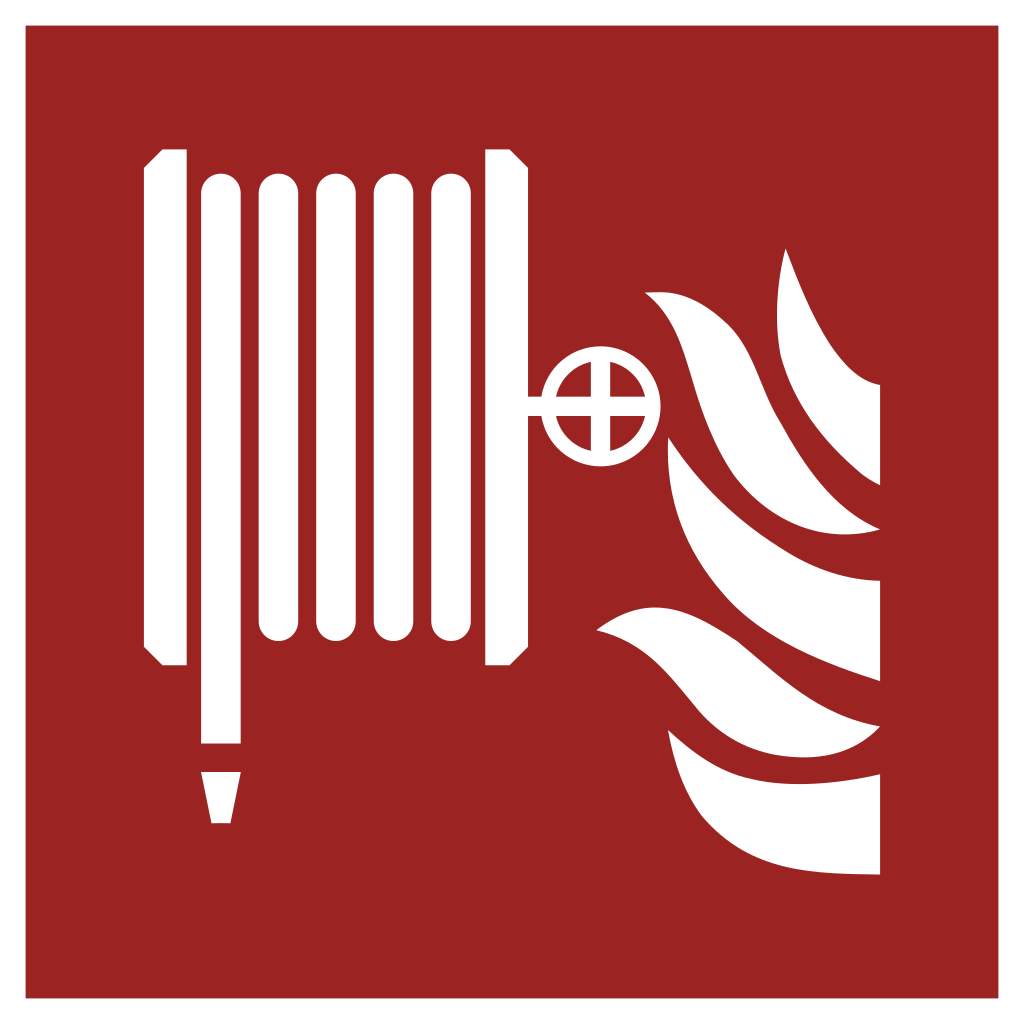
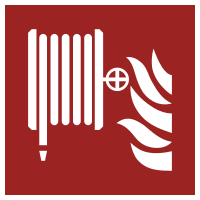
Identifies a fire hose reel.
Understanding this sign
Red square or rectangular signs identify fire equipment and manual alarm points.
Finding equipment does not mean it is suitable or safe to use. Follow your training and the site emergency procedure.
What F002 Identifies
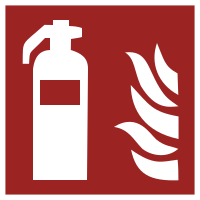
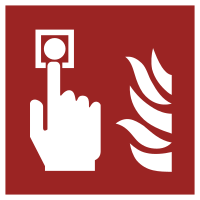
F002 marks the location of a fire hose reel: a fixed, permanently connected water supply with a hose wound on a reel or rack, intended for first-response attack on a fire in its incipient stage. The sign shows a white pictogram of a hose reel with a flame on the red square shared by all ISO 7010 fire equipment signs — the same red family as the extinguisher sign F001 and the alarm call point sign F005, and deliberately distinct from the green signs that mark the way out.
A hose reel differs from an extinguisher in capability and commitment. It delivers water continuously rather than for a few seconds of agent, which makes it more effective on a growing Class A fire, but it also anchors its user to a mains-fed line inside the building. The F002 sign therefore addresses a narrower audience than most safety signs: occupants trained and authorized under the site's fire strategy to attempt first-aid firefighting, plus arriving responders looking for fixed equipment.
The EN 671 Framework
In Europe, hose reels are built and maintained to the EN 671 series. EN 671-1 covers hose reels with semi-rigid hose — the type usable by one person, since the hose holds its shape and flows water without being fully run out — while EN 671-2 covers hose systems with lay-flat hose, which generally demand more training and hands. EN 671-3 governs maintenance: regular inspection by a competent person on at least an annual cycle, and periodic pressure testing of the hose at longer intervals, with equipment taken out of service labeled accordingly.
Installation requirements flow mostly from national building regulations, which decide where reels are required at all — typically larger buildings, warehouses, parking structures, and premises where escape distances or fire loads justify fixed first-aid firefighting equipment. Wherever a reel is installed, the signage obligation follows automatically under EU Directive 92/58/EEC: fire-fighting equipment must be identified with red signage, and F002 is the ISO 7010 sign that does the identifying.
Who Is Supposed to Use It
Fire strategies split on hose reels, and the split is worth understanding before specifying signage. Some operators, particularly in the UK, have moved toward evacuate-first policies and removed hose reels entirely, reasoning that untrained occupants attempting attack with a mains-fed line delays their escape and that the equipment invites misuse. Others — industrial sites with trained fire teams, remote facilities with long fire-service response times — treat reels as a core layer of defense. Both positions are defensible; what fails audits is signage advertising equipment the written plan forbids anyone to touch.
United States practice is different again. Occupant-use hose stations on standpipe systems were once common in US buildings, but many jurisdictions have allowed or encouraged their removal in favor of extinguishers for occupants and fire-department hose connections for professionals, which is why the F002 pictogram is a rare sight in American facilities. Multinational EHS teams standardizing signage across regions should map the F-series signs to what each building actually contains rather than applying one global template.
Signage and Access in Practice
Mount F002 directly above the reel or on the cabinet that houses it, sized to the viewing distances of the space — parking decks and warehouse corridors need larger formats than hotel corridors. Recessed cabinets are the visibility problem case: flush doors disappear into long walls, so a projecting double-sided sign perpendicular to the corridor earns its cost. Where reels sit inside stairwell lobbies or behind fire doors, a directional F002 with an arrow at the corridor keeps the approach legible.
Access discipline matters as much for hose reels as for any emergency equipment, with one aggravating factor: reels have taps, and taps attract informal use for washing floors and filling buckets, which leaves hoses kinked, valves weeping, or reels unwound. Cabinets should close properly without being locked against emergency use, the swing area of the reel arm must stay clear of stored goods, and the annual EN 671-3 inspection should be logged where responders and auditors can find it — commonly on a tag at the reel itself.
Where you will see F002
Mounted above hose reels, at fire points, in warehouses, parking structures, industrial corridors, marine or utility spaces, and large buildings where hose-reel equipment must be located without delay during incipient-stage fire response.
Common questions about F002
What does the fire hose reel sign mean?
ISO 7010 F002 indicates the location of a fixed fire hose reel connected to a water supply, for use on a fire in its early stage by people trained under the site's emergency plan. It uses the red square of the fire equipment sign family, distinguishing it from green emergency signs that mark escape and first aid.
Are employees allowed to use fire hose reels?
Only if the site's fire strategy says so and they are trained. Policies genuinely differ: some organizations rely on hose reels for first-response firefighting by trained staff, while others have adopted evacuate-only plans and in some cases removed reels altogether. The signage and the written emergency plan must tell the same story.
How often must fire hose reels be inspected?
Under EN 671-3, hose reels require regular inspection by a competent person — at least annually — covering the hose, valve, reel, water flow, and signage, plus periodic pressure testing of the hose at longer intervals. Results are typically recorded on a tag at the reel, and defective equipment must be marked out of service.
Why are hose reels common in Europe but rare in US buildings?
European building regulations frequently require hose reels built to EN 671 in larger premises, treating them as first-aid firefighting equipment. In the US, occupant-use hose stations have largely fallen out of favor, with codes and owners preferring portable extinguishers for occupants and standpipe connections reserved for fire departments, so the F002 sign appears far less often there.
Reference details
| Symbol code | F002 |
|---|---|
| Sign family | ISO Fire Equipment Signs |
| Standard reference | ISO 7010:2019 / ISO 3864-1 ISO Online Browsing Platform: F002 |
| Screen color reference | #FF0000. Screen colors are not a production color specification. |
| Download formats | SVG reference artwork; a 1024 × 1024 pixel PNG conversion on a white canvas. |
| Record date | · How to interpret our dates |
| Page updated |
Choosing a physical sign size
Download dimensions are not installation dimensions. Select sign size, material, placement, and lighting using the applicable standard and the actual viewing conditions. Chemical label sizing follows its own rules. Read the artwork and sizing guide.
Sources and artwork credits
- Artwork source
- Wikimedia Commons file page
- Creator credited by source
- MaxxL
- License
- Public domain
- Source metadata checked
SVG files are local reference copies. PNG files are raster conversions. Check the linked file history and license terms before reuse; a source-metadata check is not certification of the artwork or a workplace installation.
Report a correction to this reference