Crevasses under snow
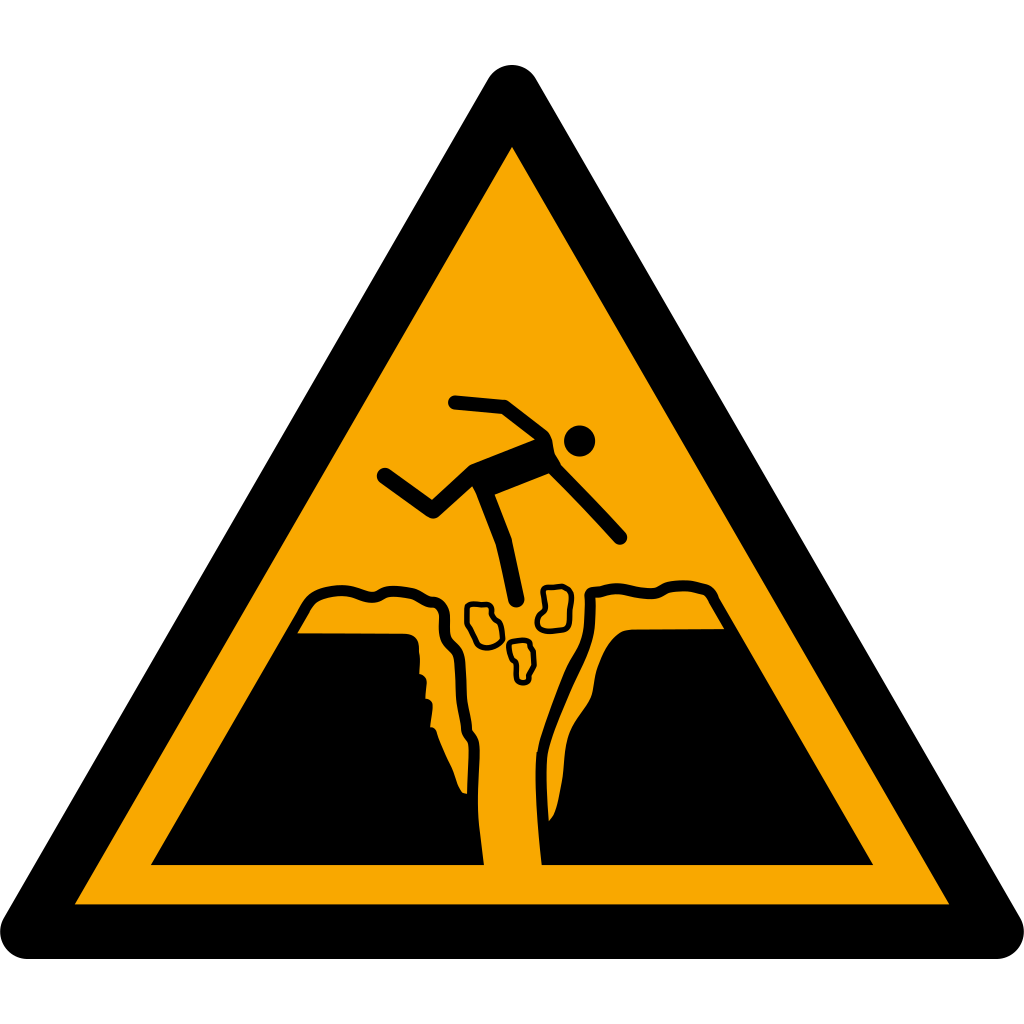
Warns of crevasses hidden under snow.
Understanding this sign
Yellow triangular signs draw attention to a hazard, such as electricity, moving machinery, or a hot surface.
A warning pictogram does not state the severity, safe distance, or protective measures. Read the accompanying instructions.
A Warning for Hidden Ground
W082 warns of crevasses under the snow — deep fissures in glacier ice concealed by a snow cover that looks continuous and solid. The pictogram shows a person breaking through a snow surface into a void below. It belongs to the group of mountain and natural-hazard referents added to ISO 7010 by amendment, extending the standard beyond factories and buildings into ski areas, glacier tourism, and alpine terrain.
The hazard is treacherous because the visual evidence is absent by definition. Wind-blown snow bridges span crevasses and can bear their own weight for months while remaining unable to bear a person, and the surface gives no reliable indication of what lies beneath. A fall through a snow bridge typically means a drop of many meters into narrowing ice, with wedging, cold, and difficult extraction compounding the impact injuries.
Where the Sign Is Used
W082 appears at the boundaries where managed terrain meets glaciated terrain: the edges of marked pistes on glacier ski areas, exits from cable car and lift stations that open onto glacier plateaus, viewpoints and walking routes on or beside glaciers, and access points used by ski tourers and mountaineers leaving controlled areas. Operators of glacier resorts in the Alps and similar ranges rope off the secured corridor and hang the triangle along the barrier line.
The sign's message is territorial rather than behavioral: everything inside the marked and controlled area has been assessed; one step beyond the rope has not. That distinction is the operational core of glacier resort safety, because the surface on both sides of the barrier looks identical. W082 also serves summer audiences — hikers on glacier trails and visitors at ice caves — for whom the existence of hidden voids in apparently solid snowfields is genuinely unknown information.
What the Sign Can and Cannot Do
Beyond the barrier, the sign hands responsibility to alpine technique. Travel on crevassed glaciers is a roped-party discipline: harnesses, rope spacing, crevasse rescue equipment, and knowledge of extraction systems, none of which a triangle can supply. W082 at a lift exit is therefore best read as a gate — properly equipped and trained parties pass through; everyone else stays inside the secured area. Resorts often pair it with multilingual text panels and route maps because the consequences of misreading it are severe.
It also pays to distinguish W082 from neighboring winter hazards. Avalanche danger, thin ice over water, and cornice collapse are separate referents and separate signs; a crevasse warning says nothing about snowpack stability. Site operators should match the sign to the assessed hazard rather than posting a generic mountain warning, since visitors calibrate their behavior to the specific danger named.
Where you will see W082
Glacier ski resorts hang it along the ropes bounding marked pistes, at cable car and lift station exits opening onto glacier plateaus, and at access points used by ski tourers leaving the secured corridor. Viewpoints, glacier walking routes, and ice cave approaches carry it for summer visitors, often with multilingual panels, because the surface on both sides of the barrier looks identical.
Common questions about W082
What does the crevasses under snow warning sign mean?
ISO 7010 W082 warns that the snow surface beyond the sign may conceal crevasses — deep cracks in glacier ice bridged over by snow. The surface can look identical to safe ground yet collapse under a person's weight. In practice it marks the limit of secured terrain at glacier ski areas and walking routes: stay inside the marked area unless you are equipped and trained for roped glacier travel.
Why are snow-covered crevasses so dangerous?
Because snow bridges hide them completely. Wind deposits snow across the opening until it spans the gap, and the resulting bridge can look and even feel firm while being far too weak to hold a person. A collapse drops the victim several meters into ice that narrows with depth, so falls combine impact trauma with wedging, rapid cooling, and rescues that require rope systems and often professional teams.
Where are W082 signs posted at ski resorts?
Along the boundary ropes and barriers of glacier ski areas, at lift and cable car exits that open onto glacier terrain, at the edges of marked pistes crossing ice, and on summer glacier trails and viewpoints. The placement logic is a perimeter: the sign marks where patrolled, assessed terrain ends and unassessed crevassed terrain begins, usually accompanied by text panels in several languages.
Does a crevasse warning sign also cover avalanche danger?
No. Crevasses and avalanches are unrelated hazards with separate signs and separate risk assessments. W082 speaks only to hidden voids in glacier ice; snowpack instability on slopes is communicated through avalanche warning signage and the regional bulletin scale. A slope can carry high avalanche danger with no crevasses, and a flat glacier can be riddled with crevasses on a day of minimal avalanche risk.
Reference details
| Symbol code | W082 |
|---|---|
| Sign family | ISO Warning Signs |
| Standard reference | ISO 7010:2019 / ISO 3864-1 ISO Online Browsing Platform: W082 |
| Screen color reference | #FFCC00. Screen colors are not a production color specification. |
| Download formats | SVG reference artwork; a 1024 × 1024 pixel PNG conversion on a white canvas. |
| Record date | · How to interpret our dates |
| Page updated |
Choosing a physical sign size
Download dimensions are not installation dimensions. Select sign size, material, placement, and lighting using the applicable standard and the actual viewing conditions. Chemical label sizing follows its own rules. Read the artwork and sizing guide.
Sources and artwork credits
- Artwork source
- Wikimedia Commons file page
- Creator credited by source
- Clemenspool
- License
- CC0
- Source metadata checked
SVG files are local reference copies. PNG files are raster conversions. Check the linked file history and license terms before reuse; a source-metadata check is not certification of the artwork or a workplace installation.
Report a correction to this reference