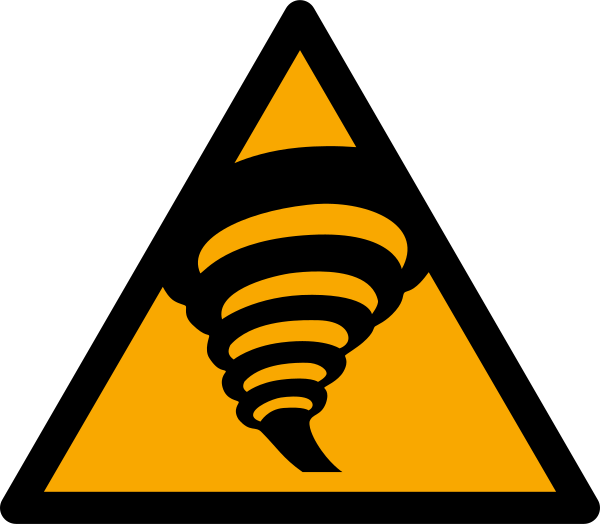
Tornado zone
Warns of a tornado hazard zone.
Understanding this sign
Yellow triangular signs draw attention to a hazard, such as electricity, moving machinery, or a hot surface.
A warning pictogram does not state the severity, safe distance, or protective measures. Read the accompanying instructions.
Meaning of the W074 Tornado Zone Sign
W074 warns that tornadoes can occur in the area where the sign stands. In the ISO 7010 register its function is to warn of potential tornadoes in the area, making it one of the natural-hazard zone symbols added to the standard by amendment as part of an international push — heavily influenced by Japanese disaster-signage standardization and the ISO 22578 lineage — to give communities a common pictographic language for disaster risk.
Like its siblings in this family, W074 describes a place, not a moment. It tells residents, workers, and visitors that violent rotating windstorms are part of the local hazard picture, so they should identify sturdy shelter in advance. When a tornado is actually forming or approaching, the operative warnings are outdoor sirens, broadcast alerts, and mobile emergency notifications; the sign exists so that those alerts find people who already know what to do.
Where Tornado Zone Signs Appear
Candidate locations follow climatology and exposure. Regions with recurrent tornado activity — the central United States, parts of eastern Asia including Japan's coastal plains, Bangladesh, northern Europe's convective corridors — combine with settings where people are outdoors or in weak structures: campgrounds, fairgrounds, sports fields, mobile home parks, and open industrial yards. Site operators and local governments post the symbol at entrances and gathering points in such settings.
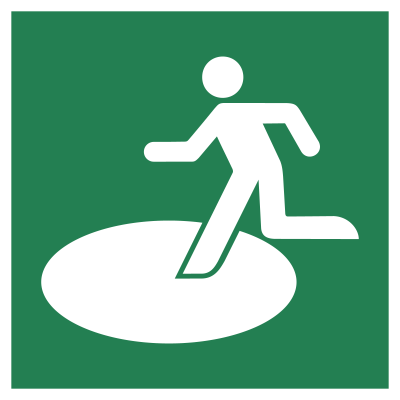
The sign is most useful where it can be paired with shelter wayfinding. A campground that displays W074 at check-in and then marks the route to a reinforced storm shelter, or to the E065 natural disaster refuge sign, gives visitors an actionable plan rather than bare anxiety. Facilities may also add supplementary text stating the local siren signal or the designated shelter building.
What to Do in a Marked Tornado Zone
The protective actions the sign implies are standard tornado guidance: on any severe-weather forecast, monitor official alerts; on a warning, move immediately to a basement, storm shelter, or small interior room on the lowest floor of a sturdy building, away from windows. Vehicles, tents, mobile homes, and open ground are the places the sign is implicitly telling you not to be caught in.
For site managers, W074 is also a planning prompt. Displaying it commits the operator to answering the obvious follow-up question of where people should shelter, so it belongs in an emergency plan together with shelter capacity, alerting arrangements, and staff responsibilities — not as a standalone gesture. Sites that host transient populations, such as festivals and seasonal campgrounds, benefit most, since their visitors have had no chance to absorb local severe-weather routines.
Where you will see W074
Campgrounds, fairgrounds, sports fields, mobile home parks, and open industrial yards in tornado-prone regions station it at entrances and gathering points, ideally paired with wayfinding to a reinforced storm shelter or an E065 refuge sign. Sites hosting transient populations, such as festivals and seasonal campgrounds, benefit most, and supplementary text can state the local siren signal.
Common questions about W074
What does the ISO 7010 W074 sign with a tornado symbol mean?
It means the location is in an area where tornadoes can occur. It is a permanent awareness sign identifying a hazard zone, not a signal that a tornado is currently approaching. Active tornado warnings come from sirens, broadcasts, and phone alerts; the sign prepares you to respond to those quickly.
Does seeing a W074 sign mean a tornado shelter is nearby?
Not automatically, but it should. Good practice is to pair the warning with directional signage to a designated shelter or refuge, such as the green E065 natural disaster refuge sign. If you see W074 at a campground or event site, ask staff where the shelter is before severe weather is forecast.
Where should tornado zone warning signs be installed?
At entrances and assembly points of outdoor and lightly built sites in tornado-prone regions — campgrounds, fairgrounds, sports facilities, mobile home communities, and open work yards. Placement decisions rest with municipalities and site operators based on local hazard history; ISO 7010 standardizes the symbol, not the posting requirements.
Reference details
| Symbol code | W074 |
|---|---|
| Sign family | ISO Warning Signs |
| Standard reference | ISO 7010:2019 / ISO 3864-1 ISO Online Browsing Platform: W074 |
| Screen color reference | #FFCC00. Screen colors are not a production color specification. |
| Download formats | SVG reference artwork; a 1024 × 1024 pixel PNG conversion on a white canvas. |
| Record date | · How to interpret our dates |
| Page updated |
Choosing a physical sign size
Download dimensions are not installation dimensions. Select sign size, material, placement, and lighting using the applicable standard and the actual viewing conditions. Chemical label sizing follows its own rules. Read the artwork and sizing guide.
Sources and artwork credits
- Artwork source
- Wikimedia Commons file page
- Creator credited by source
- Clemenspool
- License
- CC0
- Source metadata checked
SVG files are local reference copies. PNG files are raster conversions. Check the linked file history and license terms before reuse; a source-metadata check is not certification of the artwork or a workplace installation.
Report a correction to this reference