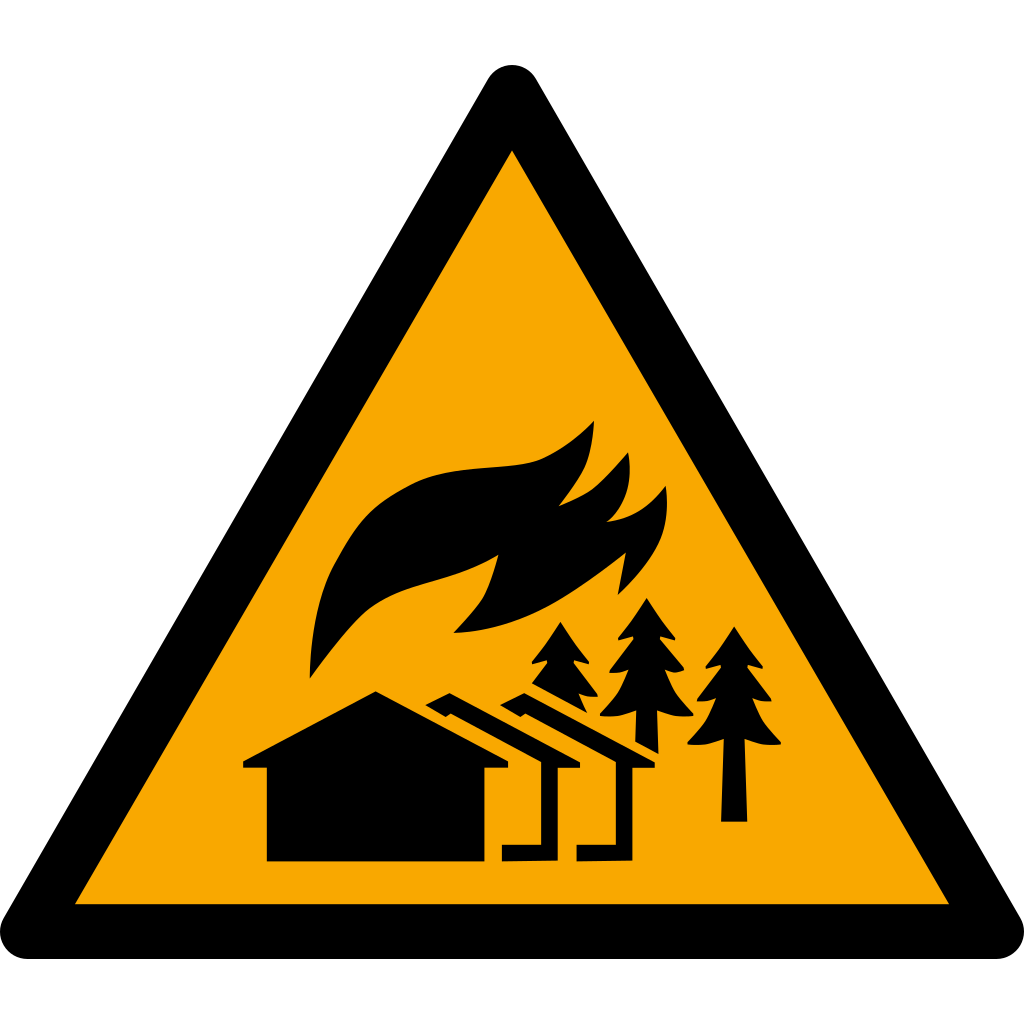
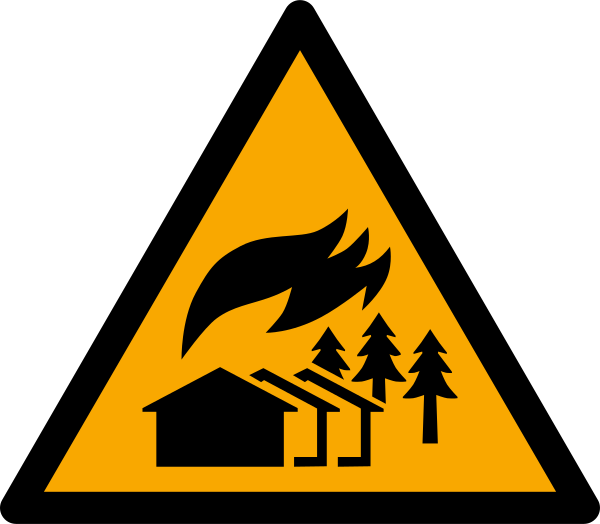
Large-scale fire zone
Warns of a zone exposed to large-scale fires.
Understanding this sign
Yellow triangular signs draw attention to a hazard, such as electricity, moving machinery, or a hot surface.
A warning pictogram does not state the severity, safe distance, or protective measures. Read the accompanying instructions.
What W073 Warns About
W073 marks a geographic zone where a large-scale fire — a wildfire, bushfire, or spreading urban conflagration — can occur. Its ISO 7010 register function is to warn of a large-scale fire zone, and it belongs to the family of natural-hazard zone signs added to ISO 7010 through amendments developed for disaster risk communication, work strongly shaped by Japanese standardization of tsunami and disaster signage and the ISO 22578 natural-disaster safety way guidance framework.
The sign communicates standing risk, not an active emergency. A person standing in front of W073 is being told that the terrain, vegetation, climate, or building density around them makes fast-spreading fire a credible scenario, and that they should know the escape routes before smoke is visible. Alerts about an actual fire in progress come from sirens, broadcast warnings, and emergency services, not from this sign.
Who Posts It and Where
W073 is a community risk-communication sign rather than a workplace sign. Typical posters are municipalities, forestry and national park administrations, and campground or trailhead operators in fire-prone regions — the wildland-urban interface, chaparral and eucalypt landscapes, pine plantations, and dense timber-built districts with a history of conflagration. Placement follows local fire hazard mapping: signs go at entrances to mapped high-risk areas, trailheads, scenic overlooks, and camping and picnic sites within them.
Because seasonal fire danger changes daily, W073 is often installed alongside a fire-danger rating board or seasonal restriction notices. The ISO symbol supplies the permanent, language-independent message that fire can sweep through this area; the adjacent boards carry the variable information such as current danger level, total fire bans, and campfire rules. Keeping the two roles separate lets the permanent symbol stay accurate year-round while the changeable elements are updated as conditions shift.
Pairing With Evacuation Signage
A hazard-zone warning is only half of the message. In the ISO scheme, W073 is meant to work together with green safe-condition signs that show people where to go, most notably E065, the natural disaster refuge sign that marks designated shelter areas for events such as major fires. Coastal communities use the same logic, pairing tsunami hazard warnings with the E062 and E063 evacuation signs.
Practically, this means an authority posting W073 should also waymark the routes out: refuge areas, assembly points, and directional arrows leading away from the mapped fire path. Visitors who cannot read the local language can then follow a complete pictographic chain from you are at risk here to safety is that way, which is the core purpose of this sign family.
Where you will see W073
Municipalities, forestry and national park administrations, and campground or trailhead operators in fire-prone regions post it at entrances to mapped high-risk areas, trailheads, scenic overlooks, and camping and picnic sites in the wildland-urban interface, chaparral, eucalypt, and pine plantation landscapes. It is commonly installed beside fire-danger rating boards and seasonal restriction notices, and paired with E065 refuge signs and waymarked routes so visitors can follow a complete pictographic chain to safety.
Common questions about W073
What does the ISO W073 large-scale fire zone sign mean?
It means you are inside an area where a large, fast-spreading fire such as a wildfire or urban conflagration is a recognized possibility. It is a pre-event awareness sign posted by local authorities and land managers, not an alert that a fire is currently burning. When you see it, note the marked escape routes and any refuge or assembly areas nearby.
Is W073 the same as the flammable material warning sign?
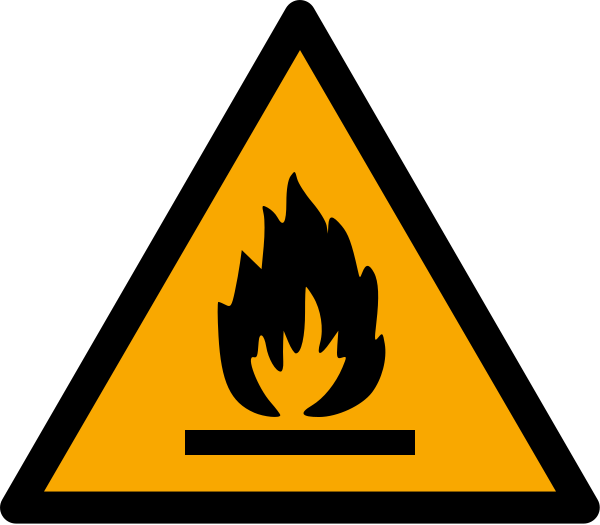
No. W021, the flame warning sign, marks flammable substances and materials in workplaces and storage areas. W073 marks a geographic zone — a landscape or district — where a large-scale fire can occur. One is about a material hazard at a specific point; the other is about area-wide disaster risk.
Who is responsible for posting large-scale fire zone signs?
Typically municipalities, forestry services, park authorities, and operators of campgrounds or recreation sites in mapped fire-risk areas. ISO 7010 defines the symbol itself but does not mandate posting; whether and where signs are required depends on local fire-management planning and land-use rules, which vary by country and region.
Should W073 be posted with other signs?
Yes, ideally. It works best alongside directional evacuation signage and the E065 natural disaster refuge sign so people know where to go, and it is commonly co-located with fire-danger rating boards and seasonal fire-ban notices that carry the day-to-day risk level the static symbol cannot express.
Reference details
| Symbol code | W073 |
|---|---|
| Sign family | ISO Warning Signs |
| Standard reference | ISO 7010:2019 / ISO 3864-1 ISO Online Browsing Platform: W073 |
| Screen color reference | #FFCC00. Screen colors are not a production color specification. |
| Download formats | SVG reference artwork; a 1024 × 1024 pixel PNG conversion on a white canvas. |
| Record date | · How to interpret our dates |
| Page updated |
Choosing a physical sign size
Download dimensions are not installation dimensions. Select sign size, material, placement, and lighting using the applicable standard and the actual viewing conditions. Chemical label sizing follows its own rules. Read the artwork and sizing guide.
Sources and artwork credits
- Artwork source
- Wikimedia Commons file page
- Creator credited by source
- Clemenspool
- License
- CC0
- Source metadata checked
SVG files are local reference copies. PNG files are raster conversions. Check the linked file history and license terms before reuse; a source-metadata check is not certification of the artwork or a workplace installation.
Report a correction to this reference