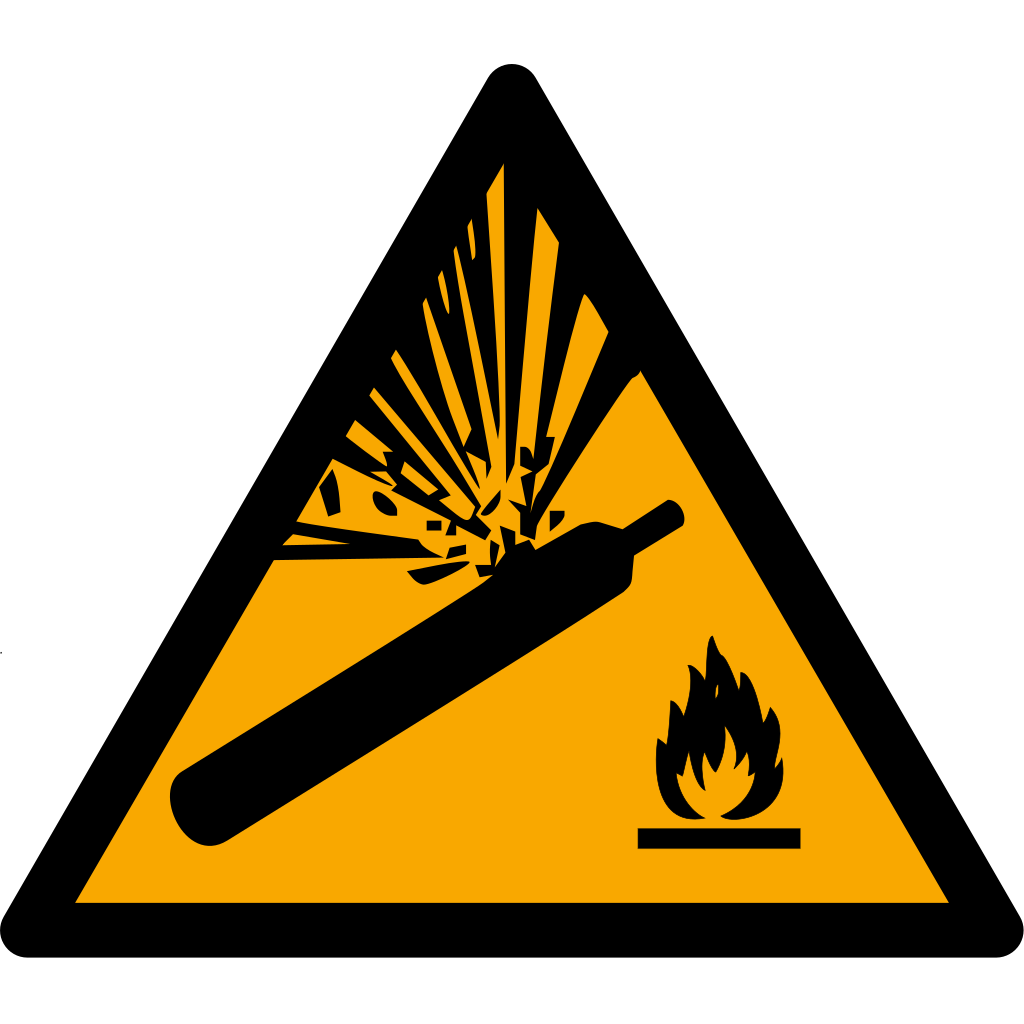
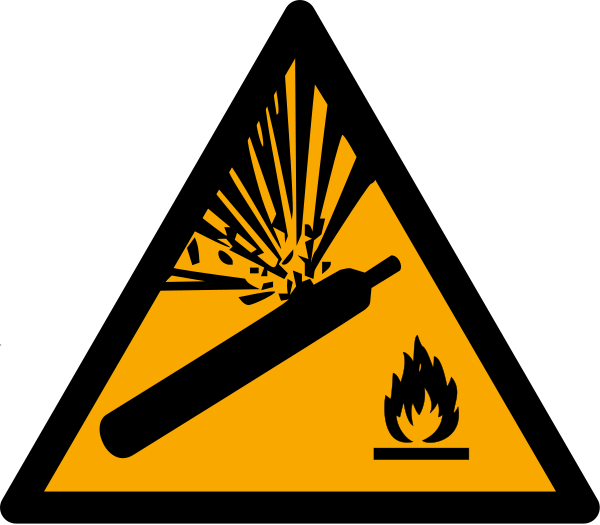
Pressurized cylinder
Warns of a pressurized cylinder.
Understanding this sign
Yellow triangular signs draw attention to a hazard, such as electricity, moving machinery, or a hot surface.
A warning pictogram does not state the severity, safe distance, or protective measures. Read the accompanying instructions.
What W029 Warns About
W029 flags the presence of pressurized cylinders — portable containers of gas at pressures that commonly reach 200 to 300 bar. The warning is about stored mechanical energy as much as the gas inside. A cylinder that falls and shears its valve becomes an unguided projectile; a damaged regulator or hose releases that energy uncontrolled. On top of the pressure itself, the contents may be flammable (acetylene, propane, hydrogen), oxidizing (oxygen), inert but asphyxiating in confined spaces (nitrogen, argon), or toxic — hazards communicated by additional signs and by the cylinder's own label.
Typical posting locations are cylinder storage cages and pads, welding bays, gas manifold and distribution rooms, laboratory gas cabinets, beverage CO2 stores, and vehicles transporting cylinders. The sign tells emergency responders something crucial too: cylinders exposed to fire can rupture violently, so knowing where they are stored shapes firefighting tactics, and pre-incident plans commonly record every location carrying this triangle.
Handling Rules the Sign Stands For
OSHA's compressed gas standard for general industry, 29 CFR 1910.101, points employers to Compressed Gas Association guidance — notably CGA pamphlet P-1 — for the handling, storage, and use of cylinders. The core disciplines are consistent everywhere: keep cylinders secured upright with chains or straps so they cannot be knocked over, keep valve protection caps on whenever a regulator is not fitted, move them on cylinder carts rather than by rolling or dragging, and keep them away from heat and hot work.
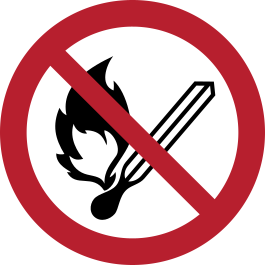
Segregation matters as much as securing. Full and empty cylinders are stored separately, and oxygen is kept apart from fuel gases — the widely applied CGA rule is 20 feet of separation or a half-hour fire-rated barrier. W029 at the cage entrance is the visual anchor for those rules, usually accompanied by content-specific warnings such as W021 or GHS-style flammable gas marking where fuel gases are present, and P003 banning ignition sources.
W029 Versus the GHS04 Pictogram
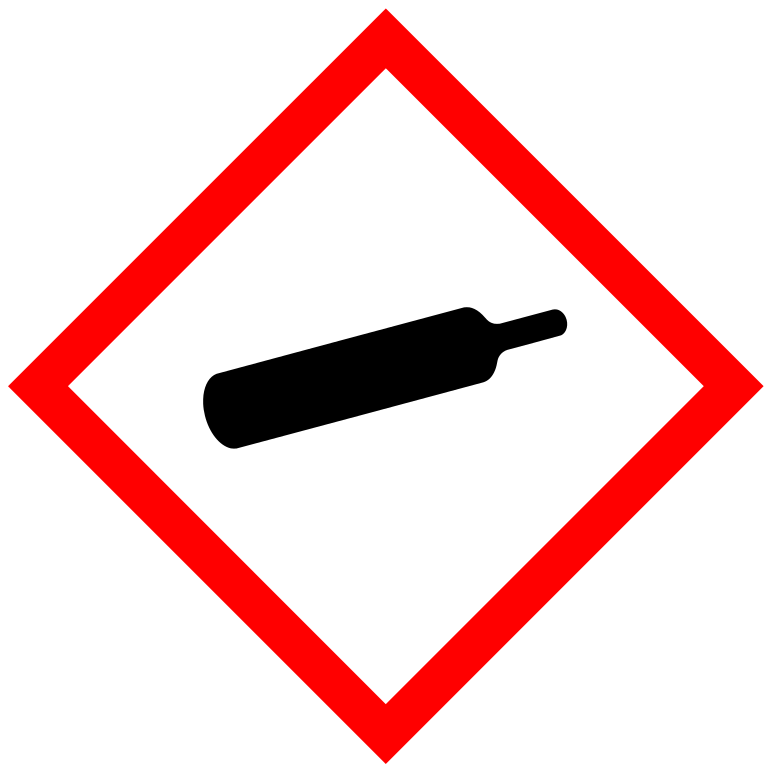
W029 and the GHS04 gas cylinder pictogram look superficially similar and are constantly confused. GHS04 is a hazard-communication label element: a black cylinder in a red diamond printed on the container and its safety data sheet, telling you the product is a gas under pressure. W029 is a workplace warning sign under ISO 7010: a yellow triangle posted on doors, cages, and walls, telling people entering an area that pressurized cylinders are present there.
The two systems answer different questions — what is in this container versus what is in this room — and one never replaces the other. A nitrogen cylinder correctly bearing GHS04 still needs W029 (and often an asphyxiation warning) on the storage room door, because the person opening the door cannot see the label yet. Auditors checking signage should verify both layers independently.
Placement and Companion Signs
Post W029 at every entrance to cylinder stores and on the outside of gas cabinets and manifold enclosures, sized for the approach distance rather than tucked at cylinder height behind the cylinders themselves. Outdoor cages need the sign on each accessible face. Where cylinders are connected in service — welding sets, laboratory bench feeds — a smaller W029 at the point of use reminds workers that the hose runs back to high-pressure storage.
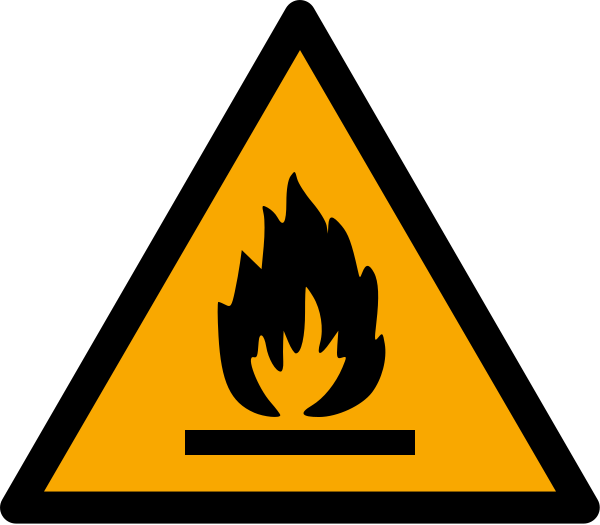
Frequent companions include P003 for ignition control near fuel gases and oxygen, W021 or a flammable gas notice for the specific contents, load-securing instructions inside the cage, and in windowless or below-grade gas rooms a warning about oxygen-deficient atmospheres from inert gas leaks. Emergency contact details for the gas supplier posted at the store speed up response to a leaking or damaged cylinder.
Where you will see W029
Cylinder storage cages and pads, welding bays, gas manifold rooms, laboratory gas cabinets, and beverage CO2 stores all carry the sign at every entrance and accessible face. It frequently appears beside P003 ignition bans near fuel gases and oxygen, and in windowless or below-grade gas rooms with warnings about oxygen-deficient atmospheres from inert gas leaks.
Common questions about W029
What does the W029 pressurized cylinder sign mean?
It warns that compressed gas cylinders are present or stored in the area. The immediate risks are violent energy release if a cylinder or valve is damaged, cylinders toppling, and rupture in fire — plus whatever the gas itself does, from feeding a fire to silently displacing oxygen. Cylinders in the area must stay secured upright with caps fitted when not in use.
What is the difference between W029 and the GHS04 gas cylinder symbol?
GHS04 is a red-diamond pictogram on the product label and safety data sheet identifying a gas under pressure. W029 is a yellow ISO 7010 warning triangle posted in the workplace to mark areas where such cylinders are kept or used. Container labeling and area signage are separate obligations, and a compliant site normally shows both.
How should compressed gas cylinders be stored under OSHA rules?
OSHA 1910.101 adopts Compressed Gas Association guidance: cylinders secured upright against falling, valve caps in place when regulators are removed, storage away from heat and ignition sources, and oxygen separated from fuel-gas cylinders — commonly by 20 feet or a fire-rated barrier. The W029 sign marks the designated storage location where these rules apply.
Why do inert gas cylinders like nitrogen or argon need warning signs?
Because a leak in an enclosed room can displace enough oxygen to cause unconsciousness without any smell or warning. W029 on the door alerts entrants that pressurized gas is inside; many sites add an explicit asphyxiant warning and ventilation or oxygen monitoring for below-grade or poorly ventilated gas stores.
Reference details
| Symbol code | W029 |
|---|---|
| Sign family | ISO Warning Signs |
| Standard reference | ISO 7010:2019 / ISO 3864-1 ISO Online Browsing Platform: W029 |
| Screen color reference | #FFCC00. Screen colors are not a production color specification. |
| Download formats | SVG reference artwork; a 1024 × 1024 pixel PNG conversion on a white canvas. |
| Record date | · How to interpret our dates |
| Page updated |
Choosing a physical sign size
Download dimensions are not installation dimensions. Select sign size, material, placement, and lighting using the applicable standard and the actual viewing conditions. Chemical label sizing follows its own rules. Read the artwork and sizing guide.
Sources and artwork credits
- Artwork source
- Wikimedia Commons file page
- Creator credited by source
- MaxxL
- License
- Public domain
- Source metadata checked
SVG files are local reference copies. PNG files are raster conversions. Check the linked file history and license terms before reuse; a source-metadata check is not certification of the artwork or a workplace installation.
Report a correction to this reference