Oxidizing substance
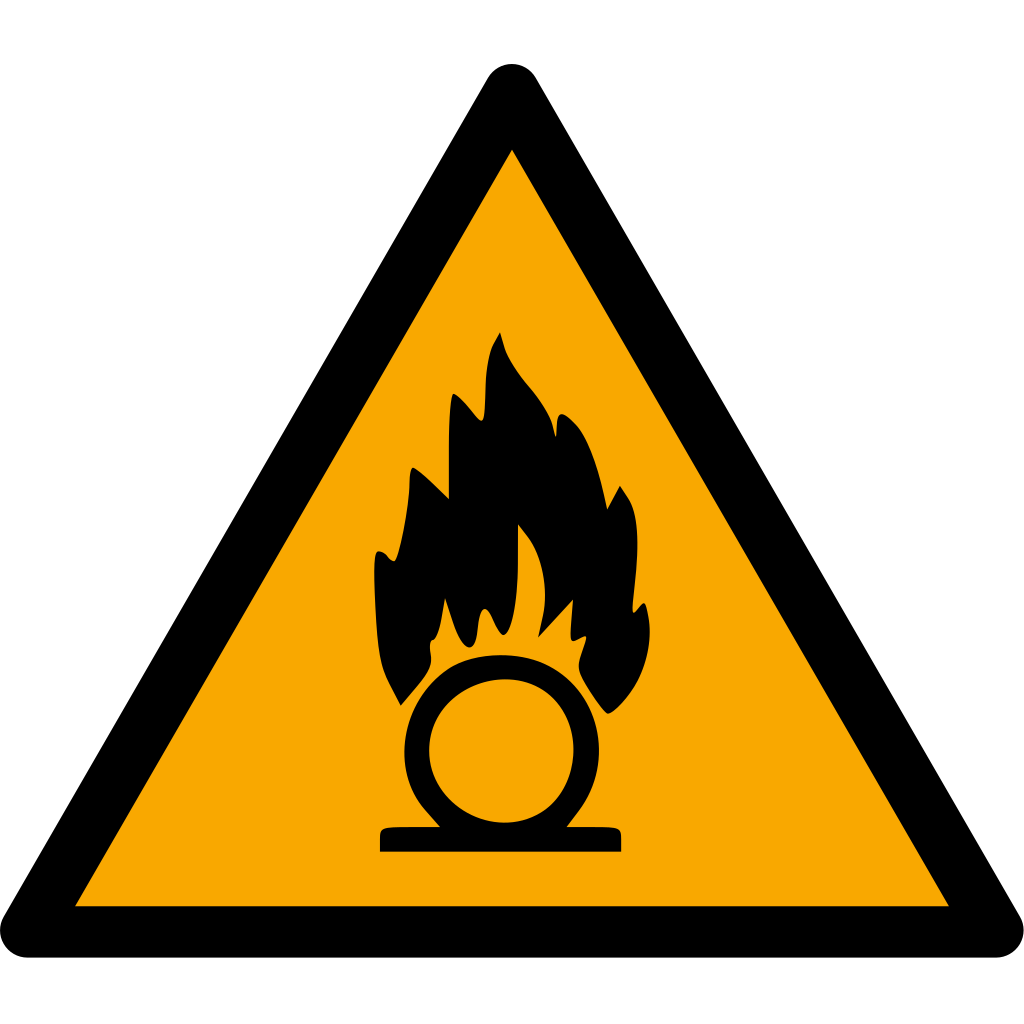
Warns of an oxidizing substance.
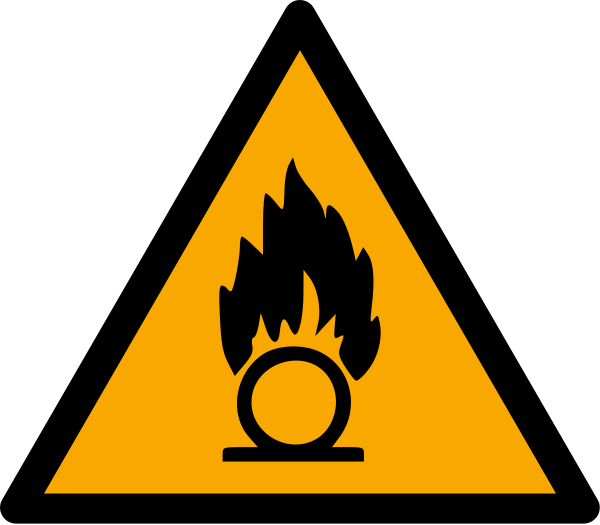
Understanding this sign
Yellow triangular signs draw attention to a hazard, such as electricity, moving machinery, or a hot surface.
A warning pictogram does not state the severity, safe distance, or protective measures. Read the accompanying instructions.
Why Oxidizers Get Their Own Triangle
W028 warns that an oxidizing substance is present. Oxidizers are not necessarily flammable themselves; their danger is that they feed fire. By releasing oxygen or acting as aggressive electron acceptors, they make ordinary combustibles ignite more easily, burn hotter and faster, and keep burning where a normal fire would starve. The pictogram — a flame over a circle inside the yellow triangle — captures the idea of a fire intensified by its oxygen source.
Common industrial oxidizers include hydrogen peroxide, ammonium nitrate fertilizers, calcium and sodium hypochlorite pool and sanitation chemicals, potassium permanganate, nitric acid, perchlorates, and compressed or liquid oxygen. Incidents involving these materials escalate abruptly: a small fire reaching an oxidizer store stops being small, and some oxidizers react violently on simple contact with oils, greases, or organic packaging without any external ignition at all.
Area Sign Versus GHS03 Label
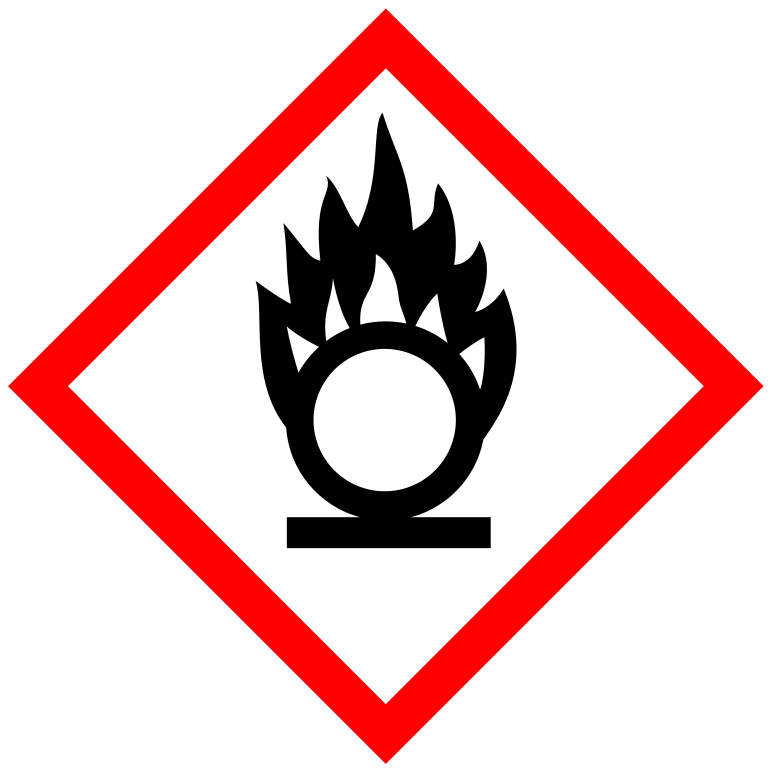
W028 and the GHS03 pictogram share the flame-over-circle motif but operate at different levels. GHS03, the symbol in a red-bordered diamond, is applied to containers, packaging, and safety data sheets under the Globally Harmonized System (implemented as CLP in the EU and HazCom 2012 in the US); it travels with the product. W028 is fixed workplace signage under ISO 7010: it marks the room, cage, or storage bay so that everyone approaching — including firefighters — knows what class of material is behind the door.
Both are usually needed. A drum of 35% hydrogen peroxide carries GHS03 on its label from the supplier; the chemical store holding a pallet of those drums displays W028 at the entrance. The area sign matters most in an emergency, when responders decide tactics from outside: water application, exclusion distances, and the decision to withdraw all change when oxidizers are involved.
Segregation Is the Real Control
Signage flags the hazard; storage practice controls it. The cardinal rule for oxidizers is segregation from combustibles and incompatibles: keep them away from flammable liquids, fuels, solvents, wooden pallets, cardboard, oils and greases, and reducing agents, using distance, fire-rated partitions, or separate buildings. Many oxidizers also have specific incompatibilities — hypochlorites with acids generate chlorine gas, and ammonium nitrate contaminated with hydrocarbons becomes far more dangerous — so segregation plans must be substance-specific.
Housekeeping carries unusual weight in oxidizer stores. Spilled granules ground into wooden floors, oxidizer dust on cardboard, or peroxide-soaked rags have all started fires that needed no spark. Stores should use non-combustible construction and shelving, keep packaging waste out, and clean spills immediately with compatible materials. Oxygen systems deserve a special mention: fittings and gauges in oxygen service must be kept oil- and grease-free, since hydrocarbons can ignite spontaneously in oxygen-enriched conditions.
Where and How to Post W028
Typical placements are chemical warehouse bays and cages holding oxidizing products, water treatment chemical rooms storing hypochlorite or permanganate, pool plant rooms, agricultural fertilizer stores, bleach and peroxide handling areas in pulp, textile, and food plants, electroplating and etching lines using nitric or chromic acid, and bulk oxygen installations. Post the sign at each entrance and on the storage enclosure itself, sized to be legible before a person or a fuel source gets close.
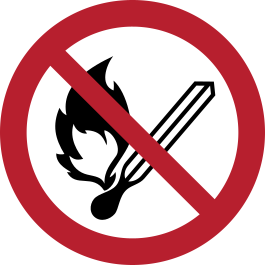
Complementary signage completes the message. P003 (no open flame, no smoking) at the same entrance converts the warning into a rule, and many sites add supplementary text such as "oxidizing substances — keep away from combustible material" so the required behavior is explicit. In EU workplaces, Directive 92/58/EEC's warning sign for oxidizing material corresponds to this design, making W028 the compliant choice across member states.
Where you will see W028
Chemical warehouse bays holding oxidizing products, water treatment rooms storing hypochlorite or permanganate, pool plant rooms, and agricultural fertilizer stores display W028 at each entrance and on the storage enclosure. Bleach and peroxide handling areas in pulp, textile, and food plants, electroplating lines using nitric acid, and bulk oxygen installations also post it, usually alongside P003 no-open-flame signage.
Common questions about W028
What does the flame over a circle symbol mean?
It identifies an oxidizing hazard — a substance that releases oxygen or otherwise intensifies fire in other materials. In a yellow triangle it is ISO 7010 W028, a workplace area sign. In a red diamond it is GHS03, the label pictogram on containers of oxidizing gases, liquids, and solids. Same motif, different jobs: the triangle marks the place, the diamond marks the product.
Are oxidizing substances flammable?
Mostly no, and that is the trap. An oxidizer like hydrogen peroxide or calcium hypochlorite will not necessarily burn on its own, but it makes everything around it burn more readily and more fiercely, and some oxidizers ignite combustibles on contact — grease on an oxygen fitting, or organic material mixed into ammonium nitrate. The hazard is fire promotion, which is why the controls center on keeping fuels away rather than on the oxidizer alone.
What must oxidizers be stored away from?
Combustible and organic materials above all: flammable liquids and gases, fuels, solvents, oils and greases, paper, cardboard, and wooden pallets. Also reducing agents and substance-specific incompatibles — hypochlorites must be kept from acids, which liberate chlorine gas, and peroxides from contamination generally. Use physical separation, fire-rated walls, or dedicated buildings, with non-combustible shelving and strict spill housekeeping inside the store.
Do I need a W028 sign if the containers already have GHS03 labels?
In most workplaces, yes. Container labels are only visible up close and do nothing for someone deciding whether to bring a fuel source, hot work, or a forklift-load of cardboard into the room. Area signage warns at the doorway and informs emergency responders from outside. In the EU, workplace signage rules under Directive 92/58/EEC expect stores of hazardous substances to be marked with the relevant warning sign, independent of labeling.
Reference details
| Symbol code | W028 |
|---|---|
| Sign family | ISO Warning Signs |
| Standard reference | ISO 7010:2019 / ISO 3864-1 ISO Online Browsing Platform: W028 |
| Screen color reference | #FFCC00. Screen colors are not a production color specification. |
| Download formats | SVG reference artwork; a 1024 × 1024 pixel PNG conversion on a white canvas. |
| Record date | · How to interpret our dates |
| Page updated |
Choosing a physical sign size
Download dimensions are not installation dimensions. Select sign size, material, placement, and lighting using the applicable standard and the actual viewing conditions. Chemical label sizing follows its own rules. Read the artwork and sizing guide.
Sources and artwork credits
- Artwork source
- Wikimedia Commons file page
- Creator credited by source
- MaxxL
- License
- Public domain
- Source metadata checked
SVG files are local reference copies. PNG files are raster conversions. Check the linked file history and license terms before reuse; a source-metadata check is not certification of the artwork or a workplace installation.
Report a correction to this reference