Optical radiation
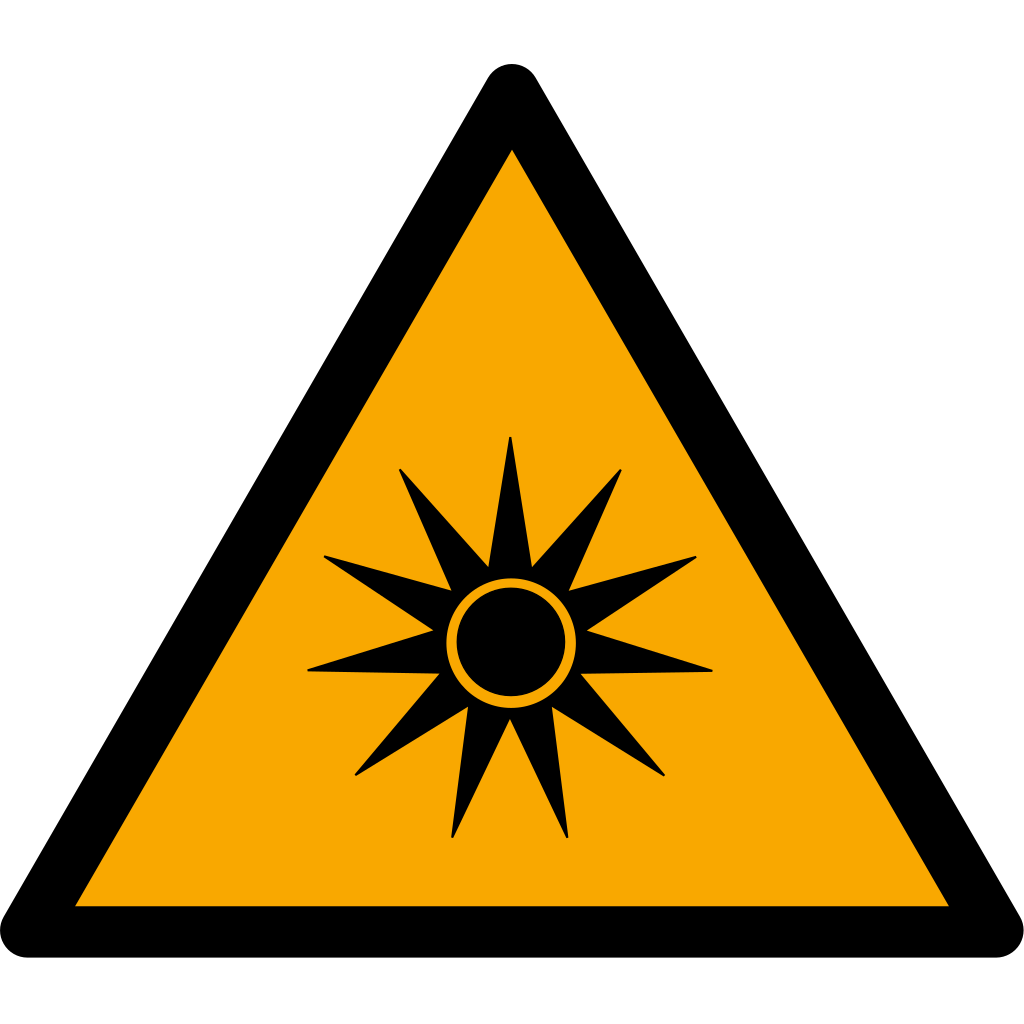
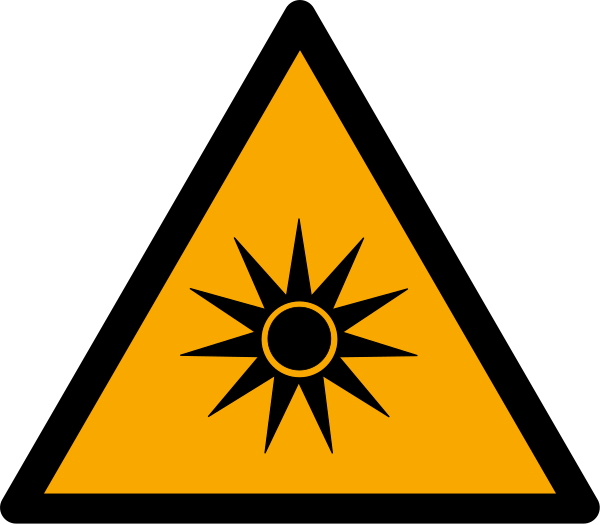
Warns of optical radiation.
Understanding this sign
Yellow triangular signs draw attention to a hazard, such as electricity, moving machinery, or a hot surface.
A warning pictogram does not state the severity, safe distance, or protective measures. Read the accompanying instructions.
The Hazard Behind W027
W027 warns of optical radiation — intense ultraviolet, visible, or infrared light from non-laser sources. The pictogram shows a radiating light symbol in the yellow warning triangle. Sources strong enough to warrant the sign include welding and plasma arcs, UV curing lamps in printing and coatings, germicidal UVC fixtures, arc lamps and solar simulators in laboratories, and furnaces, molten metal, and glassworking equipment that emit hazardous levels of infrared.
The injuries are to the eye and skin, and they vary by wavelength. Ultraviolet causes photokeratitis — the painful "arc eye" or "welder's flash" familiar to anyone who glanced at an unshielded arc — plus skin erythema and, with chronic exposure, cataract and skin cancer risk. Intense blue light can damage the retina photochemically, while infrared heats the cornea, lens, and retina. Because UV and much IR are invisible, workers get no glare or discomfort cue proportional to the dose, which is exactly why a posted warning matters.
W027 Versus W004: Broadband Light Versus Lasers
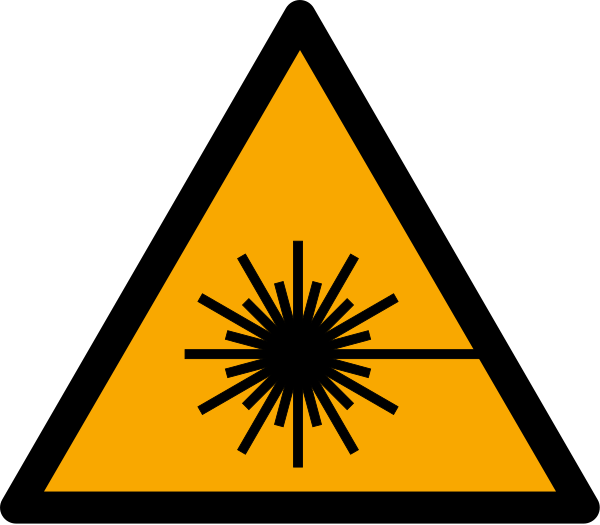
ISO 7010 splits light hazards between two triangles. W004, the starburst laser symbol, covers coherent laser beams, where the danger is a narrow beam that can focus onto a retinal spot even at long range. W027 covers everything else: incoherent, broadband emission that spreads from arcs, lamps, and hot bodies and endangers anyone within line of sight or close range rather than anyone in a beam path.
The distinction drives different controls. Laser areas rely on beam enclosure, interlocks, and wavelength-specific eyewear matched to the laser line. Optical radiation areas rely on distance, screens and curtains, shade-rated filters, and covering exposed skin. A UV curing tunnel, a welding bay, and a germicidal lamp room all take W027; a laser marking station or laser lab takes W004. Posting the laser triangle on a welding screen is a common but incorrect substitution.
Exposure Limits and EU Requirements
In the European Union, artificial optical radiation is a regulated physical agent. Directive 2006/25/EC sets exposure limit values for non-coherent radiation drawn from ICNIRP guidelines, and obliges employers to assess exposure, reduce it where limits could be exceeded, provide health surveillance, and mark and restrict access to areas where limits could be breached — which is where W027 signage becomes a legal expectation rather than good practice. Member states transposed the directive into national law, such as the Control of Artificial Optical Radiation at Work Regulations in the UK.
The United States has no single OSHA standard dedicated to broadband optical radiation, but the duty appears piecemeal: welding operations require shaded filter lenses and screening under 29 CFR 1910.252 and the eye protection rules, and the ACGIH publishes threshold limit values that industrial hygienists use for lamps and arcs. In either regime the assessment logic is the same — characterize the source, compare against limits, then engineer, shield, and sign the residual risk.
Practical Signage Decisions
Post W027 at entrances to welding bays and around welding screens, on UV curing and exposure equipment, at germicidal UVC installations in healthcare and food plants, on solar simulator and photostability chambers, and near furnace peepholes and molten metal operations. Germicidal fixtures deserve particular care: upper-room and in-duct UVC can expose maintenance staff who open enclosures, so the sign belongs on access panels and lamp housings, backed by lockout procedures before relamping.
The sign works best paired with mandatory action signs that state the control: M004 (wear eye protection) with the correct shade or filter specification, and where skin exposure is significant, gloves and covering clothing. Add supplementary text naming the source type — UV, IR, or intense visible light — because the protective response differs, and a bare triangle cannot tell a contractor whether they need a welding shade 10 filter or UV-blocking face protection.
Where you will see W027
Post this triangle at entrances to welding bays and around welding screens, on UV curing and exposure equipment in printing and coatings plants, at germicidal UVC installations in healthcare and food facilities, on solar simulators and photostability chambers, and near furnace peepholes and molten metal operations. It commonly pairs with M004 eye-protection signs specifying the correct filter shade, since UV and much infrared radiation are invisible to those exposed.
Common questions about W027
What is the difference between the W027 optical radiation sign and the W004 laser sign?
W004 is specifically for lasers — coherent beams that stay concentrated over distance and can injure the retina from far away. W027 covers intense non-laser light: welding arcs, UV curing and germicidal lamps, arc lamps, and strong infrared from furnaces or molten metal. Use W004 only where a laser is the source; every other hazardous UV, visible, or IR emitter takes W027.
Do welding areas need an optical radiation warning sign?
It is strongly advisable and, in the EU, often effectively required. Arc welding emits intense UV that causes arc eye in bystanders, so bays should be screened and marked so passers-by do not look at the arc. Under Directive 2006/25/EC, areas where exposure limits could be exceeded must be signed and access-restricted, and W027 is the appropriate ISO symbol. In the US, OSHA's welding rules require screening and shaded eye protection even though no specific sign is mandated.
Is UV from germicidal UVC lamps dangerous enough to need signage?
Yes. Germicidal UVC causes photokeratitis and skin burns at surprisingly short exposures, and because it is invisible, victims only notice hours later. Rooms with open UVC disinfection cycles, upper-room fixtures, and in-duct lamps should carry W027 on entry doors and access panels, with interlocks or procedures ensuring lamps are off before people enter or open the enclosure.
What does EU Directive 2006/25/EC require employers to do about optical radiation?
It requires employers to assess worker exposure to artificial optical radiation against exposure limit values based on ICNIRP guidance, eliminate or reduce exposures that could exceed those limits, demarcate and sign affected areas, restrict access, provide appropriate PPE and information, and offer health surveillance. Warning signage such as W027 at marked areas is part of the demarcation duty, not the whole compliance picture.
Reference details
| Symbol code | W027 |
|---|---|
| Sign family | ISO Warning Signs |
| Standard reference | ISO 7010:2019 / ISO 3864-1 ISO Online Browsing Platform: W027 |
| Screen color reference | #FFCC00. Screen colors are not a production color specification. |
| Download formats | SVG reference artwork; a 1024 × 1024 pixel PNG conversion on a white canvas. |
| Record date | · How to interpret our dates |
| Page updated |
Choosing a physical sign size
Download dimensions are not installation dimensions. Select sign size, material, placement, and lighting using the applicable standard and the actual viewing conditions. Chemical label sizing follows its own rules. Read the artwork and sizing guide.
Sources and artwork credits
- Artwork source
- Wikimedia Commons file page
- Creator credited by source
- MaxxL
- License
- Public domain
- Source metadata checked
SVG files are local reference copies. PNG files are raster conversions. Check the linked file history and license terms before reuse; a source-metadata check is not certification of the artwork or a workplace installation.
Report a correction to this reference