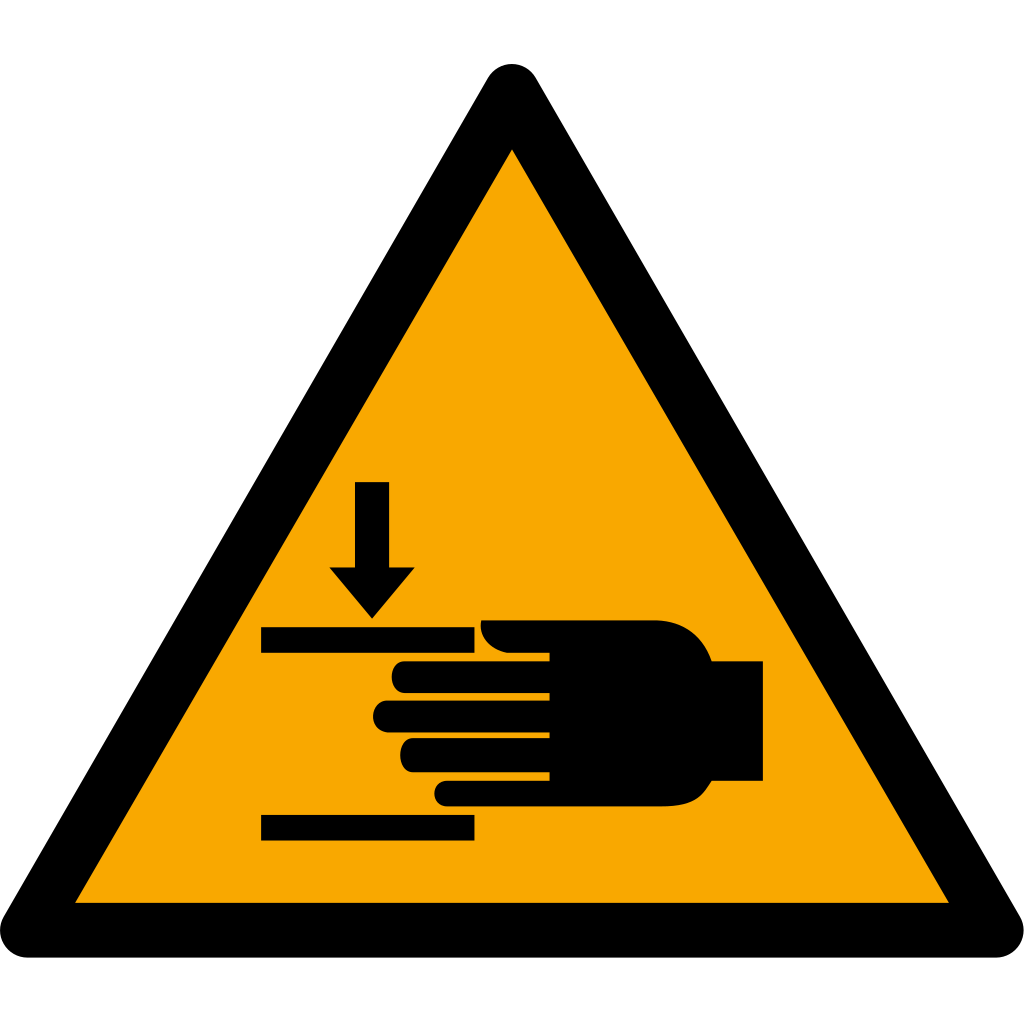
Crushing of hands
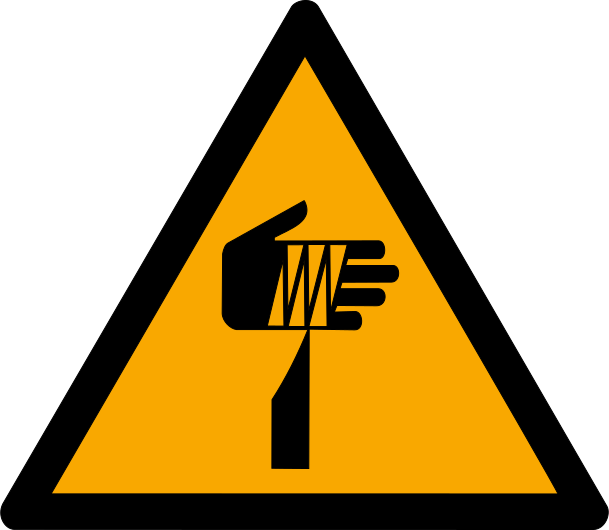
Warns of a hand-crushing hazard.
Understanding this sign
Yellow triangular signs draw attention to a hazard, such as electricity, moving machinery, or a hot surface.
A warning pictogram does not state the severity, safe distance, or protective measures. Read the accompanying instructions.
A Warning Aimed at Hands
The ISO 7010 register describes W024 as warning of a closing motion of mechanical parts of equipment, and the pictogram makes the injury explicit: a hand caught between two surfaces coming together. It is the standard triangle for point-of-operation pinch hazards — press brakes and stamping presses, injection-molding clamp units, pneumatic cylinders and grippers, vise and chuck jaws, powered doors and gates, tailgate lifts, and hinged guards heavy enough to trap fingers.
Hands dominate machinery injury statistics because they are what workers put into machines: feeding stock, clearing jams, adjusting fixtures. W024 is therefore usually mounted directly at the closing point or on the guard covering it, at the exact spot where a hand would enter, rather than at area entrances. Its message is immediate and local: do not put your hand here while the machine can close.
What OSHA Expects Instead of a Sticker
The general machine guarding rule at 29 CFR 1910.212 requires the point of operation to be guarded so the operator cannot have any part of the body in the danger zone during the operating cycle; mechanical power presses face the more detailed requirements of 1910.217. Compliance comes from fixed guards, interlocks, two-hand controls, light curtains, or feeding tools — a W024 decal on an open pinch point is evidence of a recognized hazard, not a control for it.
In the ISO 12100 scheme the same conclusion follows: closing motions should first be designed out (limited closing force, gaps too small to admit fingers), then guarded, with signage as residual-risk information. W024 shipped on a machine typically marks places guarding cannot fully cover, such as tool areas exposed during setup and die change, where safe working depends on procedure rather than a barrier.
Placement Practice and Pairings
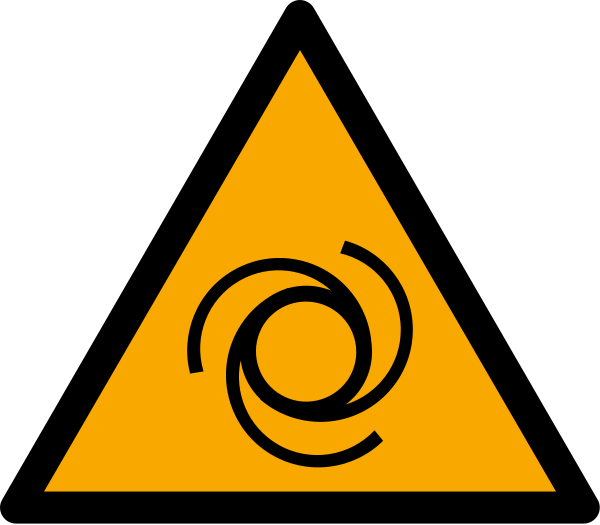
Apply W024 on or immediately beside the closing zone: press bolster edges, mold clamp windows, gripper stations on assembly lines, the leading edge of powered doors, bin-lifter and compactor loading points, and hinge lines of heavy hatches. On automated equipment that can cycle without an operator command, combine it with W018 so the viewer understands both what will happen and that it can happen without warning.
Frequent companions are the two-hand-control station itself (an engineering measure, not a sign), lockout instructions for jam clearing, and sometimes P010 (do not touch) where any contact is forbidden. Gloves are a poor answer to pinch points — a glove can be caught and drag the hand in — so unlike W022 laceration hazards, W024 is generally not paired with the M009 gloves mandate at the closing point itself.
Choosing Among the Crush and Entanglement Triangles
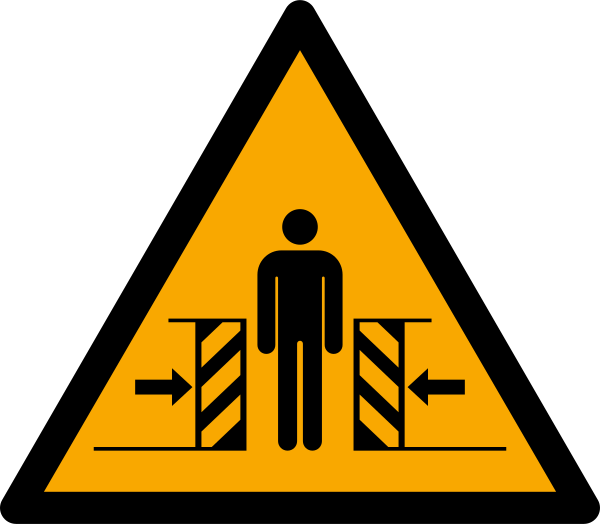
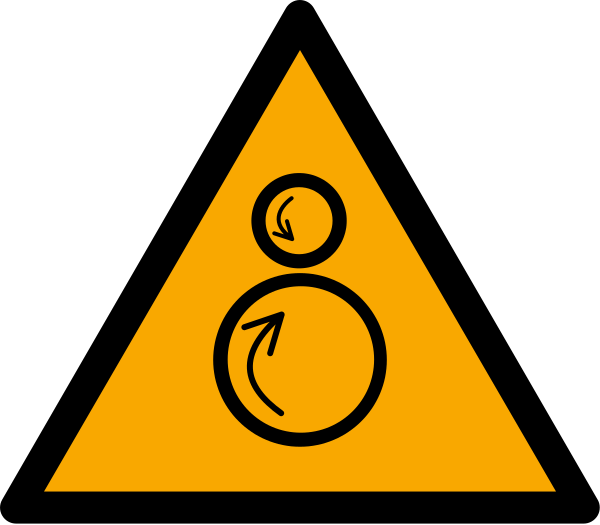
Use W024 when parts close against each other and the credible injury is to fingers or hands. Use W019 when a body or limb can be pinned by larger moving masses such as platforms, vehicles, or gates a person can be caught behind. Use W025 when the mechanism is a pair of inward-turning rollers that draw the hand in rather than closing on it — the injury dynamics and the safe responses differ.
This specificity is what makes ISO 7010 machinery labeling effective. A general W001 exclamation triangle on a press tells the operator nothing actionable; a hand-crush pictogram at the die space is understood in any language in the second before a hand moves. Machine builders should keep the specific symbol even when adding text panels for ANSI Z535-style North American labels.
Where you will see W024
Press brakes and stamping presses, injection-molding clamp units, pneumatic cylinders and grippers, vise and chuck jaws, powered doors and gates, tailgate lifts, and heavy hinged guards all carry this label. It is mounted directly at the closing point or on the guard covering it — press bolster edges, mold clamp windows, gripper stations on assembly lines, compactor loading points — rather than at area entrances, often alongside lockout instructions for jam clearing.
Common questions about W024
What does the W024 hand crushing sign mean?
It warns that mechanical parts at this point close together and can crush fingers or hands — a press, clamp, gripper, powered door, or similar mechanism. Keep hands clear while the equipment is able to cycle, and isolate energy before reaching in to clear jams or make adjustments.
Can I use a W024 sign instead of guarding a pinch point?
No. OSHA 1910.212 requires point-of-operation hazards to be physically guarded so hands cannot be in the danger zone during the cycle. The sign marks residual risk that remains after guarding — for example during setup or die change — and reminds workers of it; it cannot substitute for guards, interlocks, two-hand controls, or light curtains.
What is the difference between W024 and W019?
W024 depicts a hand caught in a closing motion and is used at point-of-operation pinch hazards such as presses and clamps. W019 depicts a whole person being crushed and is used where larger moving masses — lift platforms, transfer vehicles, closing gates — can pin the body. Pick the sign matching the realistic injury at that location.
Do gloves protect against hand crushing hazards marked with W024?
Generally not, and near moving closing parts gloves can make things worse by snagging and pulling the hand into the mechanism. The correct protections are guarding, safe distance, tools for feeding and jam clearing, and energy isolation during servicing. Cut-resistant gloves address sharp edges, which is the separate W022 hazard.
Reference details
| Symbol code | W024 |
|---|---|
| Sign family | ISO Warning Signs |
| Standard reference | ISO 7010:2019 / ISO 3864-1 ISO Online Browsing Platform: W024 |
| Screen color reference | #FFCC00. Screen colors are not a production color specification. |
| Download formats | SVG reference artwork; a 1024 × 1024 pixel PNG conversion on a white canvas. |
| Record date | · How to interpret our dates |
| Page updated |
Choosing a physical sign size
Download dimensions are not installation dimensions. Select sign size, material, placement, and lighting using the applicable standard and the actual viewing conditions. Chemical label sizing follows its own rules. Read the artwork and sizing guide.
Sources and artwork credits
- Artwork source
- Wikimedia Commons file page
- Creator credited by source
- MaxxL
- License
- Public domain
- Source metadata checked
SVG files are local reference copies. PNG files are raster conversions. Check the linked file history and license terms before reuse; a source-metadata check is not certification of the artwork or a workplace installation.
Report a correction to this reference