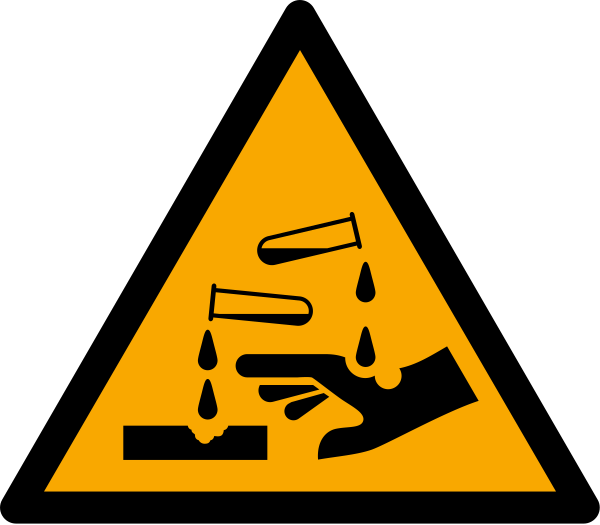
Corrosive substance
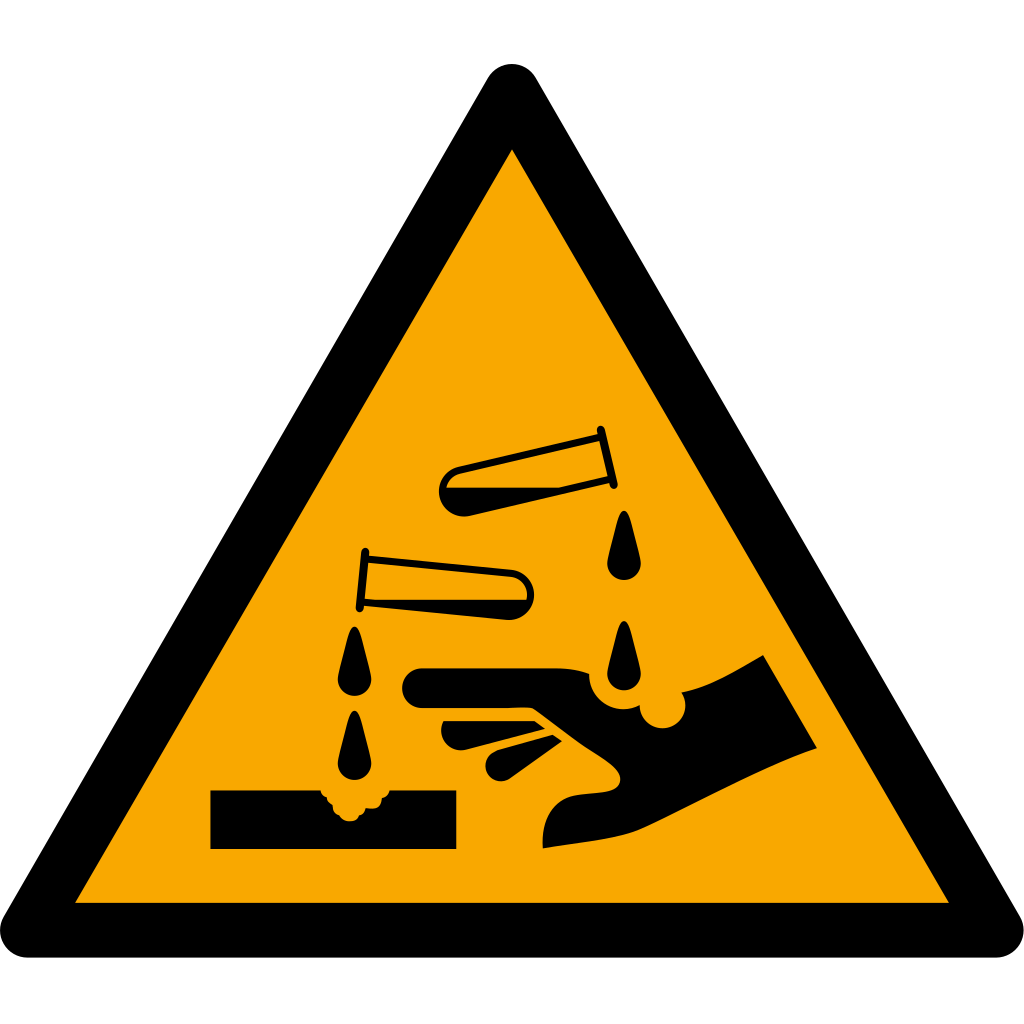
Warns of a corrosive substance.
Understanding this sign
Yellow triangular signs draw attention to a hazard, such as electricity, moving machinery, or a hot surface.
A warning pictogram does not state the severity, safe distance, or protective measures. Read the accompanying instructions.
How to Read the Corrosive Warning
W023 shows liquid dripping from a test tube onto a hand and a surface, both being eaten away — a literal depiction of what strong acids and alkalis do on contact. Inside the yellow ISO 3864-1 triangle, it warns that a substance nearby can destroy skin and eye tissue in seconds to minutes and can attack metals and other materials. Typical subjects are sulfuric, hydrochloric, and nitric acids, sodium and potassium hydroxide, hydrofluoric acid, and concentrated cleaning and process chemicals.
Two properties make corrosives distinctive among chemical hazards and shape how the sign is used. First, injury is immediate and local: the eye is the most vulnerable target, and damage begins on contact rather than after absorption. Second, alkalis are frequently underestimated — caustics penetrate tissue progressively and often cause worse eye injuries than acids. W023 marks the places where a splash, leak, or pressurized release could reach a person.
Sign on the Wall, GHS05 on the Container
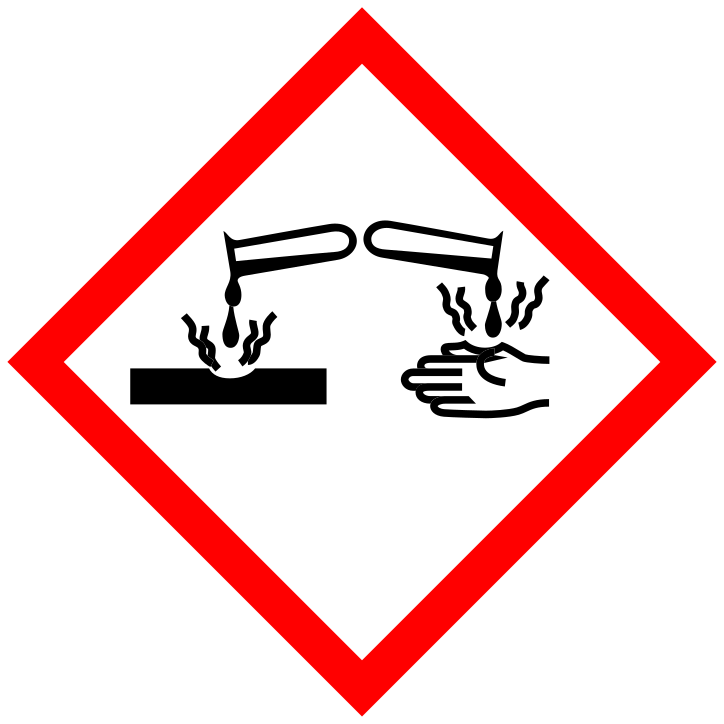
The corrosion image also exists as GHS05, the red-diamond pictogram required on container labels for substances classified as corrosive to skin, serious eye damage category 1, or corrosive to metals under GHS-aligned regulations — OSHA's Hazard Communication Standard in the U.S. and the CLP Regulation in the EU. GHS05 is bound to the product and its classification; W023 is bound to the location and the risk assessment, marking rooms, dosing stations, tanks, and pipe runs.
One divergence is worth knowing: a product can carry GHS05 purely because it corrodes metals while being only mildly hazardous to skin. Area signage should reflect the human risk, so the decision to post W023 comes from asking whether a person at that location could suffer chemical burns — not from mechanically copying whatever diamond appears on the label of the nearest drum.
Priority Locations and What to Post Alongside
Battery charging and battery storage rooms (sulfuric acid electrolyte), electroplating and pickling lines, clean-in-place chemical dosing stations in food and beverage plants, water and wastewater treatment chemical rooms, laboratory acid cabinets, tanker unloading points, and drum decanting areas are the classic W023 sites. Pipework carrying corrosives through areas where people work merits marking at valves, sample points, and flanged joints — the locations where releases actually happen.
W023 rarely stands alone. It normally appears with the mandatory PPE signs that state the protective response — M004 (eye protection), M009 (protective gloves), and M013 (face shield) where splash potential is high — and with emergency equipment signage for the eyewash and safety shower. Under ANSI/ISEA Z358.1, emergency eyewash and shower units should be reachable within about 10 seconds of the hazard, and signing that route is as important as signing the hazard itself.
Distinguishing W023 From Nearby Symbols
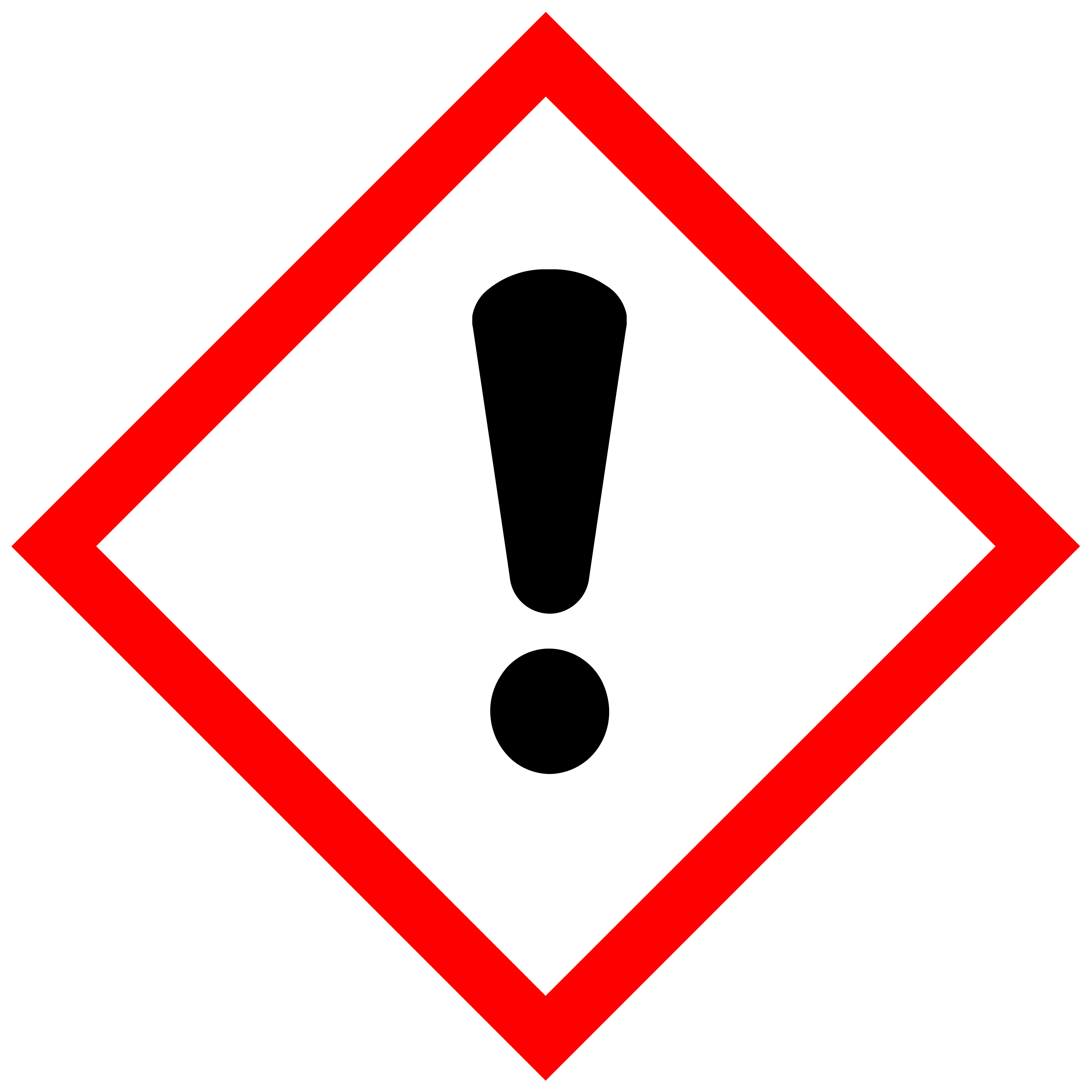
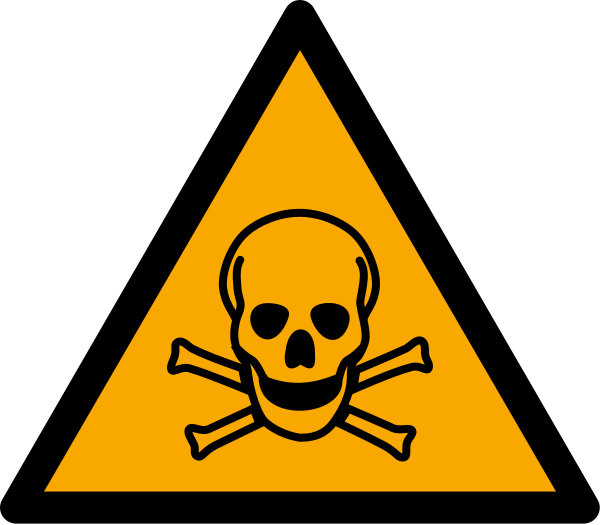
Corrosivity is about destruction on contact, which separates W023 from its neighbors. A substance that poisons through inhalation or absorption takes W016 (toxic material); many chemicals, such as concentrated hydrofluoric acid, genuinely warrant both messages because they burn on contact and poison systemically. Irritant or harmful chemicals below the corrosive threshold do not merit W023 — on labels they carry the GHS07 exclamation mark, and inflating every chemical store to corrosive status erodes the warning.
Older workers may still recognize the pre-GHS orange-and-black CHIP/DSD corrosive square, which has been obsolete in the EU since CLP took full effect; any container still bearing it is overdue for relabeling. Battery rooms illustrate correct multi-sign practice: W023 for the electrolyte, W021 or explicit text for hydrogen gas evolved during charging, and P003 or P002 to keep ignition sources out — three different hazards, three different signs, one door.
Where you will see W023
Electroplating and pickling lines, battery charging and storage rooms, and clean-in-place dosing stations in food and beverage plants are classic sites, alongside water treatment chemical rooms, laboratory acid cabinets, tanker unloading points, and drum decanting areas. It typically hangs with M004, M009, and M013 PPE mandates and signage routing workers to the eyewash and safety shower.
Common questions about W023
What is the difference between W023 and the GHS05 corrosion pictogram?
GHS05 is the container-label pictogram, applied under GHS-based rules to products classified as corrosive to skin, causing serious eye damage, or corrosive to metals. W023 is the workplace warning sign posted at rooms, dosing stations, and equipment where corrosive substances could injure a person. Note that GHS05 can appear on a product that only corrodes metals, so the label alone does not decide whether a W023 area sign is needed.
Do battery charging rooms need a corrosive substance sign?
Rooms with vented lead-acid batteries normally warrant W023 because the electrolyte is sulfuric acid and topping-up, handling, and failures can cause splashes. The room usually needs more than that one sign, since charging also evolves hydrogen: expect ignition-source prohibition signage and PPE requirements alongside, plus an eyewash within quick reach of the work.
What PPE signs go with the corrosive warning sign?
The mandatory signs that answer the splash risk: M004 for eye protection, M009 for chemical-resistant gloves, and M013 for a face shield where splashes at face height are credible, with an apron requirement added by text where needed. The pairing matters because W023 only identifies the hazard; the blue circles state the protective behavior the risk assessment requires.
Are irritant chemicals covered by the corrosive substance sign?
No. W023 is for substances that destroy tissue on contact — corrosives. Chemicals classified only as irritants or as harmful sit below that threshold and carry the GHS07 exclamation-mark pictogram on their labels rather than GHS05. Using the corrosive sign for mild products weakens its meaning at the locations where burns are a real possibility.
Reference details
| Symbol code | W023 |
|---|---|
| Sign family | ISO Warning Signs |
| Standard reference | ISO 7010:2019 / ISO 3864-1 ISO Online Browsing Platform: W023 |
| Screen color reference | #FFCC00. Screen colors are not a production color specification. |
| Download formats | SVG reference artwork; a 1024 × 1024 pixel PNG conversion on a white canvas. |
| Record date | · How to interpret our dates |
| Page updated |
Choosing a physical sign size
Download dimensions are not installation dimensions. Select sign size, material, placement, and lighting using the applicable standard and the actual viewing conditions. Chemical label sizing follows its own rules. Read the artwork and sizing guide.
Sources and artwork credits
- Artwork source
- Wikimedia Commons file page
- Creator credited by source
- MaxxL
- License
- Public domain
- Source metadata checked
SVG files are local reference copies. PNG files are raster conversions. Check the linked file history and license terms before reuse; a source-metadata check is not certification of the artwork or a workplace installation.
Report a correction to this reference