Toxic material
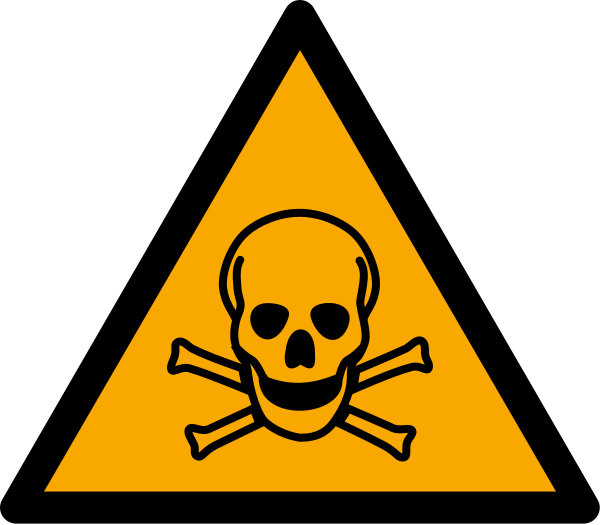
Warns of toxic material.
Understanding this sign
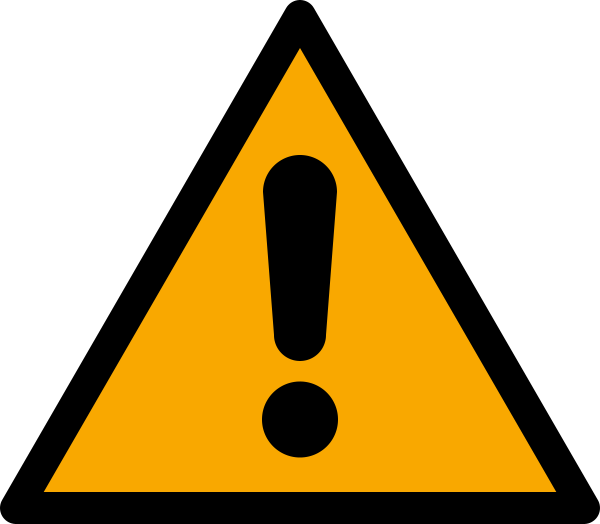
Yellow triangular signs draw attention to a hazard, such as electricity, moving machinery, or a hot surface.
A warning pictogram does not state the severity, safe distance, or protective measures. Read the accompanying instructions.
Meaning of the Skull and Crossbones Triangle
W016 places the oldest poison symbol in use — the skull and crossbones — inside the yellow warning triangle defined by ISO 3864-1 to mark places where toxic material is present. It signals substances that can kill or seriously injure through inhalation, ingestion, or skin absorption, sometimes after a brief exposure: hydrogen cyanide and cyanide salts, hydrogen sulfide, chlorine, arsine and other toxic process gases, certain pesticides, and concentrated laboratory poisons.
The sign is deliberately reserved for severe acute hazards. Marking a store of mild irritants or low-toxicity cleaning products with a skull teaches workers that the symbol is decoration, which is dangerous in a facility that also handles genuinely lethal materials. The severity threshold in the safety data sheet — acute toxicity classification, exposure limits, and emergency measures — should drive the decision to post W016, not a general sense that chemicals live behind the door.
W016 Versus the GHS06 Container Pictogram
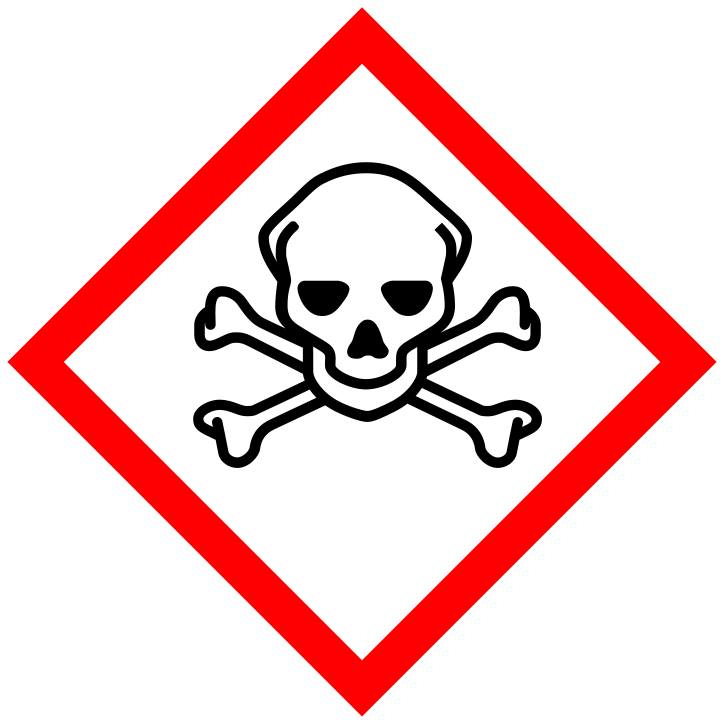
Two skull-and-crossbones symbols coexist in most plants, and they answer different questions. GHS06 — a black skull in a red-bordered diamond — is a label element under the Globally Harmonized System, applied to containers of substances classified for acute toxicity in the most severe categories (1 to 3). It travels with the product. W016 is a workplace sign fixed to rooms, cabinets, gas manifolds, and area boundaries; it stays with the location and warns before anyone reaches a labeled container.
Regulatory hooks differ accordingly. Container labeling follows OSHA's Hazard Communication Standard (29 CFR 1910.1200) in the United States and the CLP Regulation in the European Union, both aligned with GHS. Area signage in the EU falls under the safety signs framework of Directive 92/58/EEC, which the ISO 7010 warning format satisfies. In practice the two symbols reinforce each other: GHS06 on the drum, W016 on the door of the room storing it.
Where Toxic Material Signs Belong
The strongest use cases are locations where a person could be exposed before seeing any container label: gas cabinets and gas rooms holding toxic compressed gases in semiconductor fabs and water treatment plants, chlorination rooms, cyanide baths in electroplating, pesticide and fumigant stores, hydrogen sulfide risk zones in oil and gas and wastewater operations, and laboratory storage for acutely toxic reagents. Fumigated containers and grain silos under phosphine treatment need temporary W016 posting for the duration of the treatment.
Position the sign at the decision point — the door, gate, or boundary a person must cross — and support it with the information the triangle cannot carry: the name of the material, entry conditions such as gas monitoring or permits, and required respiratory protection. For gases like hydrogen sulfide that deaden the sense of smell at hazardous concentrations, the supplementary text should say explicitly that odor cannot be relied on as a warning.
Boundaries With Other Hazard Symbols
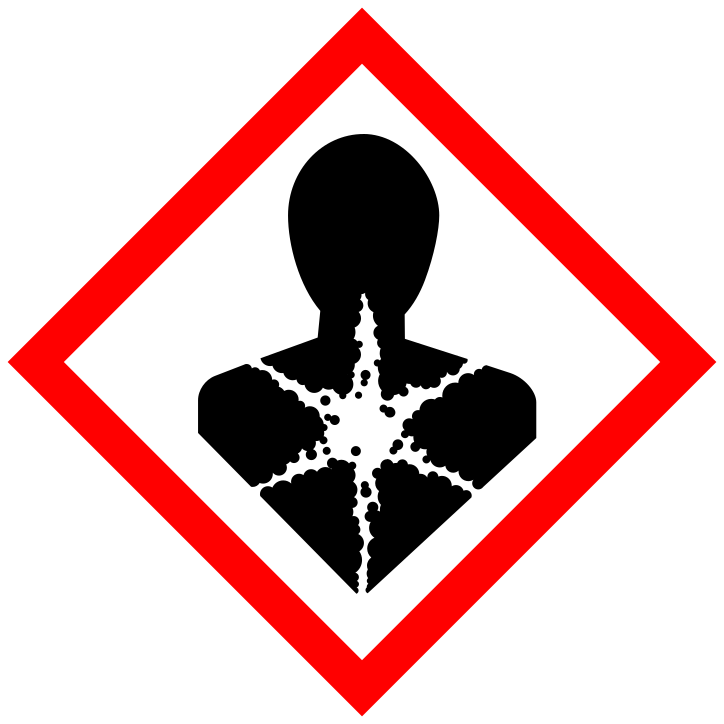
W016 covers acute poisoning; other health hazards have their own symbols. Chronic effects such as carcinogenicity, respiratory sensitization, and organ damage from repeated exposure are represented on labels by the GHS08 health-hazard silhouette, not the skull, and there is no direct ISO 7010 equivalent — those areas are usually signed with W016 or W001 plus explicit text naming the agent. Corrosives that destroy tissue on contact take W023, and materials dangerous mainly by fire take W021.
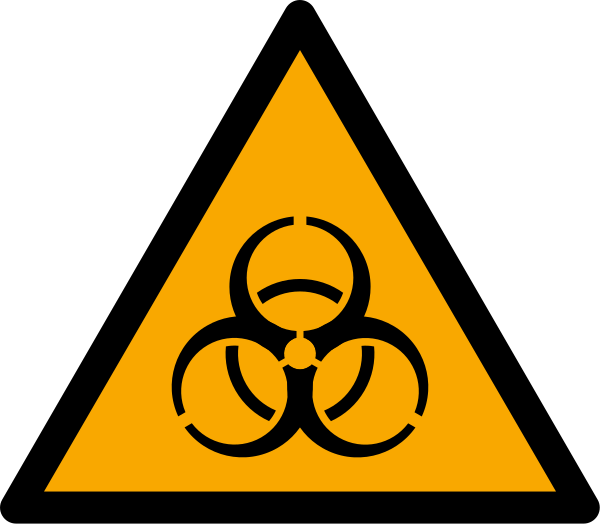
Biological agents are another common confusion: an infectious-materials area takes the biohazard symbol (W009), not the skull, because the precautions — containment, disinfection, immunization — differ completely from those for chemical poisons. Where one room presents several of these hazards, as in many labs, post each applicable symbol rather than electing the scariest one; emergency responders read the sign board to choose their PPE and entry tactics.
Where you will see W016
Semiconductor fabs and water treatment plants post it on gas cabinets and chlorination rooms holding toxic compressed gases, while electroplating shops mark cyanide bath areas and laboratories sign storage for acutely toxic reagents. It also guards pesticide and fumigant stores, hydrogen sulfide risk zones in oil and gas and wastewater operations, and grain silos under phosphine fumigation.
Common questions about W016
What is the difference between the W016 sign and the GHS skull and crossbones?
The symbol is nearly the same; the job is different. GHS06 is the red-diamond pictogram on container labels, required for substances classified in acute toxicity categories 1 to 3 under GHS-based rules like OSHA HazCom and EU CLP. W016 is the yellow-triangle workplace sign posted on rooms, cabinets, and area boundaries where toxic material is present. Labels warn about the product in your hand; the sign warns about the place you are entering.
Which chemicals require a toxic material warning sign?
There is no fixed list; the trigger is the risk assessment. Facilities normally post W016 where acutely toxic substances — for example toxic compressed gases, cyanides, chlorine, hydrogen sulfide sources, or restricted pesticides — are stored or handled in quantities that could cause serious exposure. Check the acute toxicity classification in section 2 of the safety data sheet; the skull should mark severe hazards, not every chemical store.
Should a toxic sign or a biohazard sign be used for an infectious materials room?
The biohazard symbol (ISO 7010 W009). The skull and crossbones is for chemical toxicity. Infectious agents call for different controls — biological containment levels, disinfection, and exposure protocols — so mixing the symbols misinforms both workers and emergency responders about what protection to bring.
Where should the W016 sign be placed on a toxic gas cabinet?
On the cabinet face where it is visible on approach, and additionally on the door of the gas room or fenced enclosure so the warning is read before entry. Add text naming the gas and the entry requirements, such as gas detection checks or permit conditions, because the triangle alone identifies the hazard category but not the specific material or precaution.
Reference details
| Symbol code | W016 |
|---|---|
| Sign family | ISO Warning Signs |
| Standard reference | ISO 7010:2019 / ISO 3864-1 ISO Online Browsing Platform: W016 |
| Screen color reference | #FFCC00. Screen colors are not a production color specification. |
| Download formats | SVG reference artwork; a 1024 × 1024 pixel PNG conversion on a white canvas. |
| Record date | · How to interpret our dates |
| Page updated |
Choosing a physical sign size
Download dimensions are not installation dimensions. Select sign size, material, placement, and lighting using the applicable standard and the actual viewing conditions. Chemical label sizing follows its own rules. Read the artwork and sizing guide.
Sources and artwork credits
- Artwork source
- Wikimedia Commons file page
- Creator credited by source
- MaxxL
- License
- Public domain
- Source metadata checked
SVG files are local reference copies. PNG files are raster conversions. Check the linked file history and license terms before reuse; a source-metadata check is not certification of the artwork or a workplace installation.
Report a correction to this reference