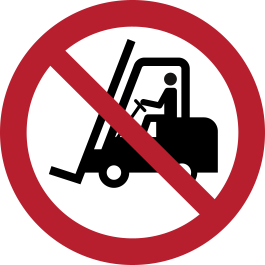
Forklift trucks and other industrial vehicles
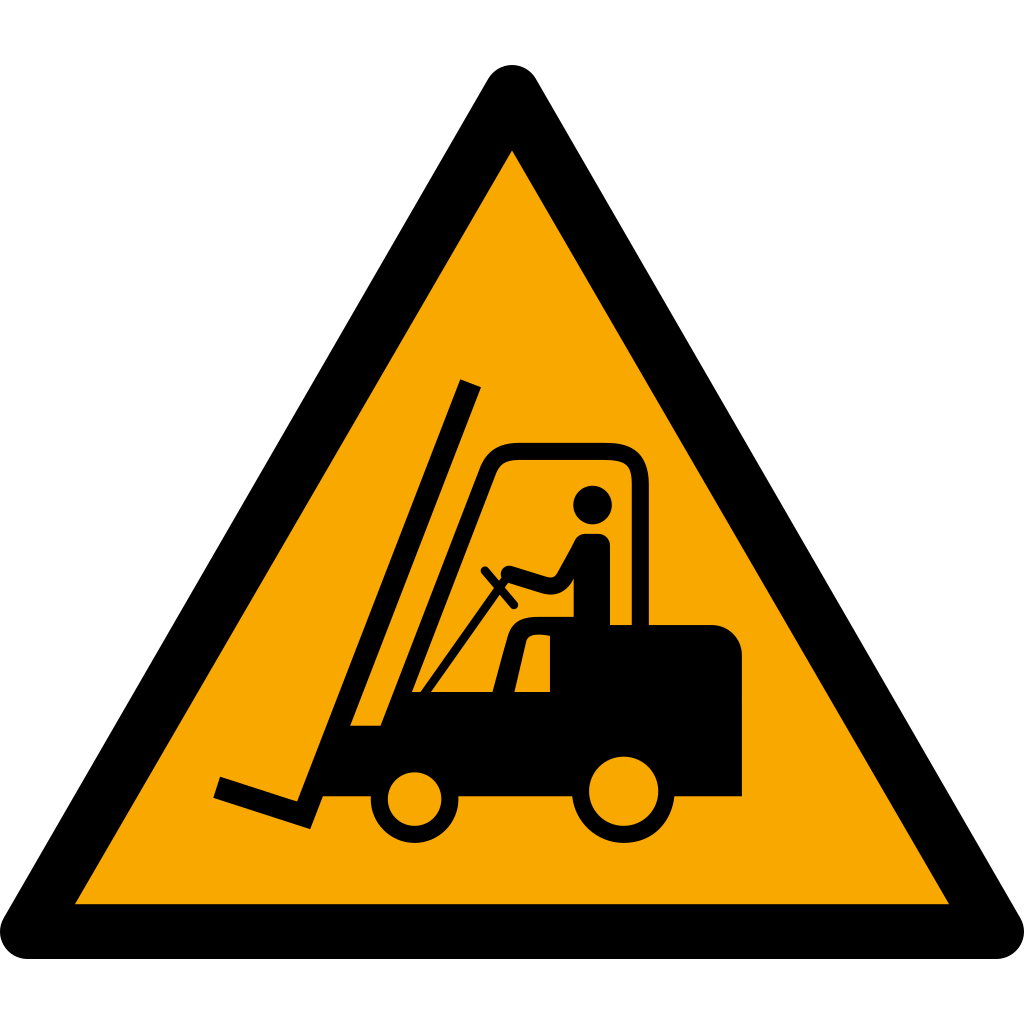
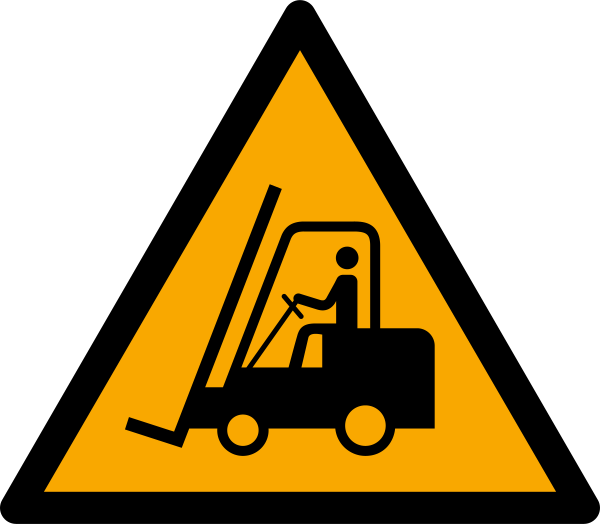
Warns of forklift trucks or other industrial vehicles.
Understanding this sign
Yellow triangular signs draw attention to a hazard, such as electricity, moving machinery, or a hot surface.
A warning pictogram does not state the severity, safe distance, or protective measures. Read the accompanying instructions.
What ISO 7010 W014 Warns About
W014 warns of forklift trucks and other industrial vehicles. The pictogram shows a counterbalance forklift in side profile, drawn in black inside the ISO 3864-1 warning triangle on a yellow field. It tells pedestrians that powered industrial vehicles operate in the area and that they should stay alert, keep to designated walkways, and give way. The warning covers not just forklifts but the wider family of works trucks — reach trucks, order pickers, tow tractors, and similar plant — that share space with people and can cause serious crushing and impact injuries.
The sign flags the presence of vehicle traffic but does not manage it. W014 cannot on its own separate people from machines, control speeds, or fix sightlines; it warns pedestrians that they are entering a shared or vehicle-operating zone. Where the layout demands specific behaviour — a crossing point, a give-way rule, or a pedestrian-exclusion area — the warning is combined with markings, barriers, and text. On its own the pictogram simply says that industrial vehicles move here and that a person on foot must expect them.
Why Vehicle-Pedestrian Signage Matters
Collisions between powered industrial trucks and pedestrians are a recognised source of serious and fatal workplace injuries, which is why the interface between vehicles and people is heavily regulated. In the United States, OSHA's powered industrial truck standard, 29 CFR 1910.178, sets requirements for the design, operation, maintenance, and operator training of forklifts and similar trucks, including safe-operation provisions in areas where pedestrians are present. Signage such as W014 supports those requirements by warning people on foot that trucks are operating.
Signage, however, sits low in the hierarchy of controls for traffic risk. The more effective measures are physical: separating pedestrian and vehicle routes, installing barriers and designated crossings, controlling speeds, improving lighting and sightlines, and using one-way systems. W014 is most valuable where those measures are in place and the sign reinforces them — for example marking the entry to a warehouse aisle where forklifts turn — rather than where it is expected to substitute for a proper traffic-management plan that keeps people and vehicles apart.
Where to Post the Forklift Warning
Post W014 at the points where pedestrians could encounter industrial-vehicle traffic: warehouse and loading-dock entrances, the ends of racking aisles, doorways that open onto operating areas, blind corners, and the boundaries between pedestrian zones and vehicle routes. On external yards it belongs at gates and at crossings where footpaths meet vehicle roadways. The goal is to place the warning where a person on foot decides whether and how to proceed, so they enter the shared space already expecting forklift movement.
Placement is most effective when it is paired with floor markings and physical guidance. Marked walkways, painted crossings, mirrors at blind corners, and barriers at aisle ends turn the warning into a workable rule rather than a general caution. At doorways where pedestrians and trucks share the same opening, the sign should be visible from both sides so drivers and walkers are each alerted to the other. Where vehicle movement is limited to certain times, supplementary text can indicate when the warning is most relevant.
Related Signs and Traffic-Management Context
W014 frequently appears with other signs that together define how a shared space works. Mandatory signs may require high-visibility clothing in vehicle areas; prohibition signs may forbid pedestrian access to a route reserved for trucks; and directional markings channel foot traffic onto safe walkways. The forklift warning identifies the hazard, while these complementary signs tell people what they must do or must not do in response, which is what actually reduces the risk of a collision.
It is worth distinguishing W014 from signage aimed at drivers rather than pedestrians, such as speed limits, give-way markings, and load or headroom restrictions inside a facility. Those manage vehicle behaviour, whereas W014 is chiefly a warning to people on foot. In a well-designed traffic scheme the two work together: drivers are governed by rules and route design, pedestrians are warned and guided, and the W014 sign marks the places where the two populations meet and extra care is required.
Where you will see W014
Warehouses mount this warning at loading-dock entrances, the ends of racking aisles, doorways opening onto operating areas, and blind corners where trucks and people converge. On external yards it stands at gates and at crossings where footpaths meet vehicle roadways, typically reinforced with painted walkways, marked crossings, mirrors, and barriers that turn the caution into a workable traffic rule.
Common questions about W014
What does the forklift warning sign mean?
The side-profile forklift in a yellow triangle is ISO 7010 W014, warning that forklift trucks and other industrial vehicles operate in the area. It alerts pedestrians to stay alert, keep to designated walkways, and give way. The warning covers the wider family of works trucks, including reach trucks, order pickers, and tow tractors, not just counterbalance forklifts.
Does OSHA require forklift warning signs?
OSHA's powered industrial truck standard, 29 CFR 1910.178, governs the design, operation, maintenance, and operator training of forklifts and similar trucks, including safe operation where pedestrians are present. Warning signage such as W014 supports those requirements by alerting people on foot. Check the specific provisions and your site's traffic-management plan, since signage is one element among physical controls and training.
Is a forklift warning sign enough to prevent collisions?
No. Signage sits low in the hierarchy of controls. Separating pedestrian and vehicle routes, installing barriers and marked crossings, controlling speeds, and improving sightlines protect people more reliably. W014 is most effective where those measures already exist and the sign reinforces them, rather than where it is expected to replace a proper plan for keeping people and vehicles apart.
Where should forklift warning signs be placed?
Post W014 where pedestrians could meet vehicle traffic: warehouse and loading-dock entrances, the ends of racking aisles, doorways onto operating areas, blind corners, and boundaries between pedestrian zones and vehicle routes. Pair it with floor markings, mirrors, and barriers so the warning becomes a workable rule, and make it visible from both sides at shared doorways.
Reference details
| Symbol code | W014 |
|---|---|
| Sign family | ISO Warning Signs |
| Standard reference | ISO 7010:2019 / ISO 3864-1 ISO Online Browsing Platform: W014 |
| Screen color reference | #FFCC00. Screen colors are not a production color specification. |
| Download formats | SVG reference artwork; a 1024 × 1024 pixel PNG conversion on a white canvas. |
| Record date | · How to interpret our dates |
| Page updated |
Choosing a physical sign size
Download dimensions are not installation dimensions. Select sign size, material, placement, and lighting using the applicable standard and the actual viewing conditions. Chemical label sizing follows its own rules. Read the artwork and sizing guide.
Sources and artwork credits
- Artwork source
- Wikimedia Commons file page
- Creator credited by source
- MaxxL
- License
- Public domain
- Source metadata checked
SVG files are local reference copies. PNG files are raster conversions. Check the linked file history and license terms before reuse; a source-metadata check is not certification of the artwork or a workplace installation.
Report a correction to this reference