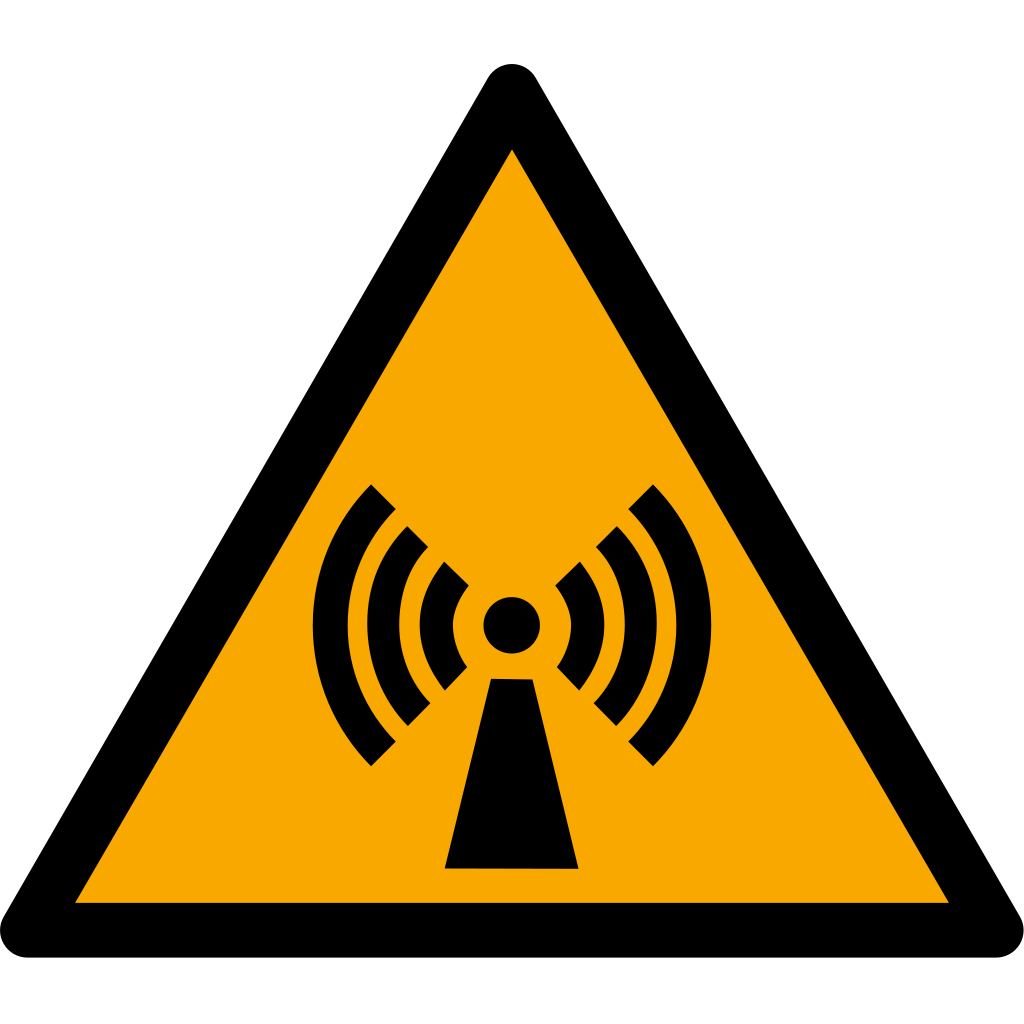
Non-ionizing radiation
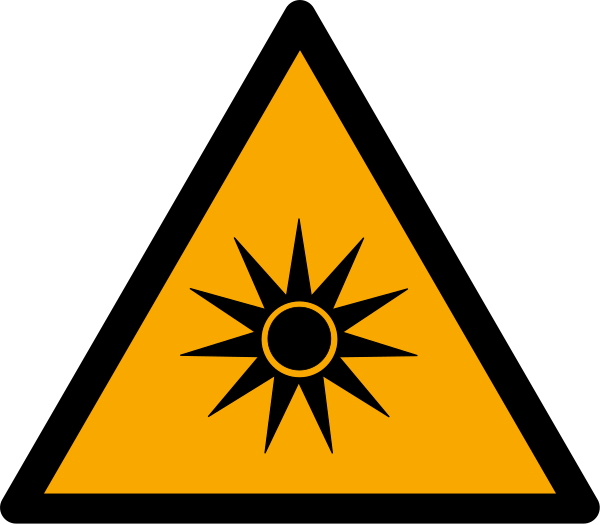
Warns of non-ionizing radiation.
Understanding this sign
Yellow triangular signs draw attention to a hazard, such as electricity, moving machinery, or a hot surface.
A warning pictogram does not state the severity, safe distance, or protective measures. Read the accompanying instructions.
What Counts as Non-Ionizing Radiation
W005 warns of electromagnetic energy that is strong enough to harm the body but not energetic enough to ionize atoms: radiofrequency and microwave fields, and the low-frequency electric and magnetic fields around powerful electrical equipment. The primary established injury mechanism at radio and microwave frequencies is tissue heating; at lower frequencies, strong fields can stimulate nerves and muscles. The sign uses the ISO 3864-1 warning format — a yellow triangle with a black border — around a pictogram of radiating waves.
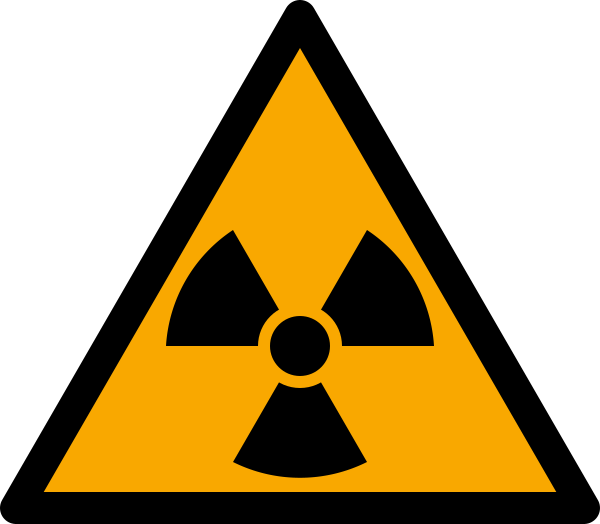
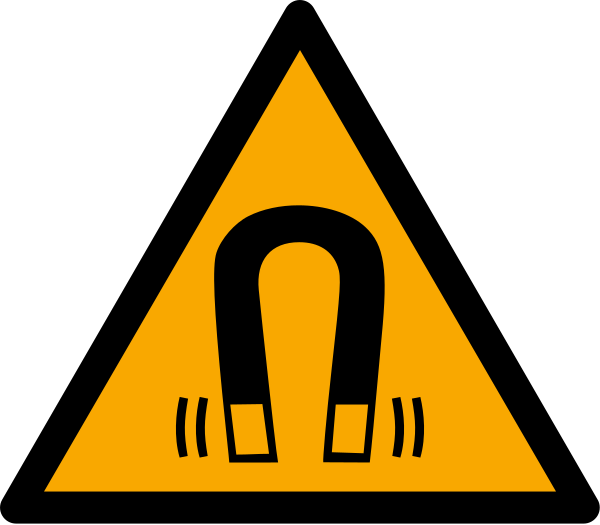
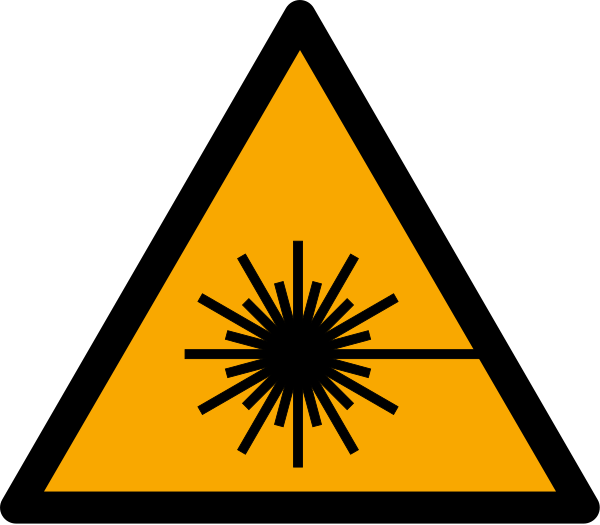
The boundary of the sign matters as much as its coverage. W005 is not the sign for ionizing sources such as X-ray equipment or radioactive materials, which take the W003 trefoil, and it is not the laser sign, which is W004. Strong static magnetic fields around MRI scanners and large magnets also have their own symbol, W006. Choosing the wrong member of this family misleads workers about both the nature of the hazard and the correct precautions.
Exposure Limits Behind the Sign
W005 signage typically marks locations where fields can exceed recognized exposure limits. Internationally, the reference values come from ICNIRP, whose guidelines for radiofrequency fields between 100 kHz and 300 GHz were updated in 2020 and underpin exposure rules in much of the world. In the European Union, Directive 2013/35/EU sets minimum requirements for protecting workers from electromagnetic fields and expects employers to demarcate and signpost areas where action levels may be exceeded.
In the United States, the FCC limits RF exposure from licensed transmitters through its maximum permissible exposure rules, and antenna site operators commonly use tiered RF notice, caution, and warning signs at rooftop and tower locations to control access. OSHA's general industry rule on radiofrequency radiation, 29 CFR 1910.97, is dated and limited in scope, so most U.S. employers manage RF hazards through the FCC framework, IEEE guidance, and the general duty to control recognized hazards.
Equipment and Sites That Need W005
The classic locations are transmitting antenna sites: rooftops shared with cellular panels, broadcast towers, microwave point-to-point links, and radar installations, where maintenance staff and other trades can unknowingly walk into high-field zones. Signage should be positioned at access points — roof hatches, tower climbing faces, ladder gates — before a person can enter the region where limits could be exceeded, not just on the antenna itself.
Industrial RF sources deserve equal attention and are more often missed. Induction heating and hardening equipment, dielectric and RF plastic welders, industrial microwave dryers, plasma etching tools, and shortwave diathermy units in physiotherapy all produce localized fields that can exceed occupational limits close to the applicator. W005 on the equipment or the surrounding demarcated area tells operators and, importantly, workers with implanted medical devices that a field hazard exists there.
Reading W005 Next to Other Radiation Signs
Facilities with mixed radiation sources should keep the family straight. W003 (ionizing radiation, the trefoil) means a fundamentally different hazard with dose limits, monitoring, and licensing behind it. W004 covers laser beams. W005 covers RF, microwave, and other electromagnetic field hazards, while W006 flags strong static magnetic fields specifically. Posting W005 where the real concern is a magnet's pull on ferromagnetic objects understates the projectile risk that W006 is meant to communicate.
Because non-ionizing fields are invisible and produce no immediate sensation at many hazardous levels, W005 works best when paired with supplementary text stating the boundary and the rule: for example, the distance to keep from an antenna, a requirement to power down transmitters before climbing, or a notice that workers with pacemakers or other active implants must not enter without an assessment. The triangle alone announces the hazard; the text makes it actionable.
Where you will see W005
Rooftops shared with cellular panels, broadcast towers, microwave links, and radar installations post W005 at roof hatches, tower climbing faces, and ladder gates before workers can enter high-field zones. Inside plants it appears on induction heating and hardening equipment, RF plastic welders, industrial microwave dryers, plasma etching tools, and shortwave diathermy units in physiotherapy.
Common questions about W005
What is the difference between the non-ionizing radiation sign and the radioactive sign?
They mark different physics. The W003 trefoil marks ionizing radiation — X-rays, gamma rays, and radioactive materials — which can damage DNA and is controlled through dose limits and licensing. W005 marks non-ionizing electromagnetic fields such as RF and microwave energy, where the main established risk is tissue heating and interference with implanted medical devices. The precautions, exposure limits, and regulators involved are entirely different.
Do Wi-Fi routers or cell phones require a W005 warning sign?
No. Consumer devices operate far below occupational and public exposure limits, and no signage requirement applies to them. W005 is for locations where fields can approach or exceed recognized limits — transmitting antenna work zones, induction heaters, RF welders, and similar equipment — typically established by an EMF exposure assessment.
Can workers with pacemakers enter an area marked with W005?
Not without an individual assessment. Active implanted devices such as pacemakers and defibrillators can be affected by fields well below the levels that would harm other workers, which is why EU EMF rules treat implant wearers as workers at particular risk. The area's EMF assessment, the implant manufacturer's specifications, and occupational health advice should decide access, and supplementary text on the sign should direct implant wearers to report before entering.
Where should RF warning signs be placed on a rooftop antenna site?
At every access point into the area where exposure limits could be exceeded — roof hatches, access doors, ladders, and along barriers marking the compliance boundary — so a worker sees the sign before entering the field, not after. Many operators add tiered signage (notice at the entry, caution or warning nearer the antennas) with contact details for powering down transmitters before close-in work.
Reference details
| Symbol code | W005 |
|---|---|
| Sign family | ISO Warning Signs |
| Standard reference | ISO 7010:2019 / ISO 3864-1 ISO Online Browsing Platform: W005 |
| Screen color reference | #FFCC00. Screen colors are not a production color specification. |
| Download formats | SVG reference artwork; a 1024 × 1024 pixel PNG conversion on a white canvas. |
| Record date | · How to interpret our dates |
| Page updated |
Choosing a physical sign size
Download dimensions are not installation dimensions. Select sign size, material, placement, and lighting using the applicable standard and the actual viewing conditions. Chemical label sizing follows its own rules. Read the artwork and sizing guide.
Sources and artwork credits
- Artwork source
- Wikimedia Commons file page
- Creator credited by source
- Maxxl2
- License
- Public domain
- Source metadata checked
SVG files are local reference copies. PNG files are raster conversions. Check the linked file history and license terms before reuse; a source-metadata check is not certification of the artwork or a workplace installation.
Report a correction to this reference