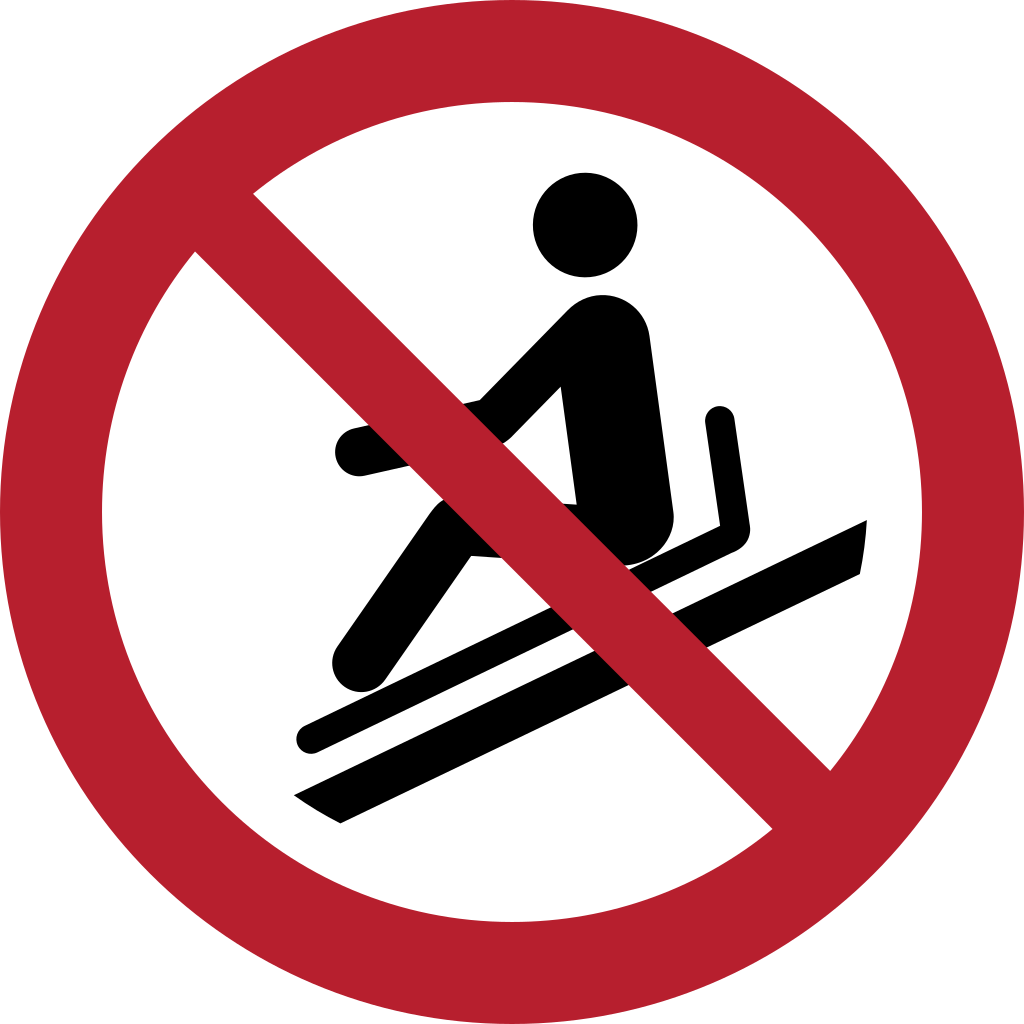
No tobogganing or sledding
Tobogganing or sledding is prohibited.
Understanding this sign
Red circular signs with a diagonal bar identify an action that must not be taken in the marked area.
Check what object or action the symbol prohibits. A prohibition sign does not identify all the hazards in an area.
What ISO 7010 P078 Covers
P078 prohibits riding toboggans and sleds in the marked area. The ISO 7010 register names the referent No tobogganing or sledding, with the function of prohibiting tobogganing or sledding, and the pictogram — a rider on a sled inside the red prohibition ring with its diagonal slash — follows the ISO 3864-1 template used by every sign in the P series. It covers gravity sledding devices generally: classic wooden toboggans, plastic sleds, and saucers alike.
Sledding is the least regulated of the snow sports. It needs no lift ticket, no lessons, and no special terrain, which means it appears wherever there is a slope and snow — including places engineered for entirely different traffic. P078 exists to draw the line in those places without needing a paragraph of translated text.
Why Sleds Get Banned from Slopes
On ski pistes, sleds are a traffic problem. A toboggan sits low, is hard for a fast-moving skier to spot against the snow, cannot carve away from a conflict, and its braking — heels dug into the snow — is weak on a groomed surface. Resorts therefore keep sled traffic off downhill runs and lift corridors and route it to dedicated toboggan runs, marking the boundary with P078 at piste entries, lift lines, and the bottom stations where families with sleds tend to wander in.
Away from resorts, municipalities post the sign on hazardous informal sledding spots: hills that run out into roads, parking lots, ponds, or fences; embankments and dams; and park slopes with trees or play equipment in the fall line. Many of these bans follow local accident history — the run-out, not the slope itself, is usually what makes a neighborhood sledding hill dangerous.
Reading P078 Alongside Its Neighbors
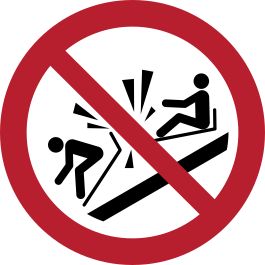
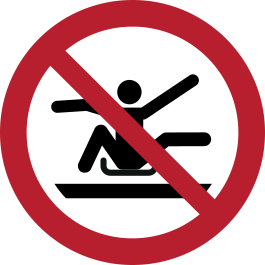
P078 is the area ban; it says nothing about how to behave where sledding is allowed. Conduct on a permitted toboggan run is handled by P046 (do not stretch out of toboggan) and P047 (do not ram into toboggans), so a well-signed winter operation often deploys all three: P078 at the pistes to keep sleds out, and the other two at the sled run to keep riders safe once they are in the right place.
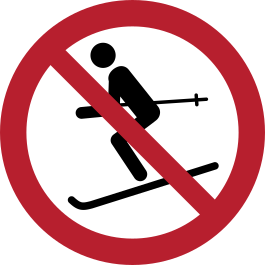
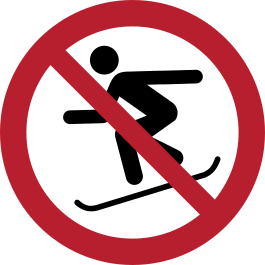
Where an area excludes all sliding sports — an avalanche closure, terrain under grooming, a protected zone — P078 is posted with P076 (no skiing) and P077 (no snowboarding), since each pictogram prohibits only the activity it depicts. Whether a given posting is a permanent rule or a temporary closure should be evident from context: closures come with ropes and reopen; permanent bans stand alone year after year.
Where you will see P078
Ski resorts post it at piste entries, lift lines, and run bottoms to keep low-sitting, weak-braking sleds out of downhill traffic and route them to dedicated toboggan runs. Municipalities use it on hazardous informal sledding hills whose run-outs end in roads, parking lots, ponds, or fences, and on embankments and dams, often following local accident history; where all sliding sports are excluded it appears beside P076 no-skiing and P077 no-snowboarding.
Common questions about P078
Why is sledding not allowed on ski slopes?
A sled is low to the ground and hard for descending skiers to see, cannot steer out of a conflict the way a skier can, and brakes poorly on groomed snow. Mixing sleds into downhill ski traffic produces collisions with the sled rider coming off worst, so resorts confine sledding to dedicated toboggan runs and post P078 at piste and lift-corridor entries.
What makes a public hill get a no sledding sign?
Usually the run-out rather than the slope: hills that discharge into streets, parking areas, ponds, fences, or trees are the classic cases, along with dams, embankments, and park slopes with obstacles in the fall line. Municipalities often post the ban after near-misses or injuries at a popular informal spot, and some also act to limit their own liability.
Does P078 apply to all types of sled?
Treat it as covering any gravity sliding device you sit or lie on — wooden toboggans, plastic sleds, saucers, and similar. The referent explicitly names both tobogganing and sledding, and the purpose of the ban (keeping sliding traffic out of the area) does not depend on the sled's construction. Operators who allow specific equipment, such as airboards on a designated run, say so separately.
What is the difference between P078 and P047?
P078 bans tobogganing in an area altogether. P047 (do not ram into toboggans) is a conduct rule for places where sledding is permitted, requiring riders to keep distance and avoid collisions. One controls where sleds may go; the other controls how riders behave once there.
Reference details
| Symbol code | P078 |
|---|---|
| Sign family | ISO Prohibition Signs |
| Standard reference | ISO 7010:2019 / ISO 3864-1 ISO Online Browsing Platform: P078 |
| Screen color reference | #FF0000. Screen colors are not a production color specification. |
| Download formats | SVG reference artwork; a 1024 × 1024 pixel PNG conversion on a white canvas. |
| Record date | · How to interpret our dates |
| Page updated |
Choosing a physical sign size
Download dimensions are not installation dimensions. Select sign size, material, placement, and lighting using the applicable standard and the actual viewing conditions. Chemical label sizing follows its own rules. Read the artwork and sizing guide.
Sources and artwork credits
- Artwork source
- Wikimedia Commons file page
- Creator credited by source
- Clemenspool
- License
- CC0
- Source metadata checked
SVG files are local reference copies. PNG files are raster conversions. Check the linked file history and license terms before reuse; a source-metadata check is not certification of the artwork or a workplace installation.
Report a correction to this reference