No snowboarding
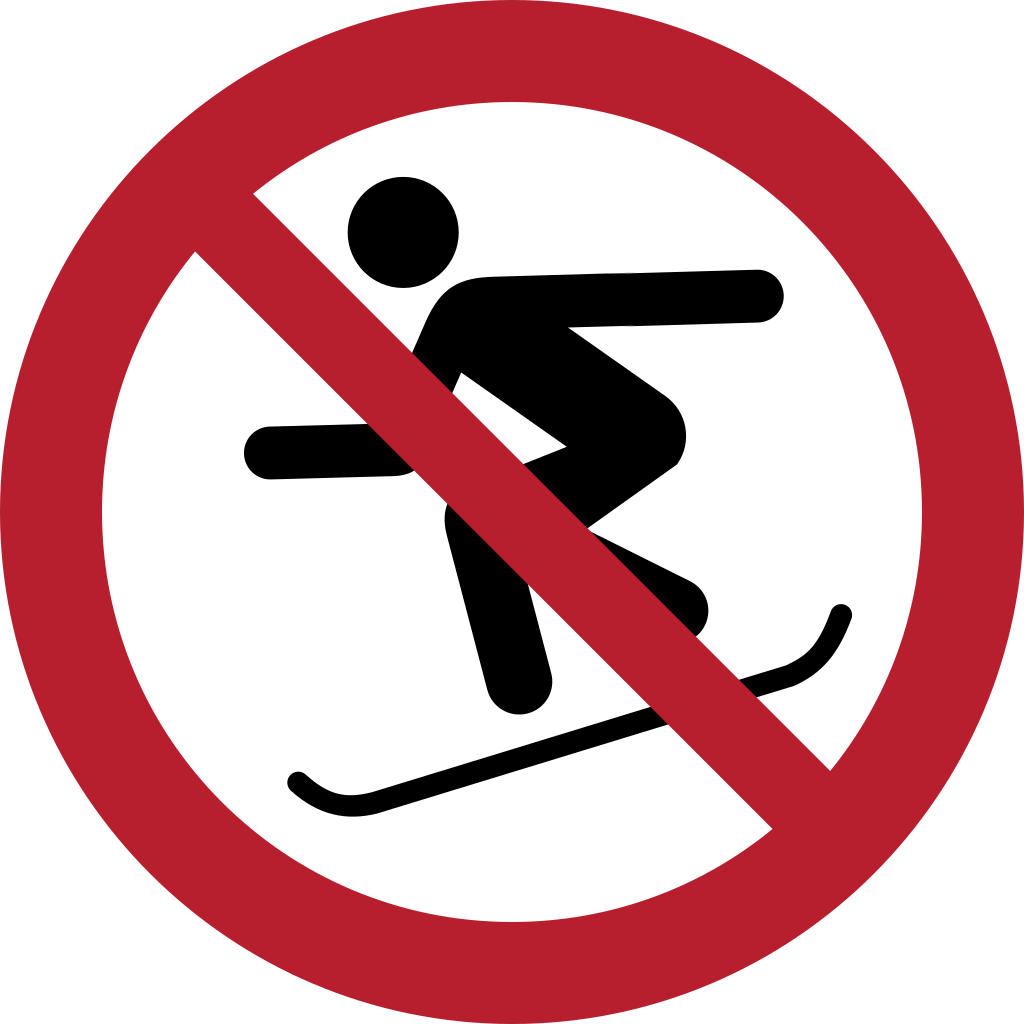
Snowboarding is prohibited.
Understanding this sign
Red circular signs with a diagonal bar identify an action that must not be taken in the marked area.
Check what object or action the symbol prohibits. A prohibition sign does not identify all the hazards in an area.
Meaning of ISO 7010 P077
P077 is the registered ISO 7010 prohibition sign for snowboarding: a rider on a snowboard, struck through by the red ring and diagonal bar prescribed by ISO 3864-1. The register defines its function plainly as prohibiting snowboarding. Because the prohibition format needs no text, the sign works for the international mix of guests a snow-sports area actually receives.
ISO added a snowboard-specific sign rather than stretching the skier pictogram to cover all sliding sports, and the separation is useful in practice. Terrain can legitimately be open to one discipline and closed to another, and enforcement is cleaner when the posted symbol matches the equipment being excluded.
Where Snowboarding Gets Prohibited
The best-known cases are the handful of resorts that exclude snowboards entirely as a matter of policy — a permanent, area-wide prohibition rather than a safety closure. Far more routine are targeted postings: nordic and cross-country trails where a snowboard's sideways stance and inability to traverse flats damage the set tracks, narrow ski routes where a boarder's blind side creates overtaking conflicts, and race or training corridors reserved for a single discipline.
P077 also appears in operational closures alongside P076 when patrols shut terrain for avalanche control, grooming, or thin cover, and on municipal land — park slopes, dams, embankments — where authorities exclude sliding traffic. A sign posted for a seasonal or temporary closure should come down when the terrain reopens; leaving expired prohibitions up is the fastest way to teach guests to ignore them.
Using P077 Correctly with Related Signs
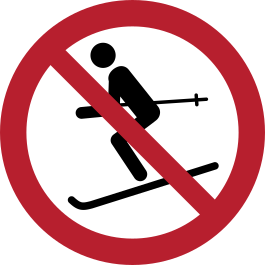
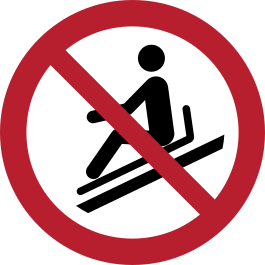
Specifiers should resist the assumption that a no-skiing sign implies no snowboarding. If both are excluded, post both P076 and P077 — or, where sleds are also a concern, the full trio with P078. Conversely, terrain such as a boardercross course closed to skiers but open to boarders is exactly where the discipline-specific signs earn their keep, since a general closure would exclude the intended users too.
Once on shared pistes, snowboarders are bound by the same FIS Rules for Conduct as skiers, including the duty to respect signage and markings. A resort that posts P077 is therefore not inventing a private rule; it is invoking a conduct code that ski patrols across member countries already apply, with pass revocation as the standard sanction for riding through a posted prohibition.
Where you will see P077
Routine postings cover nordic and cross-country trails where a snowboard's sideways stance damages the set tracks, narrow ski routes where a boarder's blind side creates overtaking conflicts, and race or training corridors reserved for a single discipline. It also appears alongside P076 in operational closures for avalanche control, grooming, or thin cover, and on municipal park slopes, dams, and embankments where authorities exclude sliding traffic.
Common questions about P077
Why would a slope ban snowboarding but allow skiing?
Common reasons include groomed cross-country tracks that a snowboard's stance and flat-terrain skating would tear up, narrow trails where a boarder's blind side raises collision risk during overtaking, discipline-specific race or training corridors, and a few resorts that exclude snowboards area-wide as policy. The sign states the rule; the operator's terrain plan supplies the reason.
Do any ski resorts still not allow snowboarders?
Yes, a small number of resorts maintain ski-only policies and exclude snowboards from their entire terrain. At such areas, P077 or equivalent local signage expresses a permanent prohibition rather than a temporary safety closure. Because policies change, check the resort's current rules directly before traveling with a board.
If a sign shows a crossed-out skier, can I still snowboard there?
Do not assume so. Strictly, the crossed-out skier (P076) prohibits skiing, and ISO 7010 uses P077 for snowboarding — but many closures are posted for safety reasons that apply to anyone sliding on the terrain, such as avalanche hazard or grooming work. If the context suggests a closure rather than a discipline rule, treat it as closed and ask patrol.
What happens if you snowboard in a prohibited area?
Resorts typically revoke lift passes for riding posted closures, and the FIS Rules for Conduct — which apply to snowboarders as well as skiers — make respecting signs and markings an explicit duty. Where the prohibition protects against avalanche terrain or works in progress, local law may add fines or liability for rescue costs, depending on the jurisdiction.
Reference details
| Symbol code | P077 |
|---|---|
| Sign family | ISO Prohibition Signs |
| Standard reference | ISO 7010:2019 / ISO 3864-1 ISO Online Browsing Platform: P077 |
| Screen color reference | #FF0000. Screen colors are not a production color specification. |
| Download formats | SVG reference artwork; a 1024 × 1024 pixel PNG conversion on a white canvas. |
| Record date | · How to interpret our dates |
| Page updated |
Choosing a physical sign size
Download dimensions are not installation dimensions. Select sign size, material, placement, and lighting using the applicable standard and the actual viewing conditions. Chemical label sizing follows its own rules. Read the artwork and sizing guide.
Sources and artwork credits
- Artwork source
- Wikimedia Commons file page
- Creator credited by source
- Clemenspool
- License
- CC0
- Source metadata checked
SVG files are local reference copies. PNG files are raster conversions. Check the linked file history and license terms before reuse; a source-metadata check is not certification of the artwork or a workplace installation.
Report a correction to this reference