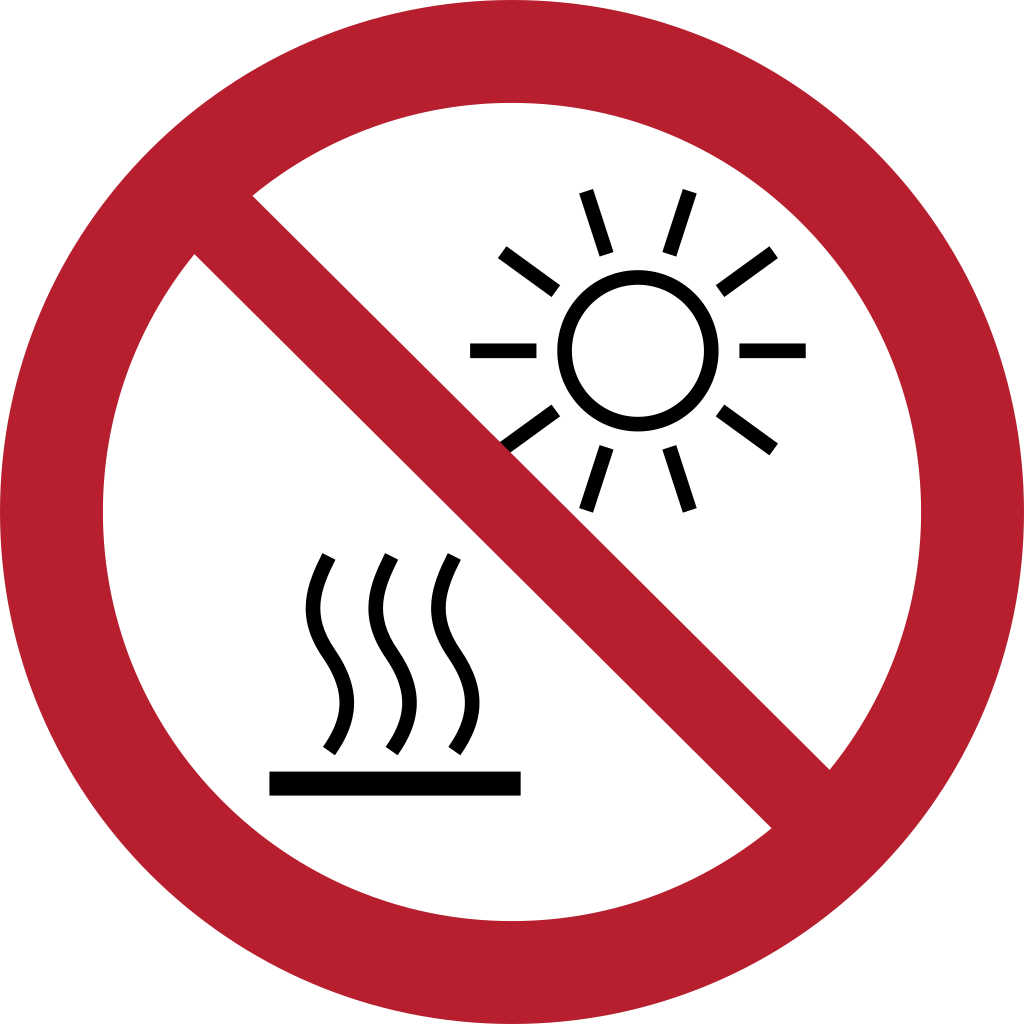
Do not expose to direct sunlight or hot surface
Exposure of the marked item to direct sunlight or a hot surface is prohibited.
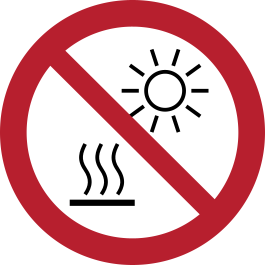
Understanding this sign
Red circular signs with a diagonal bar identify an action that must not be taken in the marked area.
Check what object or action the symbol prohibits. A prohibition sign does not identify all the hazards in an area.
A Prohibition About Heat, Written for Products
ISO 7010 P068 combines two heat sources in one pictogram — the sun and a hot surface — and forbids exposing the marked item to either. Unlike most prohibition signs, its natural habitat is a product label rather than a wall: it protects the object it is printed on. The items that carry it share one property: heat makes them dangerous, whether by raising internal pressure, triggering ignition or decomposition, or pushing a chemistry into thermal runaway.
Typical carriers are aerosol cans and gas cartridges, small pressurized containers and cylinders, lithium and other battery products, fire extinguishers stored in vehicles, certain adhesives, propellant-driven devices, and heat-sensitive chemical packagings. A parked car's dashboard or a spot beside a radiator, stove, or engine block can take such products well past their design temperature, which is exactly the everyday scenario P068 is aimed at.
How P068 Relates to GHS Labeling
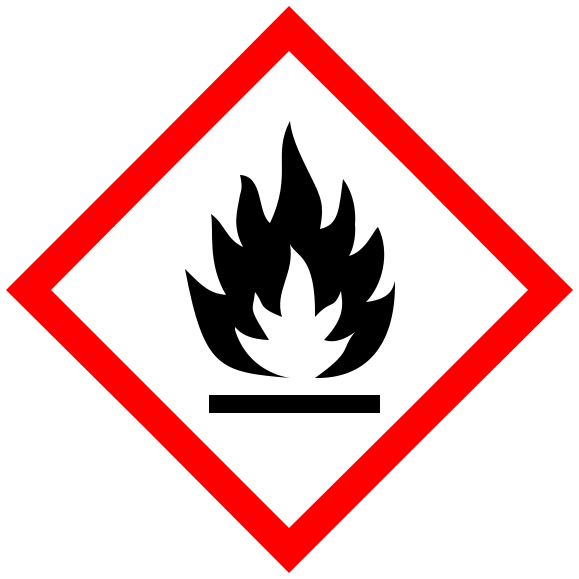
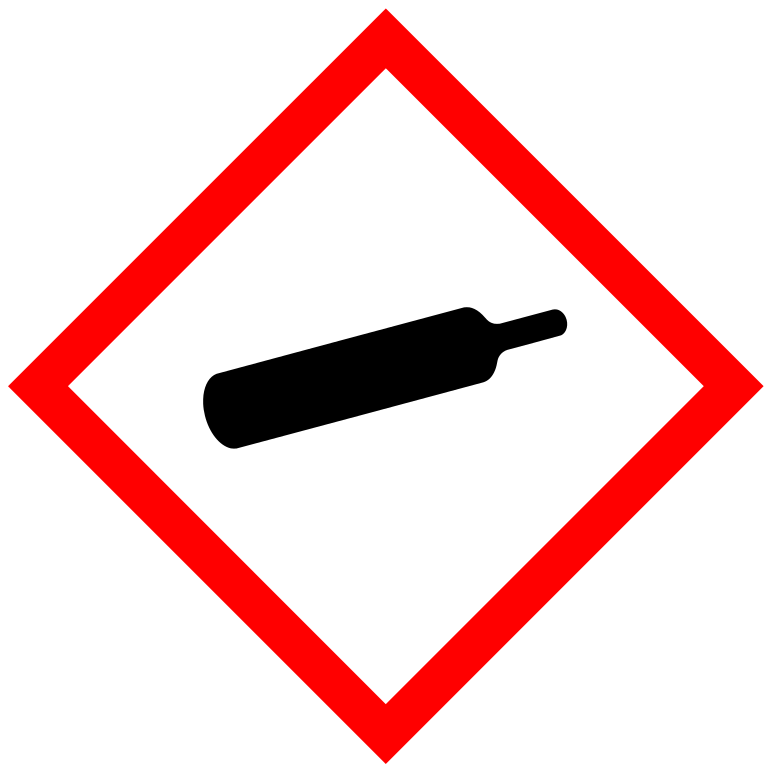
On chemical products the same rule already exists as text: GHS precautionary statements P410 ('Protect from sunlight') and P412 ('Do not expose to temperatures exceeding 50 °C/122 °F') are the standard wording assigned to aerosols and to some gases under pressure, printed on the label alongside the GHS02 flame or GHS04 gas cylinder diamond. P068 gives that instruction a language-free graphic form, which matters on products sold across markets and on small packages where translated text competes for space.
The pictogram and the statements are complements, not substitutes. Hazard-communication regulations built on GHS, such as EU CLP, define what must appear on a chemical label, and an ISO 7010 pictogram does not discharge those obligations. Manufacturers typically use P068 as an additional, instantly readable cue on the can, the outer carton, or storage cabinets and vehicle stowage points where the products live.
Consequences the Sign Is Preventing
Pressure is the most direct mechanism: gas pressure inside a sealed container climbs with temperature, and an aerosol or cartridge heated far beyond its rating can rupture or explode, with flammable propellant turning the burst into a fireball if an ignition source is near. Lithium batteries add a second pathway — sustained heat can degrade cells and provoke thermal runaway, a self-accelerating overheating that ends in fire and is notoriously hard to extinguish.
For other products the failure is quieter but still consequential: heat-degraded adhesives, medical or diagnostic goods that lose potency, and plastics that deform and leak. In storage planning, P068 translates into shaded, ventilated locations away from windows, radiators, hot pipework, and vehicle load beds in summer — and into checking manufacturer temperature limits before staging products near any process that radiates heat.
Where you will see P068
Aerosol cans, gas cartridges, small pressurized cylinders, lithium battery products, vehicle-stored fire extinguishers, and heat-sensitive adhesives carry it as a product label rather than a wall sign. Manufacturers also apply it to outer cartons, storage cabinets, and vehicle stowage points, translating in practice into shaded, ventilated storage away from windows, radiators, hot pipework, and summer load beds.
Common questions about P068
What does the sun and hot surface prohibition symbol mean?
That is ISO 7010 P068, 'Do not expose to direct sunlight or hot surface.' It appears mostly on products — aerosols, gas cartridges, batteries, pressurized containers — that become dangerous when heated, because heat raises internal pressure or can trigger fire or thermal runaway. Keep the item shaded and away from radiators, engines, stoves, and sun-heated vehicle interiors.
Why do aerosol cans warn against sunlight and heat?
The propellant inside is a gas under pressure, and pressure rises with temperature. Heated well beyond its design limit — achievable on a car dashboard in summer — a can may rupture or burst, and with flammable propellants the rupture can ignite. GHS labels carry the matching text statements about protecting from sunlight and temperature limits; P068 expresses the same rule graphically.
Is P068 the same as the GHS flame or gas cylinder pictogram?
No. GHS02 (flame) and GHS04 (gas cylinder) are hazard pictograms that classify what the substance is. P068 is a behavior prohibition telling you what not to do with the package — expose it to sun or hot surfaces. They frequently appear on the same label and reinforce each other, but P068 cannot replace required GHS label elements.
How should products with a P068 label be stored?
In shaded, ventilated locations away from direct sun, windows, radiators, hot pipes, machinery, and vehicle interiors that heat up when parked. Follow the manufacturer's stated maximum storage temperature, and for battery products keep the storage area clear of other combustibles given the fire behavior of cells in thermal runaway.
Reference details
| Symbol code | P068 |
|---|---|
| Sign family | ISO Prohibition Signs |
| Standard reference | ISO 7010:2019 / ISO 3864-1 ISO Online Browsing Platform: P068 |
| Screen color reference | #FF0000. Screen colors are not a production color specification. |
| Download formats | SVG reference artwork; a 1024 × 1024 pixel PNG conversion on a white canvas. |
| Record date | · How to interpret our dates |
| Page updated |
Choosing a physical sign size
Download dimensions are not installation dimensions. Select sign size, material, placement, and lighting using the applicable standard and the actual viewing conditions. Chemical label sizing follows its own rules. Read the artwork and sizing guide.
Sources and artwork credits
- Artwork source
- Wikimedia Commons file page
- Creator credited by source
- ISO
- License
- Public domain
- Source metadata checked
SVG files are local reference copies. PNG files are raster conversions. Check the linked file history and license terms before reuse; a source-metadata check is not certification of the artwork or a workplace installation.
Report a correction to this reference