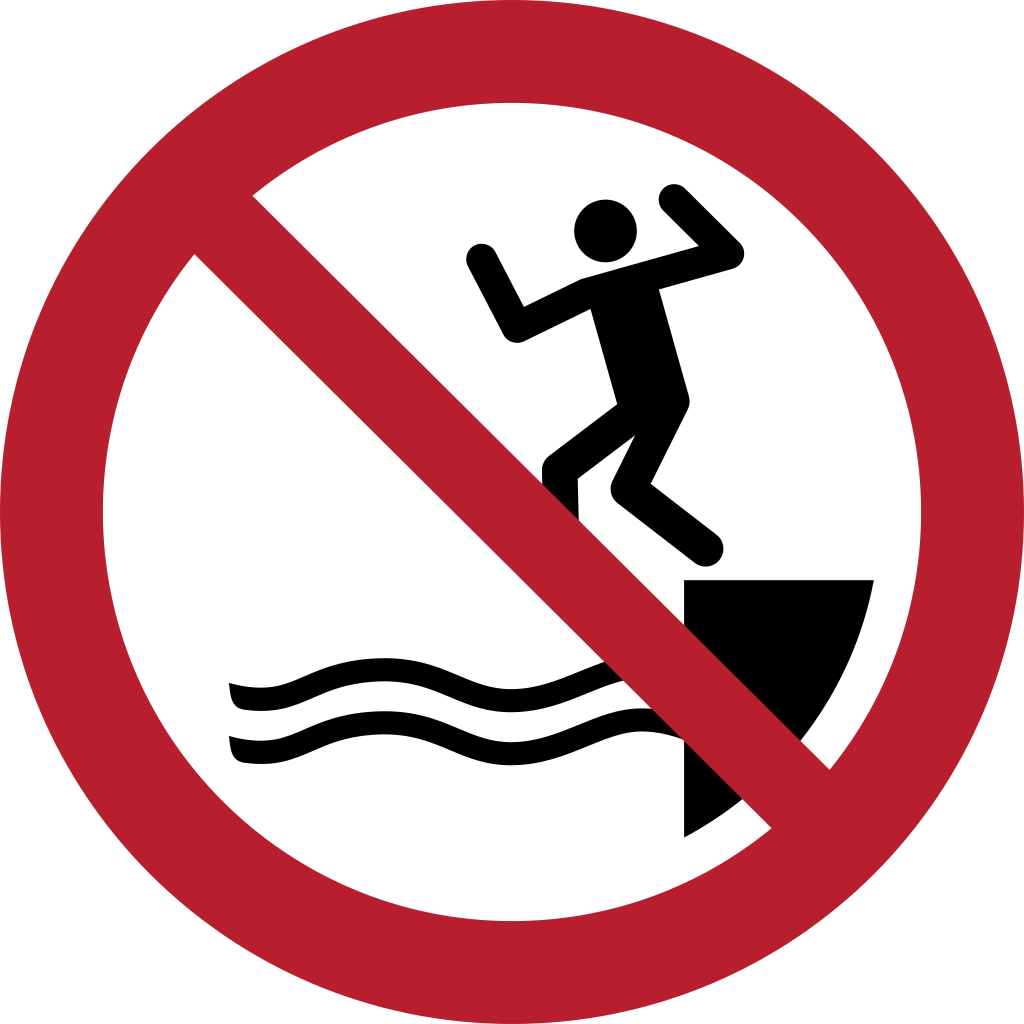
No jumping into water
Jumping into the water is prohibited.
Understanding this sign
Red circular signs with a diagonal bar identify an action that must not be taken in the marked area.
Check what object or action the symbol prohibits. A prohibition sign does not identify all the hazards in an area.
What ISO 7010 P061 Prohibits
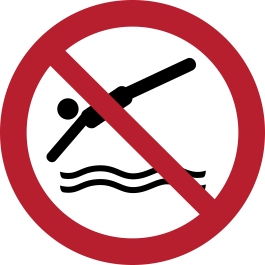
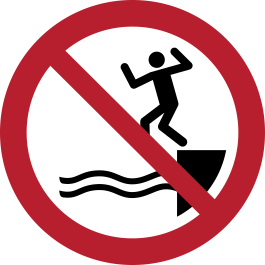
P061 bans jumping into the water — deliberate feet-first entry from an edge, wall, or structure above it. The pictogram shows an upright figure dropping toward a water surface, struck through in the standard red prohibition style, and the register defines the function as prohibiting jumping into the water. It complements rather than duplicates P052: that sign stops headfirst dives, this one stops the leap.
The sign exists because feet-first entry, often assumed to be the safe option, kills and injures people every year at heights and in waters where no entry is survivable or sensible. It is part of the ISO 20712-1 lineage of water safety signs and is aimed as much at open-water structures as at swimming pools.
Why Feet-First Entry Still Injures People
Three hazards dominate. Depth is the first: a jumper cannot see whether the water below a quay or bridge covers rocks, shopping trolleys, mooring chains, or a shelving bottom, and tidal water changes the answer hour by hour. Impact is the second: from height, water behaves harshly, and awkward landings break legs, ankles, and backs before the swim home even begins.
The third is cold-water shock. Sudden immersion in cold open water triggers an involuntary gasp and rapid breathing; a jumper who goes under on that gasp inhales water, and even strong swimmers can be incapacitated within the first minute. Because the jump ends in deep, cold water away from easy egress, incidents that start as bravado end as rescues or recoveries — the pattern known in the UK as tombstoning.
Structures That Carry the Sign
P061's natural habitat is any elevated edge that invites a leap: harbour walls, piers, jetties, bridges, lock gates, quaysides, breakwaters, and the platforms of quarry lakes and reservoirs. Coastal towns install it at the specific spots with a jumping tradition, often after repeated incidents, and pair it with depth or submerged-object warnings that explain what the water conceals.
It also earns a place at pools and waterparks — on spectator ledges, feature rocks, and edges above shallow or congested water where a jumper would land on other bathers. At leisure sites the sign frequently shares a panel with the no-diving and no-pushing pictograms (P052 and P062), covering the full set of uncontrolled entries in one place.
Specifying P061 Correctly
Choose P061 when people may be in or near the water legitimately but must not enter it by jumping from the signed structure. If the entire water body is off limits, P049 is the honest sign; if only headfirst entry is the danger, P052 is sufficient. Locations with both a shallow bottom and an elevated edge — a pontoon over variable tidal depth, for example — justify posting P052 and P061 together.
Because jumping spots are social and seasonal, placement should follow behavior: mount the sign at the exact ledges people use, not just the official entrance, and keep it legible from the approach path. Supplementing the pictogram with a short factual reason, such as submerged rocks or strong currents, has a better record of deterring teenagers than the symbol alone.
Where you will see P061
Harbour walls, piers, jetties, bridges, lock gates, quaysides, breakwaters, and quarry-lake platforms are its natural habitat, with coastal towns installing it at the specific spots that have a jumping tradition. Pools and waterparks add it on spectator ledges, feature rocks, and edges above shallow or congested water, often on a shared panel with the P052 no-diving and P062 no-pushing pictograms.
Common questions about P061
What does the no jumping into water sign mean?
ISO 7010 P061 prohibits entering the water by jumping — feet-first — from the wall, edge, pier, or platform where it is displayed. It targets the hazards of unknown depth, submerged objects, impact from height, and cold-water shock. It is distinct from P052, which prohibits headfirst diving, and from P049, which closes the water to swimmers entirely.
What is tombstoning and why is it dangerous?
Tombstoning is the UK term for jumping from height — harbour walls, cliffs, bridges — into open water. It is dangerous because the jumper cannot verify depth or what lies beneath the surface, tides change both by the hour, impact from height causes fractures, and cold-water shock can incapacitate even good swimmers on entry. P061 is the standard sign used at known tombstoning spots.
Is jumping into water feet first actually risky if I can swim?
Swimming ability does not protect against the main killers. Cold-water shock causes involuntary gasping and can trigger drowning in the first moments regardless of skill; submerged rocks and debris break bones on impact; and currents or vertical walls can prevent you getting out. Where P061 is posted, the operator knows something about that water — depth, obstacles, temperature, or egress — that makes the jump a bad bet.
Should a pool use P061 or P052?
It depends on which entry you need to stop. Shallow water where headfirst entry risks spinal injury calls for P052. Edges above crowded or shallow zones, feature rocks, and raised ledges where guests might leap call for P061. Many pools display both, because the two signs prohibit different actions and neither implies the other.
Reference details
| Symbol code | P061 |
|---|---|
| Sign family | ISO Prohibition Signs |
| Standard reference | ISO 7010:2019 / ISO 3864-1 ISO Online Browsing Platform: P061 |
| Screen color reference | #FF0000. Screen colors are not a production color specification. |
| Download formats | SVG reference artwork; a 1024 × 1024 pixel PNG conversion on a white canvas. |
| Record date | · How to interpret our dates |
| Page updated |
Choosing a physical sign size
Download dimensions are not installation dimensions. Select sign size, material, placement, and lighting using the applicable standard and the actual viewing conditions. Chemical label sizing follows its own rules. Read the artwork and sizing guide.
Sources and artwork credits
- Artwork source
- Wikimedia Commons file page
- Creator credited by source
- ISO
- License
- Public domain
- Source metadata checked
SVG files are local reference copies. PNG files are raster conversions. Check the linked file history and license terms before reuse; a source-metadata check is not certification of the artwork or a workplace installation.
Report a correction to this reference