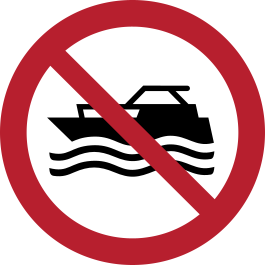
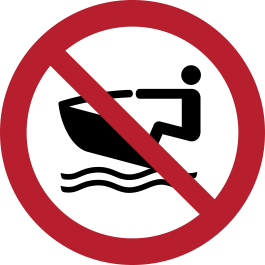
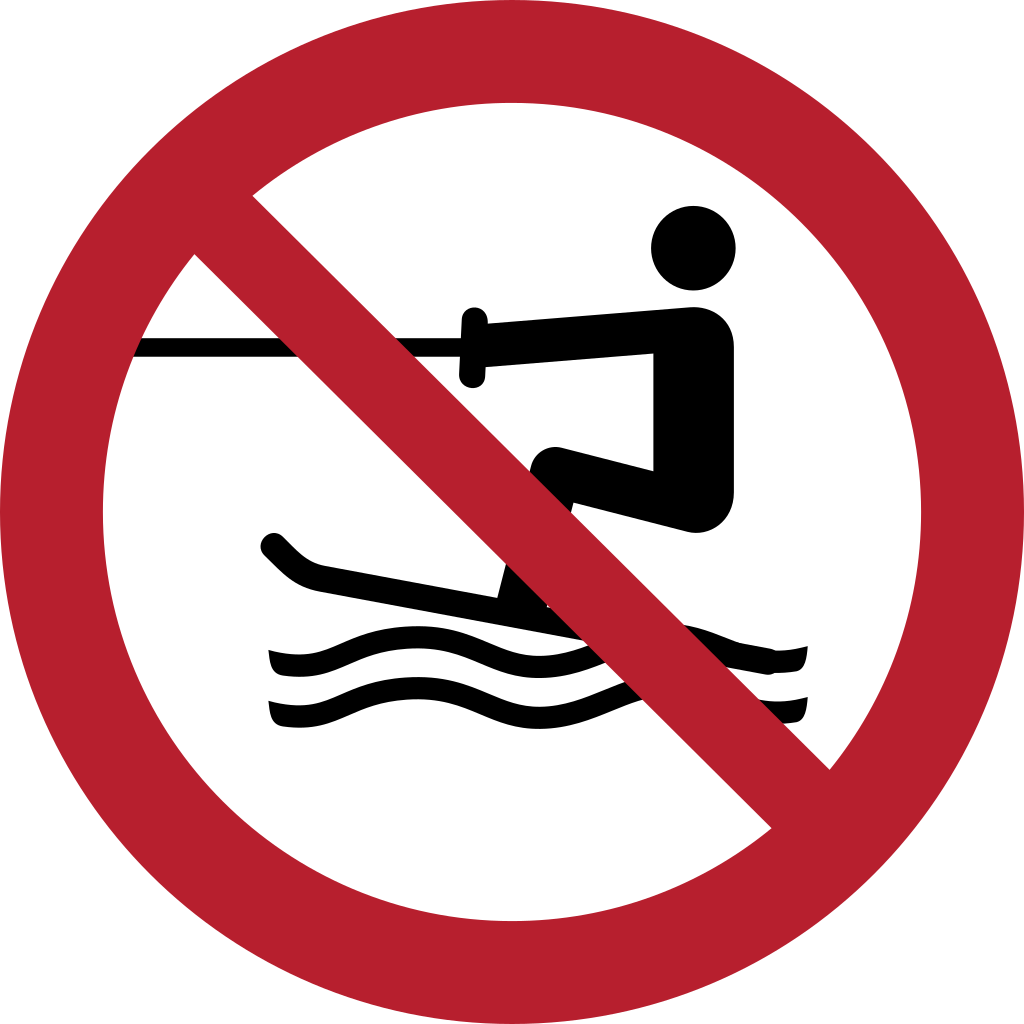
No towed water activity
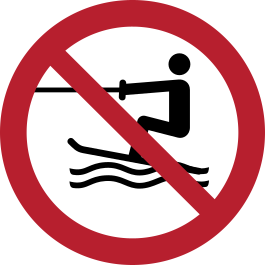
Towed water activities are prohibited.
Understanding this sign
Red circular signs with a diagonal bar identify an action that must not be taken in the marked area.
Check what object or action the symbol prohibits. A prohibition sign does not identify all the hazards in an area.
What ISO 7010 P058 Prohibits
P058 bans towed water activities: waterskiing, wakeboarding, kneeboarding, and rides on towed inflatables such as doughnuts and banana boats — the examples listed in the ISO register. The prohibited thing is the towing arrangement itself, a powered vessel pulling a person or ridden inflatable on a line, not the vessel or the participant considered separately.
That framing is what distinguishes P058 from the craft prohibitions around it. A motorboat may lawfully cruise through a P058 zone; the moment it takes a skier under tow it is in breach. Conversely, banning motor craft outright with P056 makes P058 redundant, so the towed-activity sign is characteristically found on water that remains open to powered navigation but closes off this one use of it.
Why Towing Is Singled Out
A tow operation occupies far more water than the boat alone. The line runs many meters astern, the skier or tube swings wide of the boat's track on every turn, and towed inflatables whip outside the wake in arcs their riders cannot control. Other water users judge clearance by the boat and are then struck or startled by something traveling well off its line — a hazard geometry unique to towing, and the core reason for a dedicated prohibition.
Fallen participants add a second layer. A dropped skier is a head in open water, often in the middle of a fairway, while the boat circles back at speed to recover them. Many jurisdictions manage this with requirements such as an observer aboard in addition to the driver, and by confining towing to designated areas or hours; P058 is the signage face of those schemes, marking the water where tow sports must not take place at all.
Typical Zoning and Placement
Lakes and coastal resorts commonly divide their water by activity: a ski corridor or ski lane with jetty access at one end, and P058 posted across bathing frontages, mooring areas, angling banks, and narrow channels where a swinging towline would sweep the full width. River navigations use the sign on reaches with blind bends or heavy traffic, where a recovering skier could not be seen in time by oncoming vessels.
Effective installations address the boat driver rather than the person on the line, since the driver makes the decision. That means signage at slipways, fuel berths, and marina exits, plus buoyage marking the boundary of the no-towing water. A supplementary panel stating what counts — skiing, wakeboarding, inflatable rides — prevents the recurring claim that a doughnut ride is not skiing.
Where you will see P058
Lakes and coastal resorts post it across bathing frontages, mooring areas, angling banks, and narrow channels a swinging towline would sweep, while river navigations use it on blind bends and heavily trafficked reaches. Because the boat driver makes the decision, effective installations target slipways, fuel berths, and marina exits, backed by buoyage marking the boundary of the no-towing water.
Common questions about P058
Does the no towed water activity sign ban the boat or the skier?
It bans the combination: a vessel towing a person or ridden inflatable. The boat itself may still navigate the zone if no other prohibition applies, and swimming or paddling are unaffected. The offence under most local rules is committed by the towing operation, with responsibility resting primarily on the boat driver.
Are inflatable doughnut and banana boat rides covered by P058?
Yes. The ISO register explicitly lists doughnuts and banana craft alongside waterskiing and wakeboarding as examples of towed water activity. Any arrangement where a powered craft pulls a person on a line — on skis, a board, or an inflatable — falls within the sign.
Why would a lake allow motorboats but prohibit waterskiing?
Because towing consumes much more water than cruising. The towline extends far behind the boat, skiers and tubes swing wide on turns, and fallen participants end up as low-visibility swimmers in the fairway while the boat circles to retrieve them. A lake can tolerate transiting motor traffic yet lack the clear space that safe tow sports require.
Is towing a wakeboarder behind a jet ski included?
Yes. P058 concerns the activity, not the type of towing vessel, so a PWC pulling a wakeboarder or inflatable inside the zone breaches the prohibition just as a ski boat would. Where jet skis are themselves excluded, the separate sign P057 applies as well.
Reference details
| Symbol code | P058 |
|---|---|
| Sign family | ISO Prohibition Signs |
| Standard reference | ISO 7010:2019 / ISO 3864-1 ISO Online Browsing Platform: P058 |
| Screen color reference | #FF0000. Screen colors are not a production color specification. |
| Download formats | SVG reference artwork; a 1024 × 1024 pixel PNG conversion on a white canvas. |
| Record date | · How to interpret our dates |
| Page updated |
Choosing a physical sign size
Download dimensions are not installation dimensions. Select sign size, material, placement, and lighting using the applicable standard and the actual viewing conditions. Chemical label sizing follows its own rules. Read the artwork and sizing guide.
Sources and artwork credits
- Artwork source
- Wikimedia Commons file page
- Creator credited by source
- ISO
- License
- Public domain
- Source metadata checked
SVG files are local reference copies. PNG files are raster conversions. Check the linked file history and license terms before reuse; a source-metadata check is not certification of the artwork or a workplace installation.
Report a correction to this reference