Use of smart glasses prohibited
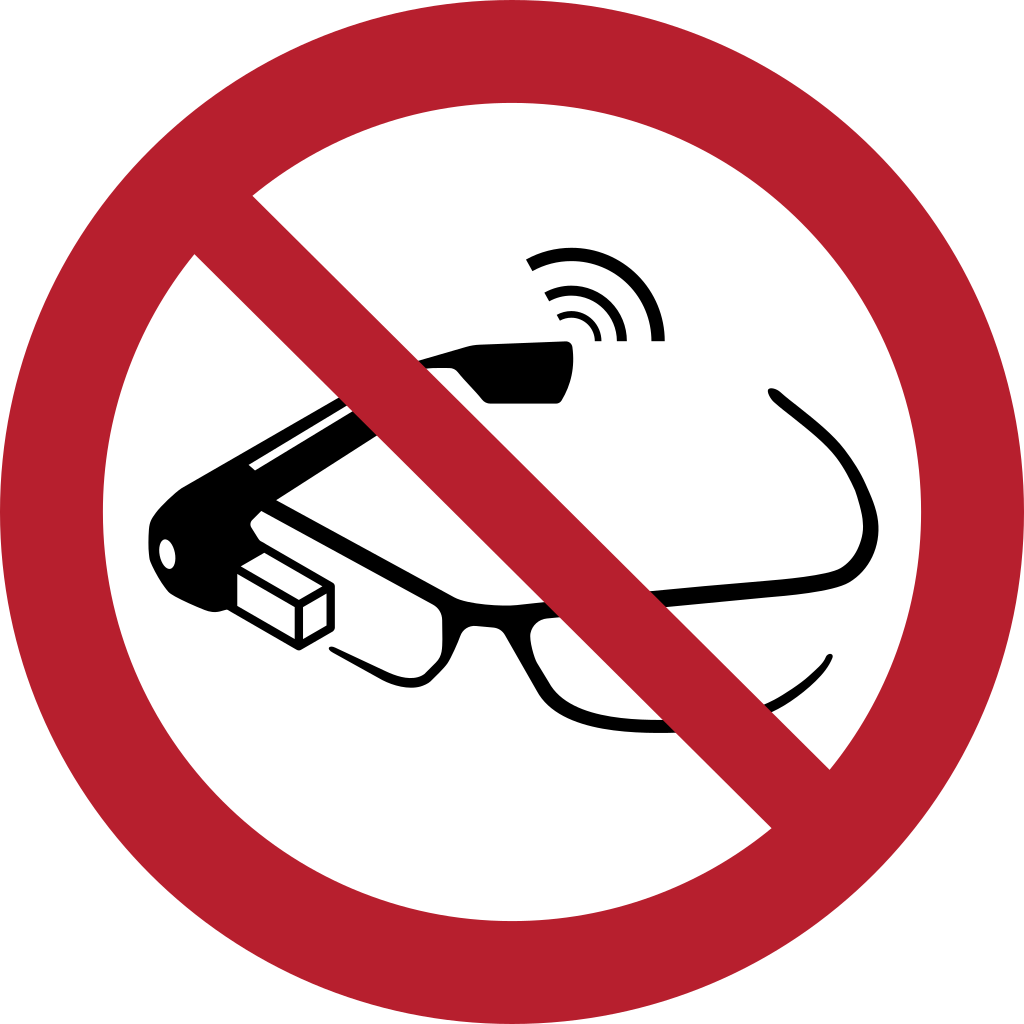
Use of smart glasses is prohibited.
Understanding this sign
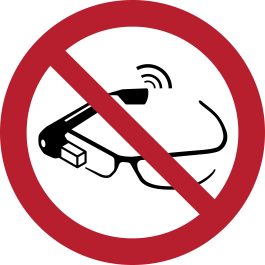
Red circular signs with a diagonal bar identify an action that must not be taken in the marked area.
Check what object or action the symbol prohibits. A prohibition sign does not identify all the hazards in an area.
What ISO 7010 P044 Prohibits
P044 forbids the use of smart glasses — head-worn devices that combine eyewear with a camera, a display, or both — in the marked area. It is one of the newer entries in the ISO 7010 register, added as wearable computing moved from novelty to consumer product and facilities found their existing camera and phone rules did not obviously cover a device worn on the face.
Two distinct concerns motivate the ban. The first is covert capture: smart glasses can photograph, film, and stream from eye level with no visible handling of a device. The second is attention: a display floating in the wearer's field of view competes with the road, the machine, or the walkway in front of them. A single site may post P044 for either reason or both.
Where the Ban Applies
Confidentiality-driven postings appear at R&D centers, prototype workshops, automotive proving grounds, semiconductor fabs, and defense facilities, where a glance can exfiltrate a trade secret. Privacy-driven postings cover examination halls, courtrooms, casinos, cinemas, medical settings, and changing or locker areas — anywhere third parties have a strong expectation of not being recorded or where recording enables cheating or fraud.
Distraction-driven postings target activity rather than information: vehicle cabs and forklift seats, crane cabins, machine operating positions, and pedestrian routes through live traffic. In these locations, P044 plays the same role for head-mounted displays that mobile phone prohibitions play for handsets, closing a loophole where an operator could claim their hands were free and eyes forward.
Scope Questions and Companion Signs
P044 targets smart eyewear specifically; ordinary prescription glasses and plain sunglasses are untouched, and safety spectacles remain mandatory wherever an eye-protection sign requires them. Ambiguity arises with camera-equipped AR headsets and prescription frames with embedded electronics — sites should resolve this in written policy, treating the pictogram as covering any head-worn device capable of capture or display.
Because the sign addresses one device class, facilities with a broader concern layer it with related prohibitions: a no-photography sign for cameras generally, a phone-use prohibition for handsets, and P008-style divest rules where recording devices must be surrendered at entry. Listing smart glasses explicitly matters because visitors genuinely dispute whether a general camera ban includes something they wear as glasses.
Where you will see P044
R&D centers, prototype workshops, automotive proving grounds, semiconductor fabs, and defense facilities post it to protect trade secrets, while examination halls, courtrooms, casinos, and medical settings use it for privacy. Distraction-driven placements target vehicle cabs, forklift seats, crane cabins, machine operating positions, and pedestrian routes through live traffic.
Common questions about P044
Does the P044 sign apply to normal prescription glasses?
No. The prohibition covers smart glasses — eyewear with an integrated camera, display, microphone, or connectivity. Conventional prescription lenses, sunglasses, and safety spectacles are unaffected, and required protective eyewear must still be worn. Prescription frames with embedded electronics fall on the smart side of the line at most sites.
Why do factories and R&D sites ban smart glasses?
Primarily to protect confidential information. Smart glasses record from the wearer's eye line without any visible gesture, defeating the informal social check that catches someone raising a phone. Sites with prototypes, proprietary processes, or customer data treat them as always-on cameras and exclude them at the entrance rather than trying to police what is captured inside.
Are smart glasses banned while driving or operating machinery?
Increasingly, yes at site level: operators post P044 in vehicle cabs, forklift seats, and machine control positions because a head-up display divides attention even with hands on the controls. Road traffic law varies by country — some jurisdictions treat display eyewear under existing distracted-driving or screen-visibility rules — so employers usually impose the ban directly rather than relying on statute.
Does P044 also cover VR and AR headsets?
The pictogram depicts glasses-style devices, but the underlying rule — no head-worn capture or display equipment — logically extends to AR and mixed-reality headsets, and most site policies say so explicitly. Since ISO 7010 has no separate headset prohibition, P044 with a supplementary text panel naming headsets is the practical way to sign that intent.
Reference details
| Symbol code | P044 |
|---|---|
| Sign family | ISO Prohibition Signs |
| Standard reference | ISO 7010:2019 / ISO 3864-1 ISO Online Browsing Platform: P044 |
| Screen color reference | #FF0000. Screen colors are not a production color specification. |
| Download formats | SVG reference artwork; a 1024 × 1024 pixel PNG conversion on a white canvas. |
| Record date | · How to interpret our dates |
| Page updated |
Choosing a physical sign size
Download dimensions are not installation dimensions. Select sign size, material, placement, and lighting using the applicable standard and the actual viewing conditions. Chemical label sizing follows its own rules. Read the artwork and sizing guide.
Sources and artwork credits
- Artwork source
- Wikimedia Commons file page
- Creator credited by source
- ISO
- License
- Public domain
- Source metadata checked
SVG files are local reference copies. PNG files are raster conversions. Check the linked file history and license terms before reuse; a source-metadata check is not certification of the artwork or a workplace installation.
Report a correction to this reference