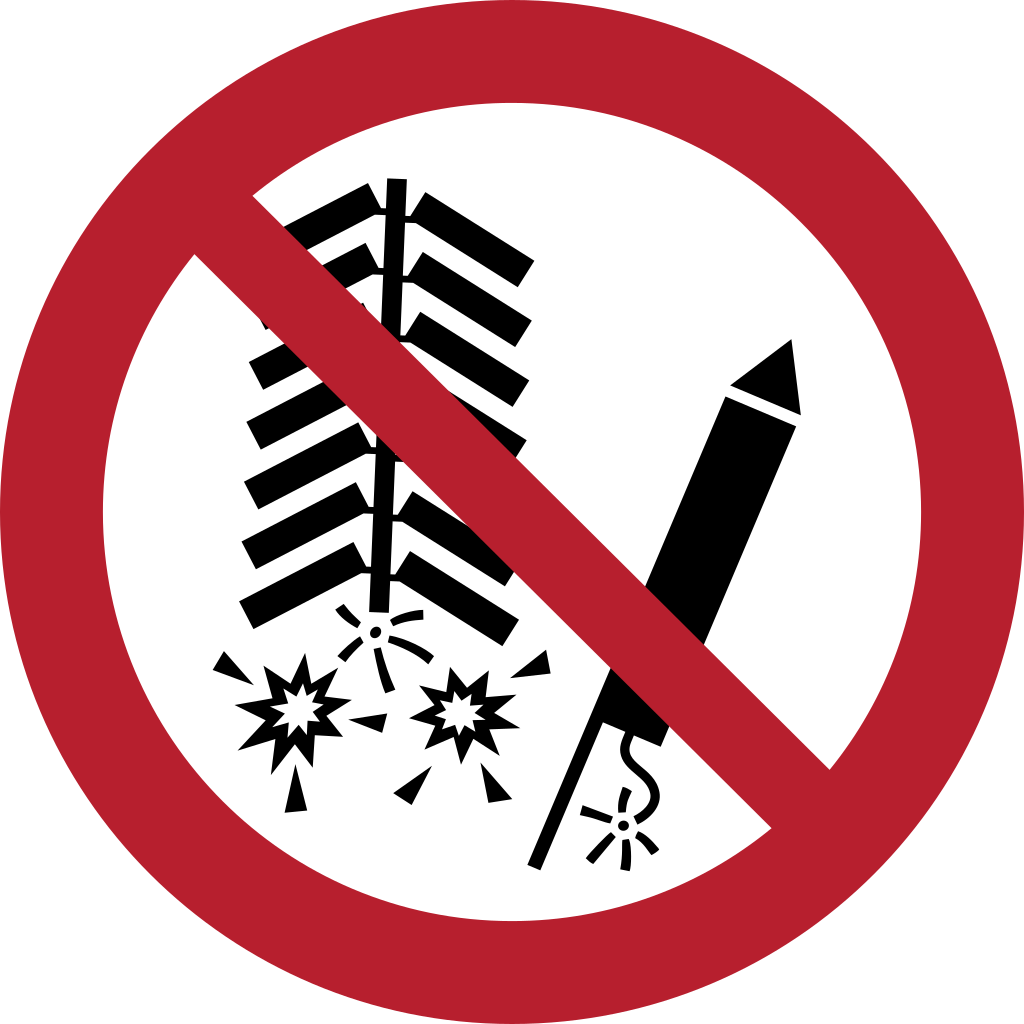
Do not set off fireworks
Setting off fireworks is prohibited.
Understanding this sign
Red circular signs with a diagonal bar identify an action that must not be taken in the marked area.
Check what object or action the symbol prohibits. A prohibition sign does not identify all the hazards in an area.
What ISO 7010 P040 Prohibits
P040 forbids igniting or launching fireworks in the posted area. In the ISO 7010 register the referent reads Do not set off fireworks, with the function of prohibiting setting off fireworks; the pictogram shows a firework rocket inside the red prohibition ring and slash specified by ISO 3864-1. The ban covers consumer pyrotechnics broadly — rockets, firecrackers, fountains, and similar devices a member of the public might bring and light themselves.
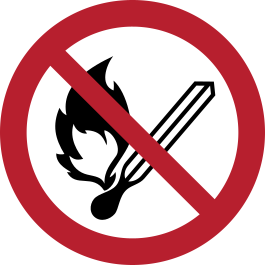
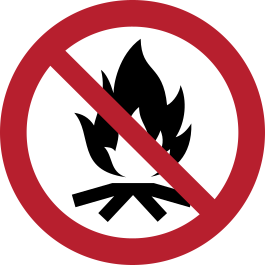
The sign fills a gap the older fire-prohibition signs leave open. P003 stops flames and ignition sources, and P045 stops campfires, but neither picture reads to a festival-goer holding a rocket as a message about their plans for midnight. Fireworks are also unusual among ignition hazards in that they fly: a device lit legally outside a boundary can land inside it, which shapes where the sign has to be posted.
Wildfire Zones and the Outdoors
In fire-prone landscapes, fireworks are among the most tightly restricted ignition sources because they scatter burning material over distance and are used at night, when a starting fire gains hours before detection. Land agencies in many countries ban them from forests, heathland, and grassland outright or during declared fire-danger periods; campgrounds and holiday parks in such regions post the prohibition permanently. New Year and midsummer celebrations concentrate the risk into single nights when conditions may be dry.
Seasonal bans deserve honest signage. Where the prohibition follows a fire danger rating or a declared ban period, authorities pair P040 with the rating board or dated notice, so visitors can see the rule is active rather than a leftover. Where the ban is permanent — near protected habitats, in municipalities that prohibit consumer fireworks year-round — the sign stands alone and means exactly what it shows in any season.
Venues, Fuel Facilities, and Urban Uses
Event operators post P040 at stadium and arena entrances, festival gates, and campground check-ins, usually within the cluster of entry-condition pictograms searched by security staff. Flares and firecrackers inside a packed crowd cause burns and panic movement, so sports governing bodies and venue licenses commonly ban pyrotechnics for spectators even where a licensed display is part of the show — the sign addresses the audience, not the professional operator.
Industrial users include fuel depots, LPG storage, marinas, grain terminals, and any site with flammable vapors or dusts, where a stray rocket from adjacent land is a genuine scenario; posting on perimeter fencing facing neighboring properties addresses ignition sources that originate outside the fence. Municipalities likewise use the sign in parks, on beaches, and around landmarks during festival periods when private fireworks are prohibited in favor of the public display.
Legal Context and Companion Signage
Fireworks law varies enormously by country and even by municipality — covering who may buy which device categories, on which dates, and where they may be used — so P040 should be read as marking a locally enforceable rule rather than expressing one universal law. ISO 7010 standardizes the symbol; the sanction behind it comes from local fireworks legislation, park bylaws, venue conditions of entry, or fire-ban declarations, and penalties escalate sharply during declared fire emergencies.
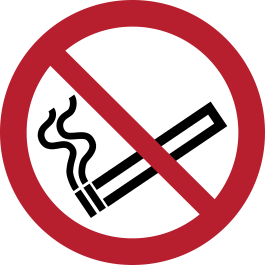
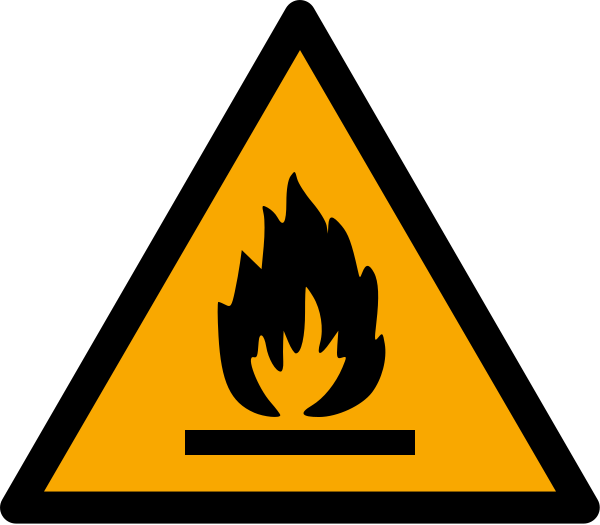
Alongside P040, sites at fire risk typically display P045 where open campfires are the parallel concern, P002 or P003 for smoking and general ignition sources, and W021 where flammable material warrants a warning in its own right. For public-facing locations, supplementary text stating the ban's dates or legal basis improves compliance, since visitors distinguish between a courtesy request and an offense.
Where you will see P040
Forests, heathland, campgrounds, and holiday parks in fire-prone landscapes carry it permanently or beside dated fire-ban notices, while stadiums, arenas, and festival gates include it among the entry-condition pictograms aimed at spectators. Fuel depots, LPG storage, marinas, and grain terminals fix it to perimeter fencing facing neighbouring land, since a stray rocket from outside is a genuine ignition scenario.
Common questions about P040
Where are you not allowed to set off fireworks?
Commonly: forests, heathland, and other wildfire-prone land, especially during declared fire-danger periods; campgrounds and holiday parks; stadiums, festivals, and other licensed venues; near fuel storage, marinas, and industrial sites handling flammables; and in many municipalities, anywhere outside specific permitted dates. The P040 sign marks locations where such a rule applies — check local fireworks law for the details, because it varies widely.
Does the P040 sign apply to sparklers and small fireworks?
Treat it as covering all consumer pyrotechnics unless the operator states otherwise. The pictogram shows a rocket, but the registered function is to prohibit setting off fireworks as an activity, and the risks it manages — scattered burning material, ignition of vegetation or vapors, burns in crowds — apply to fountains and firecrackers too. Some jurisdictions regulate sparklers separately, so the posted rule or local law decides edge cases.
Why do fuel depots and grain terminals post no-fireworks signs on their fences?
Because fireworks travel. A rocket launched from a neighboring property or public land can land inside a site handling flammable vapors or combustible dust, so operators post the prohibition outward on perimeter fencing to warn the surrounding public, not just their own staff. It complements the P003 ignition-source bans that apply inside the site.
Are fireworks banned during wildfire season?
In many fire-prone regions, yes — either automatically above a certain fire danger rating or through declared fire-ban periods, and some areas prohibit them in wildland year-round. Because these rules are jurisdiction-specific and change with conditions, look for the local fire danger board or ban notice posted with the sign, and assume the strictest reading when conditions are dry.
Reference details
| Symbol code | P040 |
|---|---|
| Sign family | ISO Prohibition Signs |
| Standard reference | ISO 7010:2019 / ISO 3864-1 ISO Online Browsing Platform: P040 |
| Screen color reference | #FF0000. Screen colors are not a production color specification. |
| Download formats | SVG reference artwork; a 1024 × 1024 pixel PNG conversion on a white canvas. |
| Record date | · How to interpret our dates |
| Page updated |
Choosing a physical sign size
Download dimensions are not installation dimensions. Select sign size, material, placement, and lighting using the applicable standard and the actual viewing conditions. Chemical label sizing follows its own rules. Read the artwork and sizing guide.
Sources and artwork credits
- Artwork source
- Wikimedia Commons file page
- Creator credited by source
- ISO
- License
- Public domain
- Source metadata checked
SVG files are local reference copies. PNG files are raster conversions. Check the linked file history and license terms before reuse; a source-metadata check is not certification of the artwork or a workplace installation.
Report a correction to this reference