Do not swing the chair
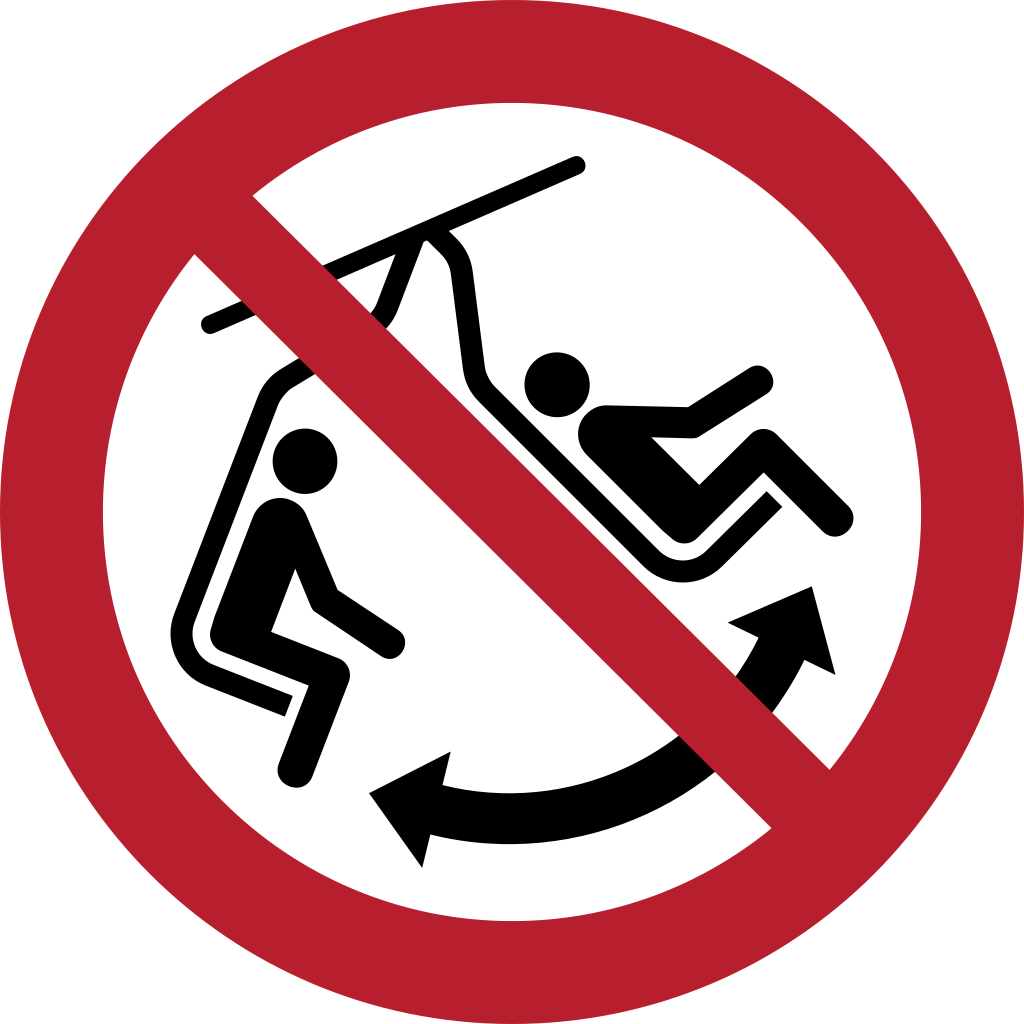
Swinging the chair is prohibited.
Understanding this sign
Red circular signs with a diagonal bar identify an action that must not be taken in the marked area.
Check what object or action the symbol prohibits. A prohibition sign does not identify all the hazards in an area.
What ISO 7010 P038 Prohibits
P038 forbids rocking or swinging a chairlift chair while it is on the line. The ISO 7010 register lists its referent as Do not swing the chair, with the stated function of prohibiting swinging the chair. The pictogram shows a suspended chair with passengers inside the familiar red prohibition ring and slash, drawn to the ISO 3864-1 design rules so the message reads the same at an Alpine resort, a Scandinavian hill, or a Japanese ski area.
It is one of the ski-area signs that entered ISO 7010 via the standard's recreation amendments, replacing the patchwork of national lift-safety pictograms with a single registered symbol. Lift operators, not public authorities, are the typical users: the sign expresses a condition of carriage that patrols and lift attendants enforce on riders of every age.
Why Swinging a Chair Is Dangerous
A chairlift chair hangs from the haul rope by a grip and swings freely by design, so deliberate rocking amplifies quickly. Enough lateral sway can bring the chair or its hanger close to a tower crosshead, and in the worst case can disturb how the rope sits in the sheave assemblies it passes over. Modern lifts monitor for abnormal rope movement and will fault or stop, which strands every passenger on the line in the cold until the system is checked and restarted.
The more immediate risk is to the people doing it. A rocking chair makes it far easier for a passenger — especially a child — to slide under or past the restraint bar, and it can knock loose skis, poles, or boards onto trails and lift lanes below. The restraint bar helps only if it stays down and the chair stays settled; horseplay defeats both.
Posting and Pairing at the Lift
Resorts commonly place P038 at the chairlift loading station, print it on the safety panel riders face while queueing, and repeat it on lift towers partway up the line where boredom sets in and rocking tends to start. Some operators also mold or sticker the pictogram onto the restraint bar itself, putting the rule directly in the rider's sightline for the whole ascent.
It usually appears in a cluster: a mandatory-action sign or placard telling riders to lower the restraint bar, a raise-bar marker approaching the unload ramp, and P037 where the resort also runs surface lifts. Grouping the messages matters, because chairlift instructions are aimed heavily at children and first-time riders who may be scanning for pictures rather than reading text.
Enforcement and the Wider Conduct Code
P038 has no direct workplace equivalent; its legal weight comes from the operator's conditions of carriage and from national ropeway and amusement-transport regulations that oblige operators to manage passenger behavior. Attendants can stop the lift, warn riders over the PA, or revoke passes for deliberate rocking, and the posted pictogram is what makes that enforcement defensible.
On the slopes themselves, rider behavior is framed by the FIS Rules for Conduct, which address speed, right of way, and consideration for others. The lift ride sits outside those downhill rules, which is exactly the gap the ISO winter-sport prohibition signs fill: they regulate the few minutes when a guest is a passenger on machinery rather than a skier in control of their own line.
Where you will see P038
Resorts place it at chairlift loading stations, on the safety panels riders face while queueing, and on lift towers partway up the line where boredom sets in and rocking tends to start. Some operators mold or sticker the pictogram onto the restraint bar itself, grouping it with lower-the-bar placards, raise-bar markers at the unload ramp, and P037 where surface lifts also run.
Common questions about P038
What happens if you swing a chairlift chair?
Deliberate rocking builds lateral sway that can bring the chair close to tower structures and unseat how the haul rope sits in the sheave assemblies. Lifts monitor for abnormal movement and may stop automatically, stranding everyone on the line. It also raises the chance of a passenger slipping under the restraint bar or dropping equipment onto people below, and most resorts treat it as grounds for a warning or pass revocation.
Does the restraint bar make swinging the chair safe?
No. The bar reduces the chance of a fall from a settled chair, but a rocking chair can still shift passengers past or under it, particularly children. Standard practice is to lower the bar promptly after loading, keep the chair still for the whole ride, and raise the bar only at the marked point before the unload ramp.
Where is the P038 sign usually displayed?
On the safety information panel at the chairlift loading station, on tower placards along the line, and often on the restraint bar or chair itself. Operators position it where riders will see it mid-ride, since that is when rocking typically starts, and group it with lower-the-bar and raise-the-bar instructions.
Is Do not swing the chair an official ISO symbol?
Yes. It is registered in ISO 7010 as prohibition sign P038, one of the winter-sport signs added through the standard's amendments. Because it follows the ISO 3864-1 prohibition format — a black pictogram behind the red ring and slash — it communicates without language, which suits international resort audiences.
Reference details
| Symbol code | P038 |
|---|---|
| Sign family | ISO Prohibition Signs |
| Standard reference | ISO 7010:2019 / ISO 3864-1 ISO Online Browsing Platform: P038 |
| Screen color reference | #FF0000. Screen colors are not a production color specification. |
| Download formats | SVG reference artwork; a 1024 × 1024 pixel PNG conversion on a white canvas. |
| Record date | · How to interpret our dates |
| Page updated |
Choosing a physical sign size
Download dimensions are not installation dimensions. Select sign size, material, placement, and lighting using the applicable standard and the actual viewing conditions. Chemical label sizing follows its own rules. Read the artwork and sizing guide.
Sources and artwork credits
- Artwork source
- Wikimedia Commons file page
- Creator credited by source
- ISO
- License
- Public domain
- Source metadata checked
SVG files are local reference copies. PNG files are raster conversions. Check the linked file history and license terms before reuse; a source-metadata check is not certification of the artwork or a workplace installation.
Report a correction to this reference