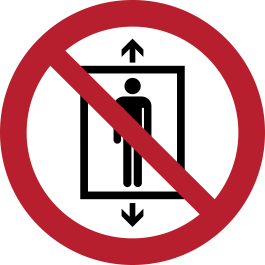
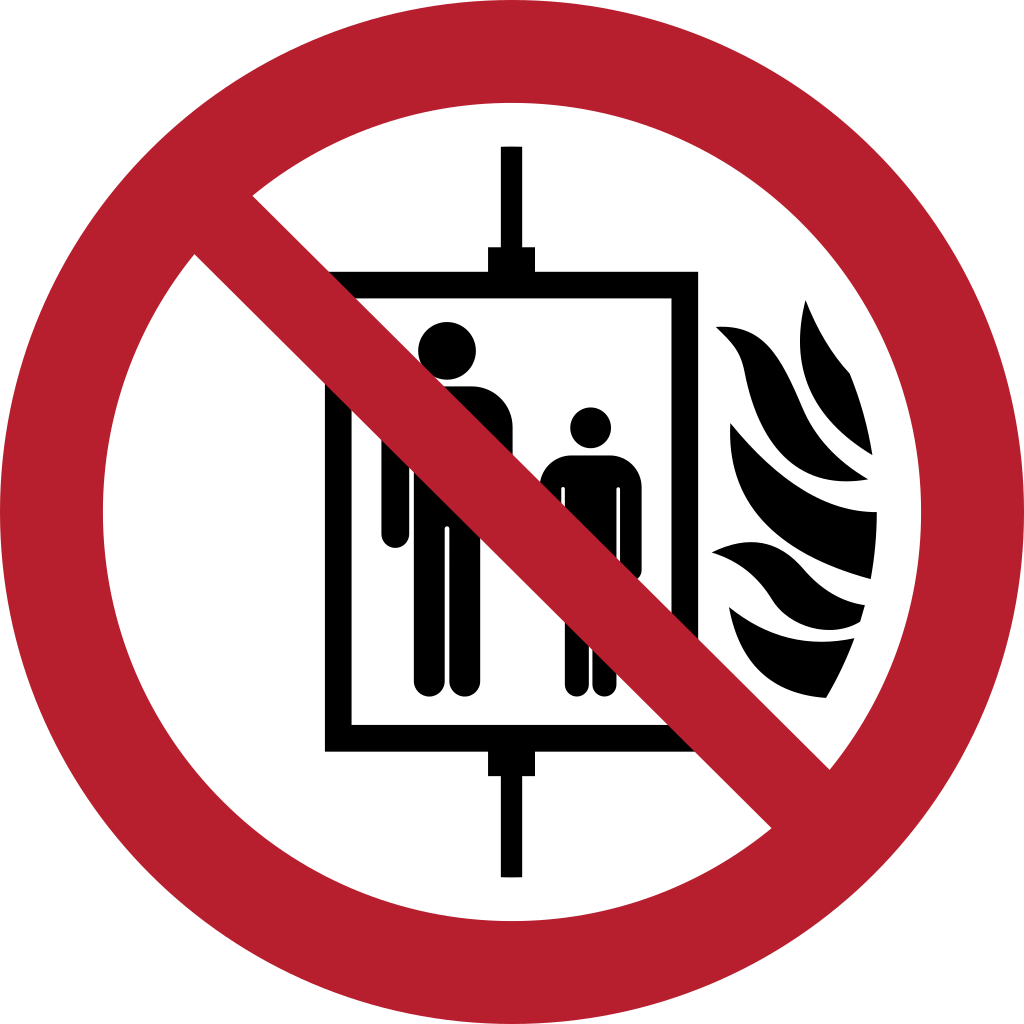
Do not use lift in the event of fire
The marked lift is not to be used in the event of fire.
Understanding this sign
Red circular signs with a diagonal bar identify an action that must not be taken in the marked area.
Check what object or action the symbol prohibits. A prohibition sign does not identify all the hazards in an area.
Why Elevators Are Off-Limits During a Fire
P020 prohibits using a lift when fire breaks out in the building. The pictogram combines flames with an elevator car and passengers under the red prohibition band, and it addresses a failure chain that occupants rarely think through. Fire routinely cuts building power, and a car stalled between floors becomes a sealed box with its occupants trapped in a burning structure.
The shaft itself compounds the danger. An elevator hoistway runs the full height of the building and behaves like a chimney, drawing smoke and hot gases upward, so an arriving car can open its doors into the worst air in the building. Heat and water can also corrupt call electronics, sending a car to the fire floor uncommanded. Stairs, by contrast, are built as protected escape routes.
The Most Universally Posted Prohibition Sign
Few ISO 7010 signs are installed as consistently as P020. Standard practice worldwide is to display it in every elevator lobby on every floor, usually beside the call button where the decision to press it is made. In multi-story offices, hotels, hospitals, and apartment buildings it is often the only prohibition sign an occupant sees daily, which is exactly the repetition that makes the rule automatic during an actual alarm.
In the United States the same message is delivered through building-code convention rather than the ISO pictogram alone: the International Building Code and elevator safety codes require signage at call stations telling occupants that in case of fire elevators should not be used and exit stairs should be taken. Many US buildings post the prescribed text sign and the ISO symbol together; internationally, P020 with a directional arrow to the stair is the common pattern.
Pair It With the Way Out
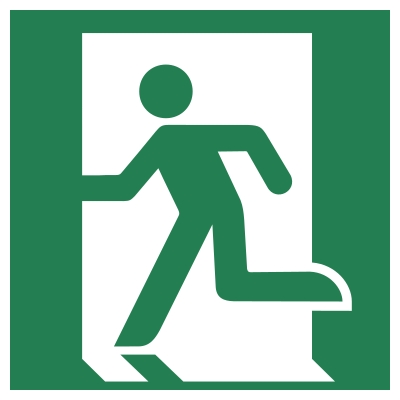
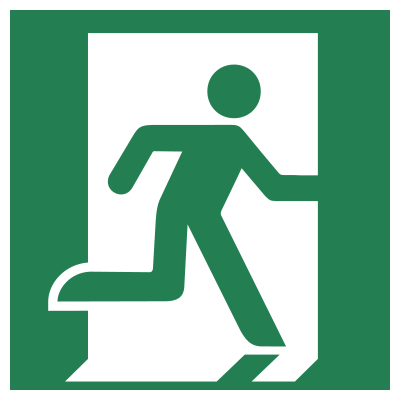
A prohibition that removes the obvious route must point to the alternative, so P020 belongs in a composite layout with the green E-series escape signs — typically E001 or E002 with an arrow toward the nearest protected stairwell. Evacuation floor plans mounted in lobbies reinforce the pairing by showing the stair locations relative to the reader. Without that second half, the sign tells people what not to do at the worst possible moment to leave them guessing.
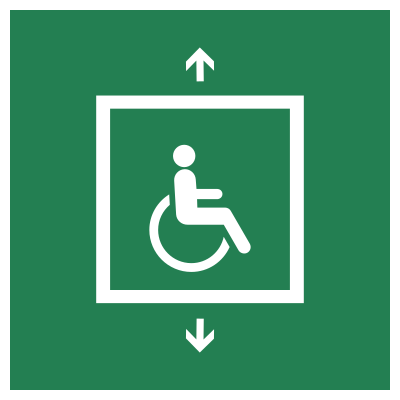
Two exceptions deserve accurate signage rather than silence. Modern codes provide for firefighters' lifts, which fire crews operate under dedicated controls, and some buildings designate evacuation lifts for people who cannot use stairs, run under managed procedures during an incident. Where such a lift exists, its lobby needs supplementary wording explaining who may use it and when, because a bare P020 would contradict the building's own evacuation plan for disabled occupants.
Where you will see P020
Standard practice worldwide places it in every elevator lobby on every floor of multi-story offices, hotels, hospitals, and apartment buildings, usually beside the call button where the decision to press it is made. It is typically shown in a composite layout with green E001 or E002 escape signs and an arrow toward the nearest protected stairwell, and US buildings often pair it with the code-mandated text signage.
Common questions about P020
Why can't you use an elevator during a fire?
Three reasons stack up. Power failure can strand the car mid-shaft with no escape. The hoistway acts as a flue, filling with smoke that pours into the car when doors open. And fire-damaged controls can deliver the car to the burning floor. Enclosed exit stairs are designed and fire-rated specifically to stay usable, which is why every evacuation plan routes people there.
Where should the P020 sign be installed?
At every elevator landing on every floor, ideally adjacent to the call button so it is read at the moment of choice, and often inside the car as well. Best practice adds a green escape-route sign or an arrow to the nearest stair in the same location, so the prohibition and the alternative are absorbed together.
Is do-not-use-lift-in-fire signage legally required?
In most jurisdictions, effectively yes. US building and elevator codes require signage at elevator call stations directing occupants to use exit stairs in a fire, and fire safety regimes in the EU, UK, and elsewhere require escape-route information that in practice includes this prohibition at lifts. The exact wording or symbol accepted varies, so check the code applying to your building.
What about firefighters' lifts and evacuation lifts?
They are deliberate exceptions. A firefighters' lift has protected power and controls for fire crews, and an evacuation lift lets staff move people with impaired mobility out under a managed procedure. P020 still applies to ordinary occupants; buildings with these lifts add supplementary signage stating who may use them so the general prohibition and the accessibility plan do not conflict.
Reference details
| Symbol code | P020 |
|---|---|
| Sign family | ISO Prohibition Signs |
| Standard reference | ISO 7010:2019 / ISO 3864-1 ISO Online Browsing Platform: P020 |
| Screen color reference | #FF0000. Screen colors are not a production color specification. |
| Download formats | SVG reference artwork; a 1024 × 1024 pixel PNG conversion on a white canvas. |
| Record date | · How to interpret our dates |
| Page updated |
Choosing a physical sign size
Download dimensions are not installation dimensions. Select sign size, material, placement, and lighting using the applicable standard and the actual viewing conditions. Chemical label sizing follows its own rules. Read the artwork and sizing guide.
Sources and artwork credits
- Artwork source
- Wikimedia Commons file page
- Creator credited by source
- ISO
- License
- Public domain
- Source metadata checked
SVG files are local reference copies. PNG files are raster conversions. Check the linked file history and license terms before reuse; a source-metadata check is not certification of the artwork or a workplace installation.
Report a correction to this reference