No sitting
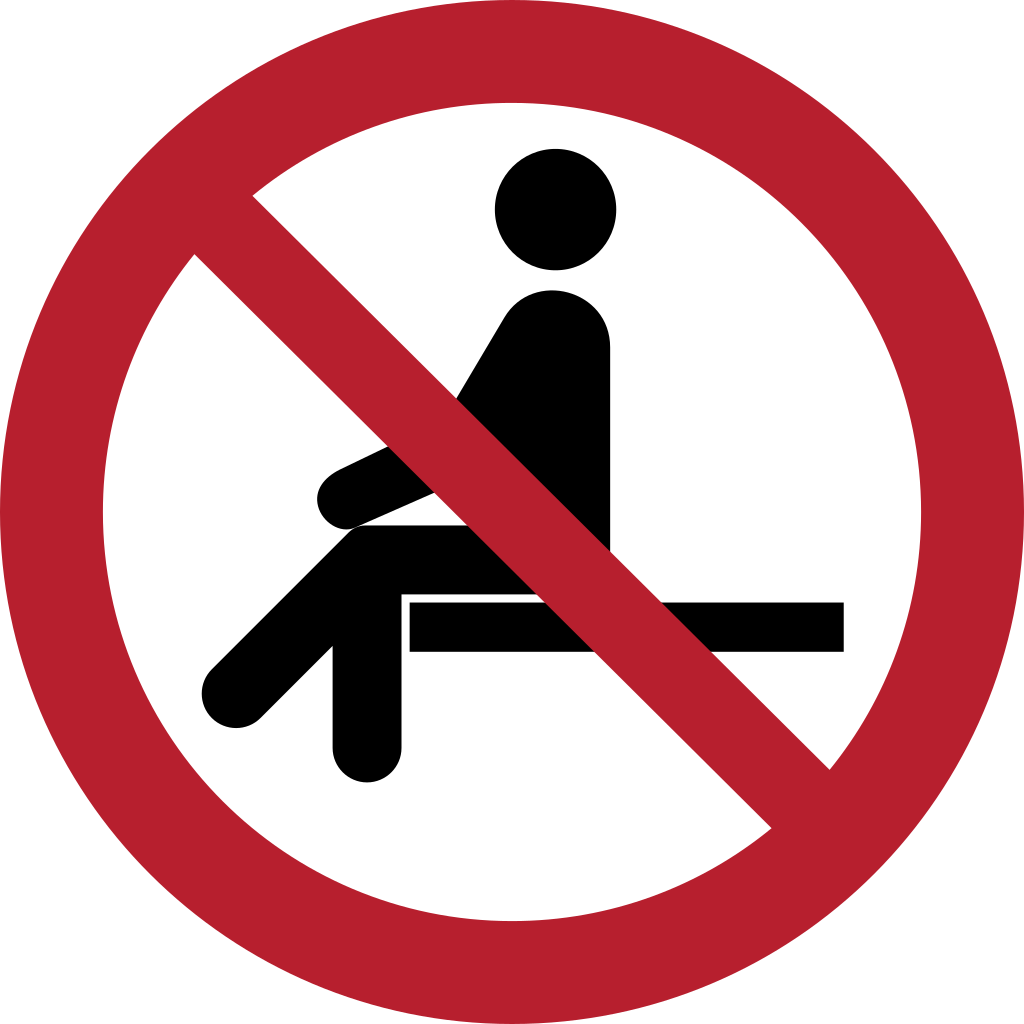
Sitting on the marked surface is prohibited.
Understanding this sign
Red circular signs with a diagonal bar identify an action that must not be taken in the marked area.
Check what object or action the symbol prohibits. A prohibition sign does not identify all the hazards in an area.
What the No Sitting Sign Covers
P018 prohibits sitting on the surface where it is displayed. The pictogram shows a seated figure crossed by the standard red prohibition band. Its target is any surface that invites a person to perch — the right height, roughly flat, apparently solid — but was never rated to carry a seated adult or places the sitter somewhere dangerous.
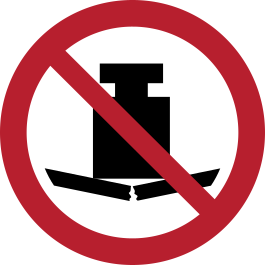
Two distinct hazards drive the sign. The first is structural: window sills, radiator covers, conveyor edges, machine housings, and display plinths can crack, deform, or collapse under a concentrated 80-plus kilogram point load. The second is positional: a ledge, parapet, guardrail, or dock edge may hold the weight perfectly well while putting the person a lean-back away from a fall.
Typical Locations
Industrial sites post P018 on conveyor frames and guarding, on the edges of vibrating or heated equipment, and on loading dock edges where a seated worker's legs hang into vehicle territory. Warehouses apply it to low racking beams that double as tempting benches during breaks. Building managers use it on window sills above ground level, glass-topped features, and heritage or decorative surfaces that damage easily.
Public venues rely on it too. Rail and metro operators mark platform-edge fixtures, museums protect exhibits and plinths, and shopping centers mark planters and water-feature edges. In cleanrooms and food production areas the sign carries a hygiene rationale instead of a structural one: sitting on work surfaces transfers contamination from clothing to product-contact areas. Stair lobbies and escape landings also receive it where seated groups would narrow the evacuation width.
Using P018 Effectively
A no-sitting prohibition works best when it competes with an alternative. People sit on ledges and machine bases because nowhere better exists within reach, so pairing the sign with actual seating in break zones removes the incentive rather than just forbidding it. Where sitting must be prevented on a long surface, physical deterrents such as sloped caps or dividers outperform signage alone.
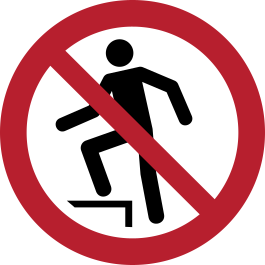
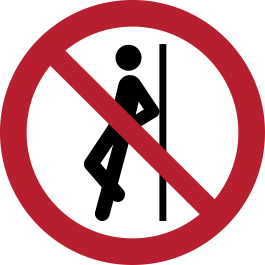
Distinguish P018 from its siblings before ordering signs. If the danger is standing or walking on the surface — a fragile roof panel, for instance — P019 is correct. If leaning body weight against a vertical element is the problem, use P041. Some edges genuinely need two of these signs together, and ISO 7010 permits combining them on one carrier board.
Where you will see P018
Industrial sites apply it to conveyor frames and guarding, the edges of heated or vibrating equipment, and loading dock edges where a seated worker's legs hang into vehicle territory, while warehouses mark low racking beams that double as break-time benches. Rail and metro operators post it on platform-edge fixtures, museums protect plinths and exhibits, and cleanrooms and food production areas use it to keep clothing contamination off product-contact surfaces.
Common questions about P018
Why would a workplace need a no sitting sign?
Because some surfaces are at seat height without being seats. A sill, machine cover, conveyor edge, or dock edge can fail under a person's concentrated weight, trap clothing in moving parts, or position the sitter next to a drop or vehicle route. P018 marks the specific surfaces a risk assessment has identified, which is far clearer than a general rule buried in a handbook.
Is P018 about the surface breaking or the person falling?
It can be either, and the sign deliberately does not say which. On a radiator cover or glass display the issue is the surface failing; on a parapet, guardrail, or platform fixture the surface is fine but the seated position risks a fall. Site induction or supplementary text can explain the local reason if that helps compliance.
Where does the no sitting symbol get used outside factories?
Museums and galleries protect plinths and exhibits with it, transit operators mark platform furniture and barriers, retail centers mark planters and ledges, and food or pharmaceutical plants use it on production surfaces for hygiene reasons. It is one of the ISO 7010 prohibitions that appears as often in public spaces as in industry.
Can P018 and P019 be posted on the same surface?
Yes. P018 bans sitting and P019 bans stepping onto a surface, and a fragile canopy or low roof edge may realistically attract both behaviors. ISO 3864 allows multiple prohibition symbols on a single sign board; just keep each pictogram at a legible size for the viewing distance rather than shrinking them to fit.
Reference details
| Symbol code | P018 |
|---|---|
| Sign family | ISO Prohibition Signs |
| Standard reference | ISO 7010:2019 / ISO 3864-1 ISO Online Browsing Platform: P018 |
| Screen color reference | #FF0000. Screen colors are not a production color specification. |
| Download formats | SVG reference artwork; a 1024 × 1024 pixel PNG conversion on a white canvas. |
| Record date | · How to interpret our dates |
| Page updated |
Choosing a physical sign size
Download dimensions are not installation dimensions. Select sign size, material, placement, and lighting using the applicable standard and the actual viewing conditions. Chemical label sizing follows its own rules. Read the artwork and sizing guide.
Sources and artwork credits
- Artwork source
- Wikimedia Commons file page
- Creator credited by source
- ISO
- License
- CC0
- Source metadata checked
SVG files are local reference copies. PNG files are raster conversions. Check the linked file history and license terms before reuse; a source-metadata check is not certification of the artwork or a workplace installation.
Report a correction to this reference