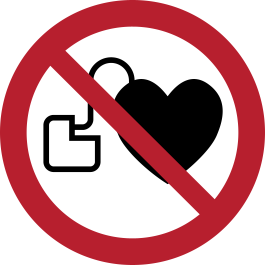
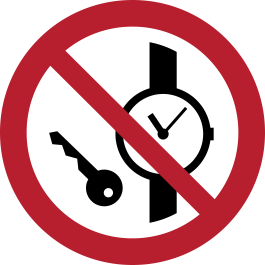
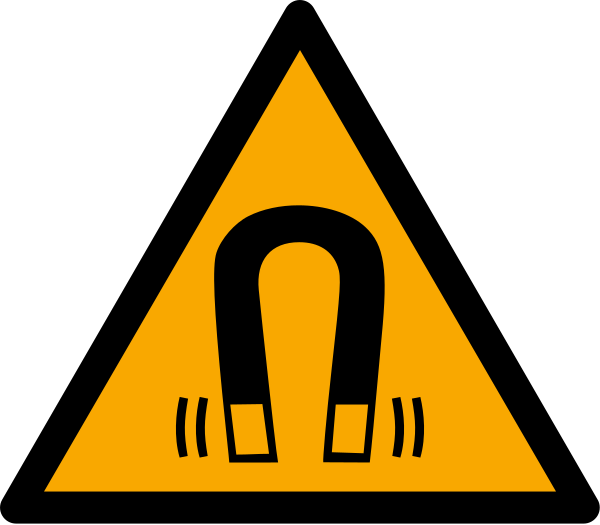
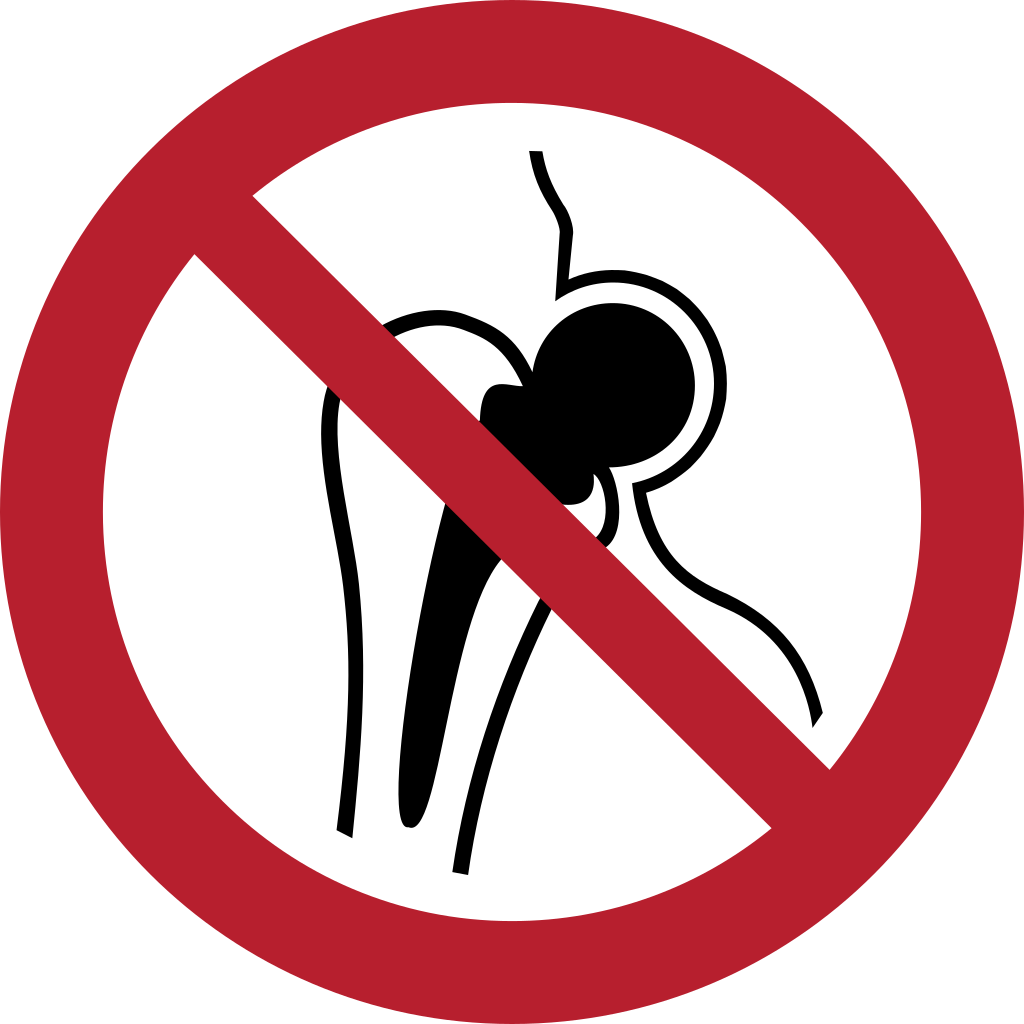
No access for people with metallic implants
Access by people with metallic implants is prohibited.
Understanding this sign
Red circular signs with a diagonal bar identify an action that must not be taken in the marked area.
Check what object or action the symbol prohibits. A prohibition sign does not identify all the hazards in an area.
What ISO 7010 P014 Prohibits
P014 denies area access to people who have metallic implants in their body. The category is broad: cerebral aneurysm clips, vascular stents and coils, artificial heart valves, cochlear implants, orthopedic plates, screws, rods and joint prostheses, dental implants with magnetic attachments, and retained fragments such as shrapnel or metalworking splinters lodged in tissue — including near the eye.
Unlike a carried object, an implant cannot be set aside at the door, so the prohibition targets the person. The sign's real function is to make people with such hardware stop and declare it before entering, because the hazard assessment depends on what the implant is made of, where it sits, and how it is labeled — questions a sign cannot answer but can force to be asked.
Why Magnetic Fields Endanger Implants
Three mechanisms matter. A static field exerts translational force and torque on ferromagnetic hardware; an older steel aneurysm clip that shifts even slightly can tear the vessel it holds. Time-varying and radiofrequency fields induce currents that heat conductive implants and the tissue around them — elongated objects like rods, wires, and leads are the worst heaters. Finally, fields can wipe or disable the magnetic and electronic elements of devices such as cochlear implants and programmable shunt valves.
Modern orthopedic implants are mostly titanium or non-ferromagnetic steel and resist the force problem, but that generalization is exactly what a site cannot rely on at a doorway. In medical imaging, implants are classified under the MR Safe, MR Conditional, and MR Unsafe scheme of ASTM F2503, and the classification of the specific model — not the material family — decides admission.
Where P014 Is Used
Expect P014 wherever strong static or alternating fields exist: MRI controlled zones, NMR and materials-research magnet labs, induction melting and hardening lines, magnetic particle inspection benches, magnetizer and demagnetizer stations, and magnetic separators in recycling and mining. In MRI departments following ACR zone practice, it sits at the Zone III entrance next to its companions so screening happens before anyone reaches the magnet.
Under the EU electromagnetic fields directive (2013/35/EU), workers with implants are among the employees at particular risk for whom the employer's EMF assessment must set specific access rules; P014 at the assessed boundary is how those rules are communicated to contractors and visitors who never saw the risk assessment document. Sites should also fold the question into contractor inductions, since a sign at the door is read seconds before entry, not during planning.
Reading P014 Against P007 and P008
P014 is the middle member of the magnetic access-control trio. It covers implanted metal in general — overwhelmingly passive hardware — while P007 singles out active cardiac electronics, whose failure mode is electrical malfunction rather than movement or heating, and P008 handles removable metallic articles and watches. A person can be subject to all three at once: a pacemaker wearer with a hip prosthesis and car keys.
Posting the full trio with the W006 magnetic field warning avoids the false-clearance problem, where satisfying one sign reads as permission to enter. It also gives screening staff a visual script: ask about cardiac devices, ask about other implants, then divest loose metal — the same order the signs hang in at a well-arranged threshold.
Where you will see P014
MRI departments post it at the Zone III entrance so screening happens before anyone reaches the magnet, and NMR and materials-research magnet labs use it the same way. Industrial placements include induction melting and hardening lines, magnetic particle inspection benches, magnetizer stations, and magnetic separators in recycling and mining, usually alongside P007, P008, and the W006 field warning.
Common questions about P014
Are titanium implants affected by the P014 restriction?
Titanium is not ferromagnetic, so the pull-and-twist hazard is minimal, but P014 still applies: the sign exists to trigger screening, not to let individuals self-clear based on what they believe their implant is made of. Conductive non-magnetic implants can also heat in radiofrequency fields, and only the specific device's labeling or the site's assessment can authorize entry.
What is the difference between P014 and the pacemaker sign P007?
P007 is specific to active implanted cardiac devices — pacemakers and defibrillators — where the danger is electronic interference with a life-supporting function. P014 covers metallic implants broadly, including passive hardware like clips, stents, and joint replacements, where the dangers are magnetic pull, twisting, and radiofrequency heating of the hardware. Facilities with strong magnets normally display both.
Do dental fillings or small surgical screws mean I cannot enter a P014 area?
Not automatically. Amalgam fillings are non-ferromagnetic and small fixed hardware is often acceptable, but the decision belongs to the screening process behind the sign, not to the individual. Declare everything, including old injuries that may have left metal fragments — retained splinters near the eye are a classic screening concern precisely because the person may not know they are there.
Why are old aneurysm clips treated as especially dangerous near magnets?
Some older intracranial aneurysm clips were made from ferromagnetic alloys, and a magnetic field can apply enough torque to displace the clip from the vessel it is sealing — a potentially fatal event that has occurred in practice. Modern clips are typically made from non-ferromagnetic materials, but because the model and alloy of an implanted clip are hard to verify, screening treats any aneurysm clip as unsafe until documented otherwise.
Reference details
| Symbol code | P014 |
|---|---|
| Sign family | ISO Prohibition Signs |
| Standard reference | ISO 7010:2019 / ISO 3864-1 ISO Online Browsing Platform: P014 |
| Screen color reference | #FF0000. Screen colors are not a production color specification. |
| Download formats | SVG reference artwork; a 1024 × 1024 pixel PNG conversion on a white canvas. |
| Record date | · How to interpret our dates |
| Page updated |
Choosing a physical sign size
Download dimensions are not installation dimensions. Select sign size, material, placement, and lighting using the applicable standard and the actual viewing conditions. Chemical label sizing follows its own rules. Read the artwork and sizing guide.
Sources and artwork credits
- Artwork source
- Wikimedia Commons file page
- Creator credited by source
- ISO
- License
- Public domain
- Source metadata checked
SVG files are local reference copies. PNG files are raster conversions. Check the linked file history and license terms before reuse; a source-metadata check is not certification of the artwork or a workplace installation.
Report a correction to this reference