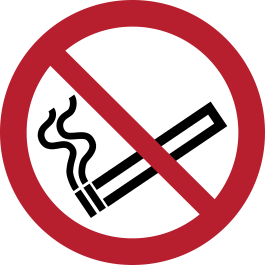
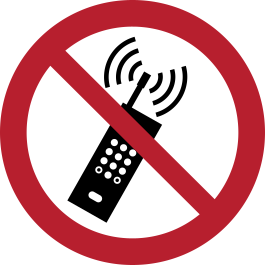
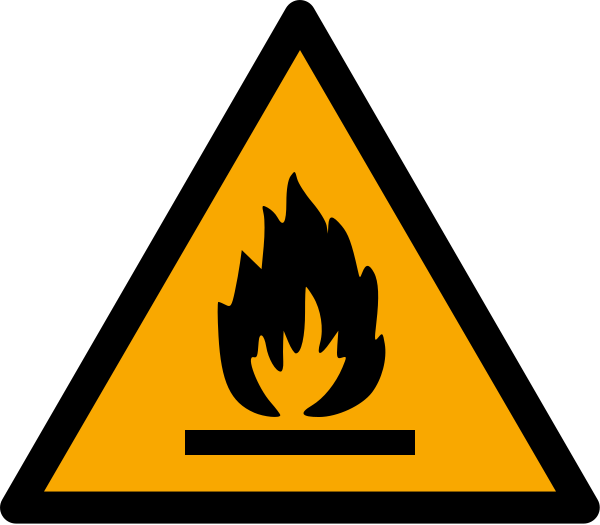
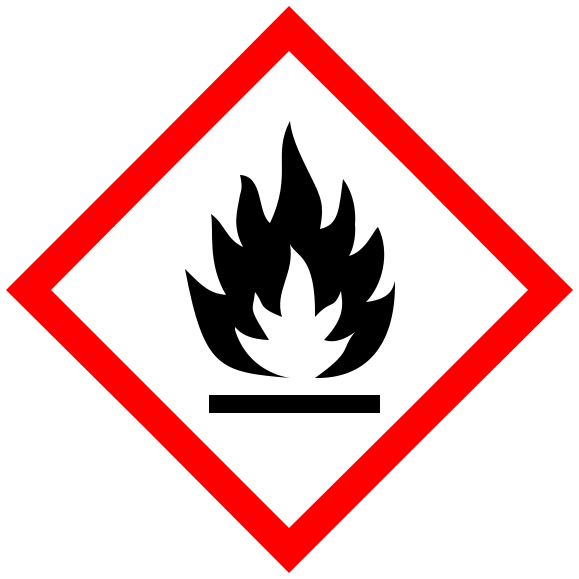
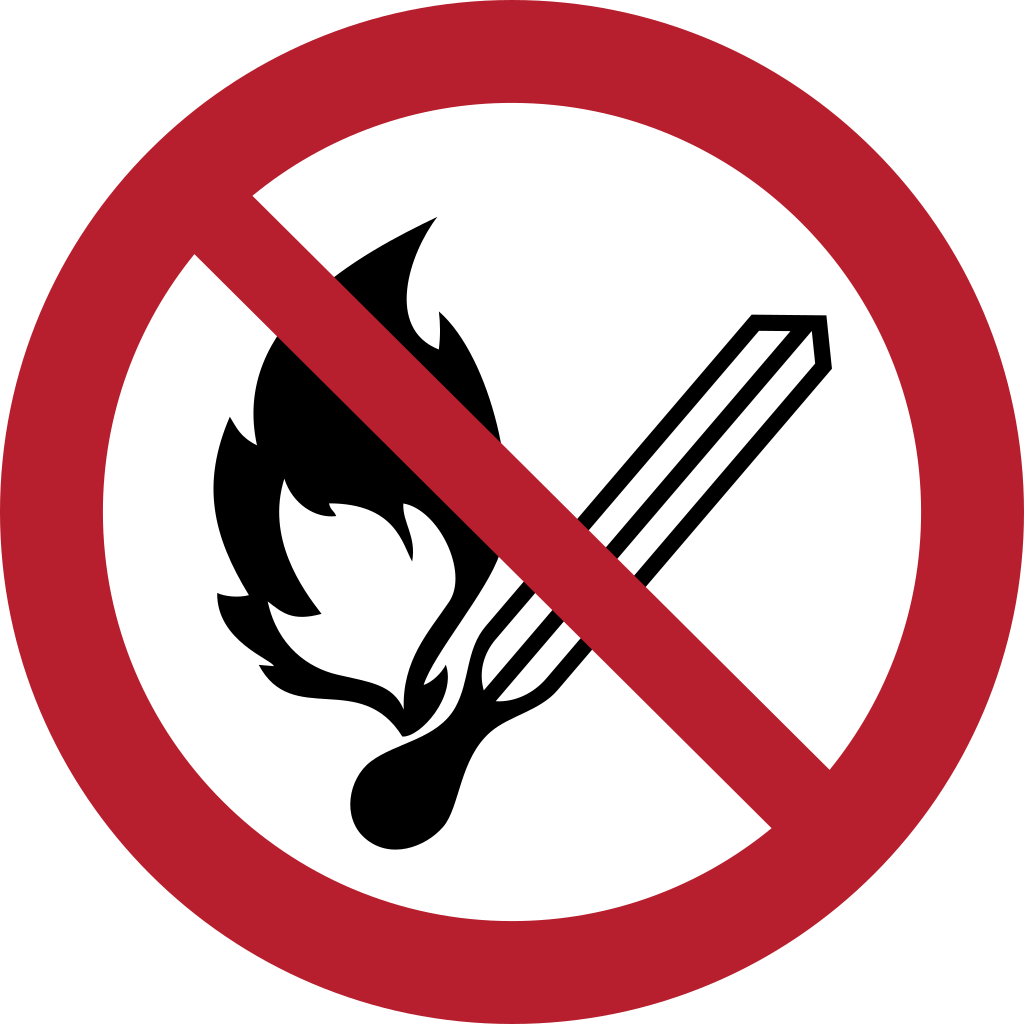
No open flame; Fire, open ignition source and smoking prohibited
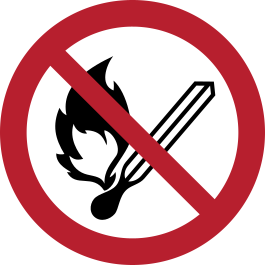
Fire, open flames, open ignition sources, and smoking are prohibited.
Understanding this sign
Red circular signs with a diagonal bar identify an action that must not be taken in the marked area.
Check what object or action the symbol prohibits. A prohibition sign does not identify all the hazards in an area.
Scope of the P003 Prohibition: Every Ignition Source
ISO 7010 P003 bans smoking together with all forms of open flame and open ignition source in the signed area. That single pictogram — a burning match struck through by the red prohibition bar — covers lighters, matches, candles, gas torches, brazing flames, and any deliberate act of creating fire. It is the sign to reach for when the concern is not the social act of smoking but the presence of any naked flame near something that can burn or explode.
P003 does not, by itself, prohibit every conceivable ignition mechanism. Non-certified electrical equipment, static discharge, and hot surfaces are separate ignition risks that need their own controls, such as P013 for active mobile phones or an equipment certification regime inside classified zones. Treat P003 as the visible boundary marker of an ignition-control program, not as the whole program.
Where Flammable-Atmosphere Rules Demand It
In workplaces handling flammable liquids and gases, ignition-source control is a legal obligation rather than good practice. Both 29 CFR 1910.106, OSHA's rule for flammable liquids, and NFPA 30 require smoking and open flames to be kept away from storage and dispensing operations, and posting P003 at those points is the conventional way to communicate the rule. Spray-finishing operations under 29 CFR 1910.107 impose similar ignition restrictions around paint booths and mixing rooms.
European sites operating under the ATEX workplace directive (1999/92/EC) must mark the entrances to zones where explosive atmospheres can form; the triangular EX sign identifies the zone, and P003 posted alongside it states the behavioral rule for anyone crossing that boundary. UK DSEAR duty holders follow the same pattern: classify the zone, mark it, and prohibit flames and smoking within it.
Typical Locations and Mounting Practice
Post P003 at petrol station forecourts and fuel dispensers, LPG and hydrogen storage compounds, solvent and paint stores, spray booths, battery charging rooms where hydrogen accumulates, grain and dust-handling plants, oxygen storage areas, and the perimeter of any classified hazardous location. The sign belongs at the approach to the controlled zone — gates, doorways, and transfer points — so the prohibition registers before a person carrying a lighter or torch steps inside.
Because the sign frequently guards outdoor compounds and vehicle approaches, choose a diameter matched to the sight line: a driver approaching a fuel island needs a substantially larger sign than a worker at a store-room door. Supplementary text naming the reason, such as FLAMMABLE ATMOSPHERE or LPG STORAGE, measurably strengthens compliance and links the prohibition to the site's hot work permit system.
Choosing Between P003, P002, and Warning Signs
If the hazard is fire or explosion, P003 is almost always the better choice over P002. A no-smoking sign leaves a welder's torch or a maintenance heat gun technically unaddressed, while P003 closes that gap in one symbol. Reserve P002 for locations where smoking alone is the issue — hygiene, contamination, or smoke-free legislation — and there is no flammable atmosphere to protect.
P003 states what people must not do; it says nothing about what the substance nearby can do. Pair it with W021 (flammable material) on the hazard itself, GHS02 flame pictograms on containers, and the EX zone marking where applicable. Hot work inside a P003 area is not automatically forbidden forever — it becomes an exception managed through a hot work permit, gas testing, and fire watch, which is exactly why the standing prohibition needs to be visible.
Where you will see P003
Petrol station forecourts, LPG and hydrogen storage compounds, solvent and paint stores, spray booths, battery charging rooms, grain and dust-handling plants, and oxygen storage areas all carry it at gates, doorways, and transfer points. ATEX and DSEAR sites post it beside the triangular EX marking at zone entrances so the behavioral rule registers before anyone carrying a lighter steps inside.
Common questions about P003
What is the difference between the P003 and P002 signs?
P002 prohibits smoking only. P003 prohibits smoking plus every open flame and open ignition source, including matches, lighters, torches, and candles. Where the reason for the restriction is a flammable or explosive atmosphere, use P003, because P002 would leave non-smoking flame sources unaddressed.
Does a P003 sign also ban mobile phones and electronic devices?
No. P003 addresses flames and open ignition sources, not electronics. In classified hazardous areas where an uncertified phone or radio could act as an ignition source, post P013 (no activated mobile phone) in addition to P003, and control other electrical equipment through your Ex equipment certification requirements.
Where should no-open-flame signs be posted at a fuel or gas installation?
At every point where a person or vehicle enters the controlled zone: site gates, forecourt approaches, dispenser islands, tank fill points, and the doors of pump rooms and cylinder stores. The prohibition must be readable before entry, so size the sign for the approach distance rather than mounting it only on the equipment itself.
Can welding or other hot work ever be done in an area marked with P003?
Yes, but only as a controlled exception. The standing prohibition is lifted for a specific task through a hot work permit that typically requires atmosphere testing, removal or shielding of flammables, a fire watch, and time limits. The sign remains in place because the default rule for everyone else is unchanged.
Reference details
| Symbol code | P003 |
|---|---|
| Sign family | ISO Prohibition Signs |
| Standard reference | ISO 7010:2019 / ISO 3864-1 ISO Online Browsing Platform: P003 |
| Screen color reference | #FF0000. Screen colors are not a production color specification. |
| Download formats | SVG reference artwork; a 1024 × 1024 pixel PNG conversion on a white canvas. |
| Record date | · How to interpret our dates |
| Page updated |
Choosing a physical sign size
Download dimensions are not installation dimensions. Select sign size, material, placement, and lighting using the applicable standard and the actual viewing conditions. Chemical label sizing follows its own rules. Read the artwork and sizing guide.
Sources and artwork credits
- Artwork source
- Wikimedia Commons file page
- Creator credited by source
- ISO
- License
- Public domain
- Source metadata checked
SVG files are local reference copies. PNG files are raster conversions. Check the linked file history and license terms before reuse; a source-metadata check is not certification of the artwork or a workplace installation.
Report a correction to this reference