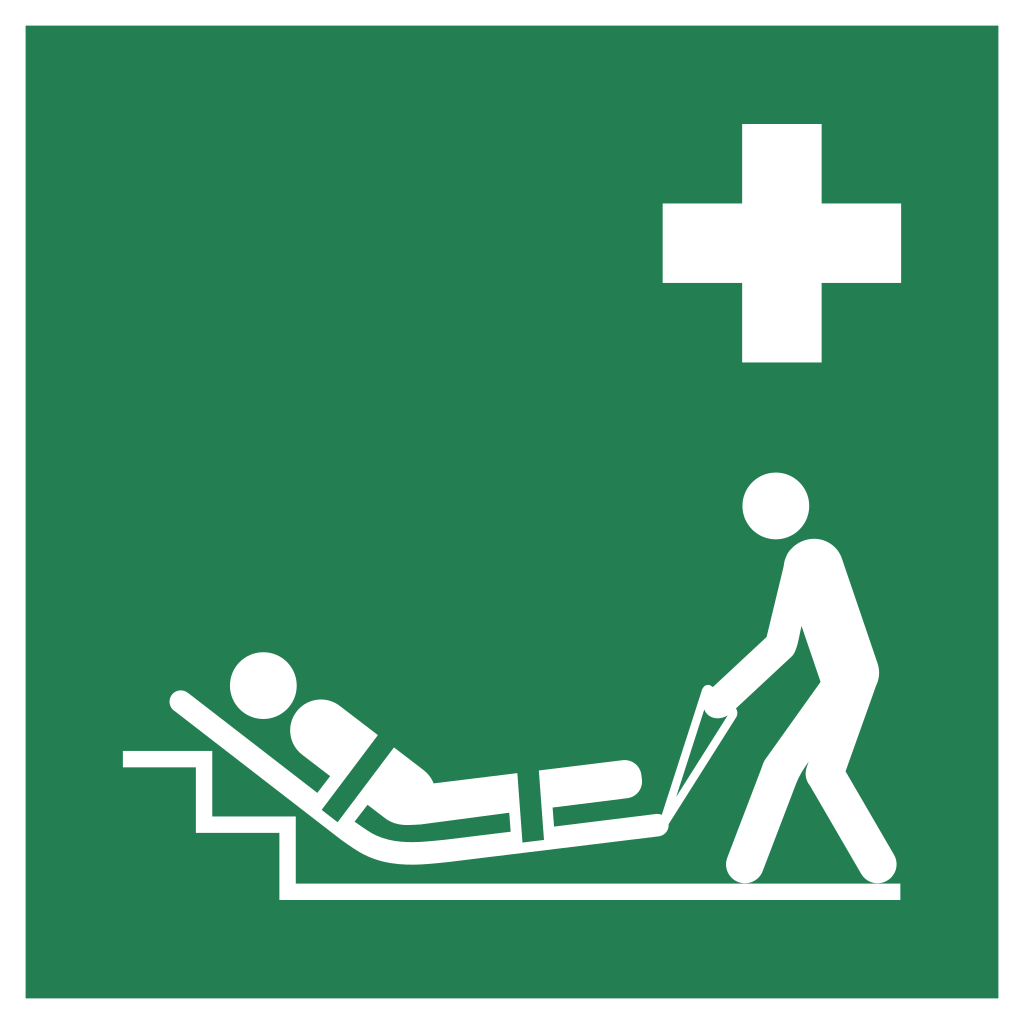
Evacuation mattress
Identifies an evacuation mattress.
Understanding this sign
Green square or rectangular signs identify emergency escape routes, safety facilities, and rescue equipment.
Follow the complete wayfinding system and local emergency plan. A symbol alone does not establish a safe route.
Why Evacuation Mattresses Exist
E067 marks the storage point of an evacuation mattress — a flexible sled with securing straps and drag handles that lets a small team slide a non-ambulant person out of a building, including down stairs, when elevators are out of service. Fire procedures take lifts out of the equation precisely when bed-bound occupants most need to descend, and carrying an occupied bed or a conventional stretcher down a stairwell is slow, hazardous, and often physically impossible for the available staff. The mattress converts that problem into a controlled drag.
Hospitals, nursing homes, and other care settings are the natural home for the device, and many pre-position one under or beside each bed of a patient who could not self-evacuate, with additional units staged at stair cores. Some models wrap around the patient's existing mattress so the transfer step disappears; all rely on the operator finding them instantly, which is the sign's entire job.
Fit Within Healthcare Evacuation Strategy
Healthcare buildings rarely evacuate everyone to the street at once. The prevailing approach is progressive horizontal evacuation — moving patients through fire-resisting compartment walls to a safe area on the same floor first — with vertical movement down stairs reserved for escalation. Evacuation mattresses are the tool for that escalation stage for patients who cannot sit upright, and their staged locations should mirror the strategy: at compartment boundaries and stairheads along the planned movement routes, each stowage marked with E067.
Staff training is inseparable from the hardware. Dragging a secured patient down stairs head-first or feet-first, controlling descent speed, and managing lines and medical attachments are drilled skills, and care facilities typically fold mattress technique into their periodic evacuation exercises. A marked mattress that no one on the night shift has handled is only half a provision.
E067 and the Other Evacuation Device Signs
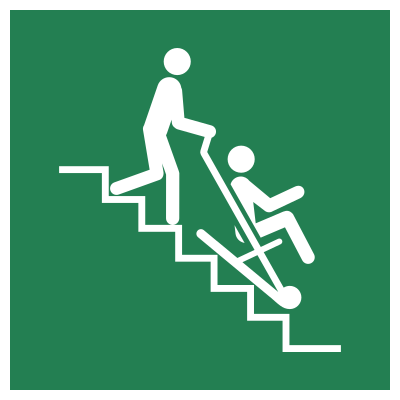
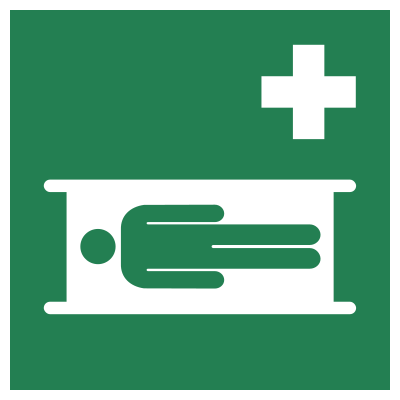
ISO 7010 separates evacuation devices by the casualty's capability. The evacuation chair, signed E060, serves people who can sit — typical for office buildings accommodating mobility-impaired occupants. The mattress under E067 serves those who must remain supine: intensive care patients, post-surgical cases, bariatric patients on compatible models, and residents with severe frailty. The carry stretcher sign E013 belongs to first aid and rescue rather than planned building evacuation. Signing each device accurately lets staff grab the right one for the person in front of them.
Placement conventions follow the device's use pattern. Under-bed units are marked at the bed position or on the footboard sleeve; communal units get E067 on the storage cabinet at the stair core, sized to be readable along the corridor. Because care floors are rearranged often, evacuation equipment mapping deserves a standing item in fire safety audits: the sign, the device, and the personal emergency evacuation plans referencing them must keep agreeing with each other.
Where you will see E067
Hospitals, nursing homes, and other care settings pre-position units under or beside the beds of patients who could not self-evacuate, with further mattresses staged at compartment boundaries and stairheads along progressive horizontal evacuation routes. Under-bed units are marked at the bed position or footboard sleeve, while communal units carry E067 on the stair-core storage cabinet, sized to be readable along the corridor.
Common questions about E067
What is an evacuation mattress used for?
For moving people who cannot walk or sit upright — typically hospital patients and care home residents — out of a building when lifts are unavailable, including controlled drags down staircases. The person is strapped onto a flexible sled-like mattress with handles, and trained staff slide it along corridors and down stairs.
Should I provide an evacuation chair or an evacuation mattress?
The chair (ISO 7010 E060) carries a seated person down stairs and suits occupants who can sit safely; the mattress (E067) keeps the person lying flat and suits bed-bound, post-operative, or critically ill patients. Healthcare premises often need both, staged and signed separately so staff select correctly under pressure.
Where should evacuation mattresses be stored in a hospital or care home?
Along the planned evacuation routes: under or beside the beds of patients who cannot self-evacuate, and in marked cabinets at stair cores and compartment boundaries used in the progressive horizontal evacuation strategy. Every stowage should carry the E067 sign and appear in the floor's evacuation plan and audits.
Do staff need training to use an evacuation mattress?
Yes. Securing the patient, choosing head or feet first, controlling descent on stairs, and handling medical lines are practiced skills, and technique varies by model. Facilities should include mattress drills in evacuation exercises across all shifts, since fires do not schedule themselves around the day staff.
Reference details
| Symbol code | E067 |
|---|---|
| Sign family | ISO Emergency Signs |
| Standard reference | ISO 7010:2019 / ISO 3864-1 ISO Online Browsing Platform: E067 |
| Screen color reference | #009933. Screen colors are not a production color specification. |
| Download formats | SVG reference artwork; a 1024 × 1024 pixel PNG conversion on a white canvas. |
| Record date | · How to interpret our dates |
| Page updated |
Choosing a physical sign size
Download dimensions are not installation dimensions. Select sign size, material, placement, and lighting using the applicable standard and the actual viewing conditions. Chemical label sizing follows its own rules. Read the artwork and sizing guide.
Sources and artwork credits
- Artwork source
- Wikimedia Commons file page
- Creator credited by source
- Clemenspool
- License
- CC0
- Source metadata checked
SVG files are local reference copies. PNG files are raster conversions. Check the linked file history and license terms before reuse; a source-metadata check is not certification of the artwork or a workplace installation.
Report a correction to this reference