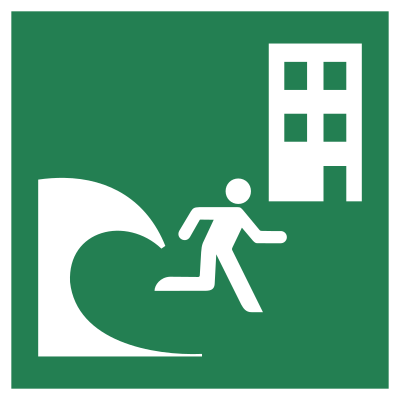
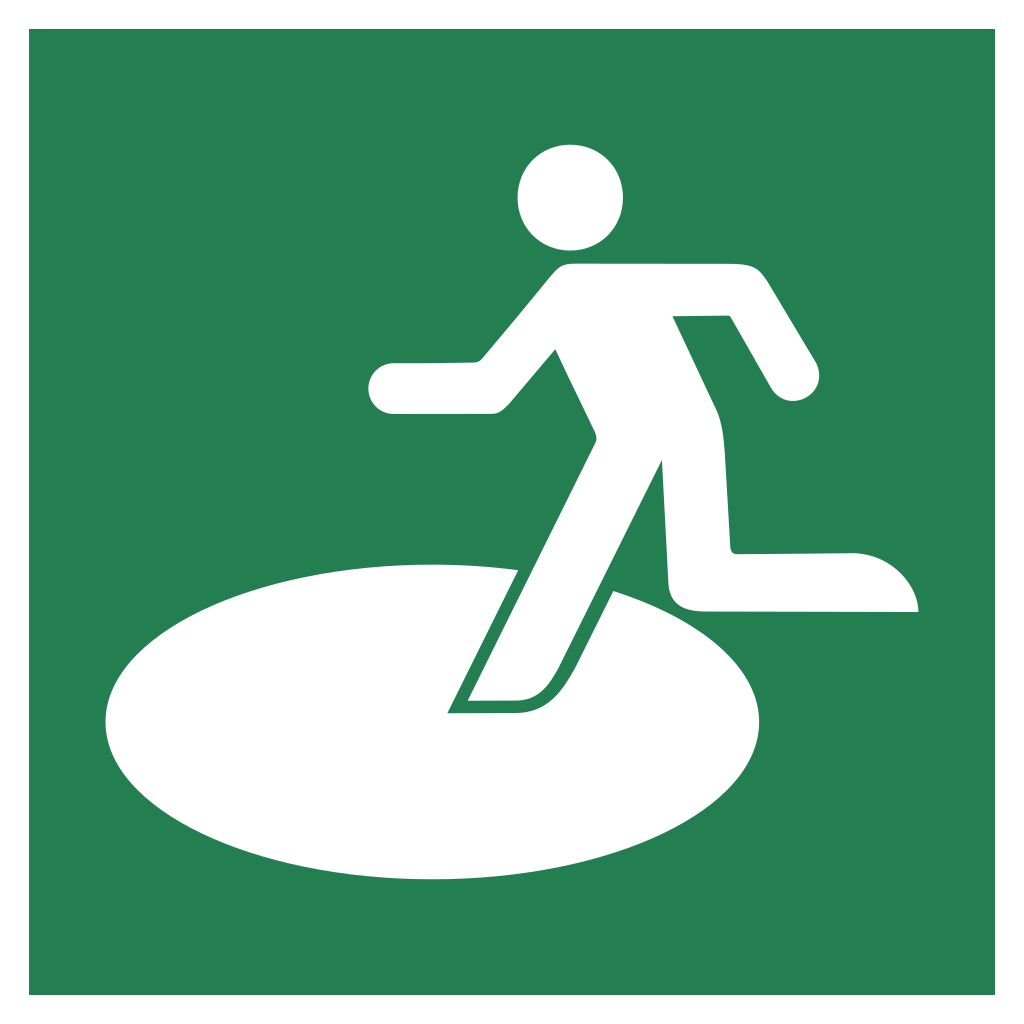
Natural disaster outdoor refuge area
Identifies an outdoor refuge area for a natural disaster.
Understanding this sign
Green square or rectangular signs identify emergency escape routes, safety facilities, and rescue equipment.
Follow the complete wayfinding system and local emergency plan. A symbol alone does not establish a safe route.
What ISO 7010 E065 Means
E065 marks a natural disaster outdoor refuge area — a designated open space, such as a large park, sports ground, or plaza, where people gather for safety when disasters make buildings dangerous or uninhabitable. The green safe-condition sign shows figures assembled in an open area, and its core promise is the opposite of a building's: space, distance from collapse and fire, and room for large numbers of people.
The concept comes most directly from Japanese disaster-prevention planning, where cities have long designated wide open areas as refuges from earthquake aftermath and the urban conflagrations that historically followed major quakes. That signage tradition fed into the international standard, giving the all-hazards outdoor refuge its own ISO 7010 symbol distinct from both the workplace assembly point and the tsunami-specific destinations.
How E065 Differs from E007, E062, and E063
The nearest lookalike is E007, the evacuation assembly point used at workplaces and venues for headcounts after a building evacuation. E065 operates at municipal scale and for a different purpose: not a muster list, but survivable open ground during a regional event — an earthquake with widespread structural damage, an approaching wildfire, or the aftermath of a storm. The two can coexist in one city without conflict because they answer different questions.
Against the tsunami pair the distinction is sharper and safety-critical. E062 promises elevation above tsunami inundation and E063 promises a vetted vertical refuge; E065 promises neither. A large riverside park may be an excellent earthquake refuge and a lethal place to stand during a tsunami, so coastal municipalities using all three symbols must map them against inundation zones and, where a refuge is tsunami-unsafe, say so on supplementary panels.
Designation, Signage, and Companion Symbols
Civil protection authorities designate refuge areas based on capacity, separation from collapse and fire-spread risk, access for emergency vehicles, and suitability for extended occupation while shelters are organized. E065 signage then appears at the site entrances and on neighborhood evacuation maps, frequently paired with multilingual text and locality names for visitor populations.
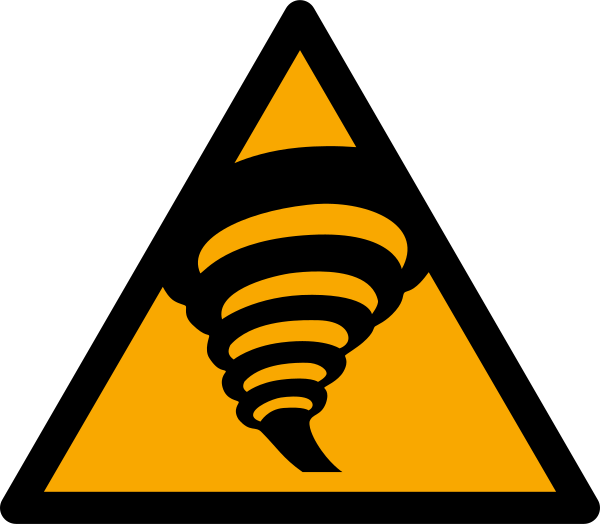
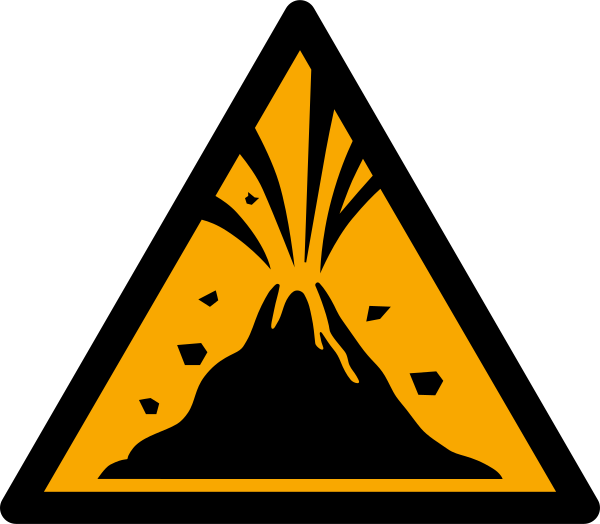
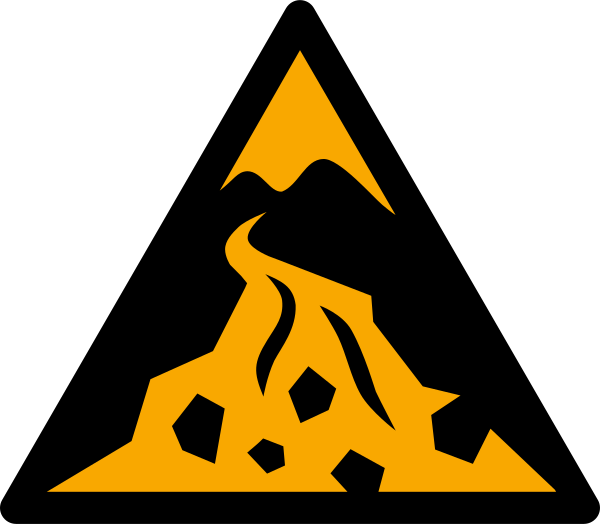
E065 also completes a signed hazard-to-refuge chain with the ISO warning series for natural hazard zones — W074 (tornado zone), W075 (active volcano), W076 (debris flow), W077 (flood zone), and W078 (landslide zone) among them. The W-series tells people what the local threat is; E065 and its tsunami-specific siblings tell them where to go, which is the pairing that makes an evacuation map self-explanatory to someone who arrived yesterday.
Where you will see E065
Civil protection authorities designate these refuges for capacity, separation from collapse and fire-spread risk, and emergency vehicle access, then post E065 at site entrances and on neighborhood evacuation maps, often with multilingual text for visitors. It completes the signed chain with the natural-hazard warning series — W074 tornado, W076 debris flow, W077 flood, W078 landslide — and coastal municipalities must map it carefully against tsunami inundation zones, which demand E062 or E063 instead.
Common questions about E065
What is a natural disaster outdoor refuge area?
A designated open space — typically a large park, school ground, or plaza — where people assemble for safety during and after disasters such as major earthquakes or approaching wildfires. Its value is openness: distance from collapsing structures, falling debris, and spreading fire, plus capacity for large crowds. The ISO 7010 E065 sign marks the designated site and the routes to it.
Is an E065 refuge area the same as an assembly point sign?
No. The assembly point sign (E007) is for mustering and headcounts after evacuating a specific building or site. E065 designates a municipal-scale refuge intended for community use during regional natural disasters, chosen and maintained by civil protection authorities. A factory car park can be an E007 assembly point without being a designated disaster refuge.
Is a natural disaster refuge area safe during a tsunami?
Not necessarily — that is the most important limit of the symbol. E065 implies open space, not elevation. Some designated refuges sit on low ground inside tsunami inundation zones and are meant for earthquakes or fire, not flooding. For tsunami, follow the tsunami-specific signs instead: E062 for high-ground evacuation areas and E063 for vertical evacuation buildings.
Why did this sign originate in Japan?
Japanese cities have designated wide open areas as earthquake and fire refuges for generations, a lesson written by historical quakes in which post-earthquake urban fires caused mass casualties among people trapped in dense districts. Japan's mature disaster-signage practice was a principal source when ISO standardized pictograms for disaster evacuation, which is how the outdoor refuge symbol entered ISO 7010 for worldwide use.
Reference details
| Symbol code | E065 |
|---|---|
| Sign family | ISO Emergency Signs |
| Standard reference | ISO 7010:2019 / ISO 3864-1 ISO Online Browsing Platform: E065 |
| Screen color reference | #009933. Screen colors are not a production color specification. |
| Download formats | SVG reference artwork; a 1024 × 1024 pixel PNG conversion on a white canvas. |
| Record date | · How to interpret our dates |
| Page updated |
Choosing a physical sign size
Download dimensions are not installation dimensions. Select sign size, material, placement, and lighting using the applicable standard and the actual viewing conditions. Chemical label sizing follows its own rules. Read the artwork and sizing guide.
Sources and artwork credits
- Artwork source
- Wikimedia Commons file page
- Creator credited by source
- Clemenspool
- License
- CC0
- Source metadata checked
SVG files are local reference copies. PNG files are raster conversions. Check the linked file history and license terms before reuse; a source-metadata check is not certification of the artwork or a workplace installation.
Report a correction to this reference