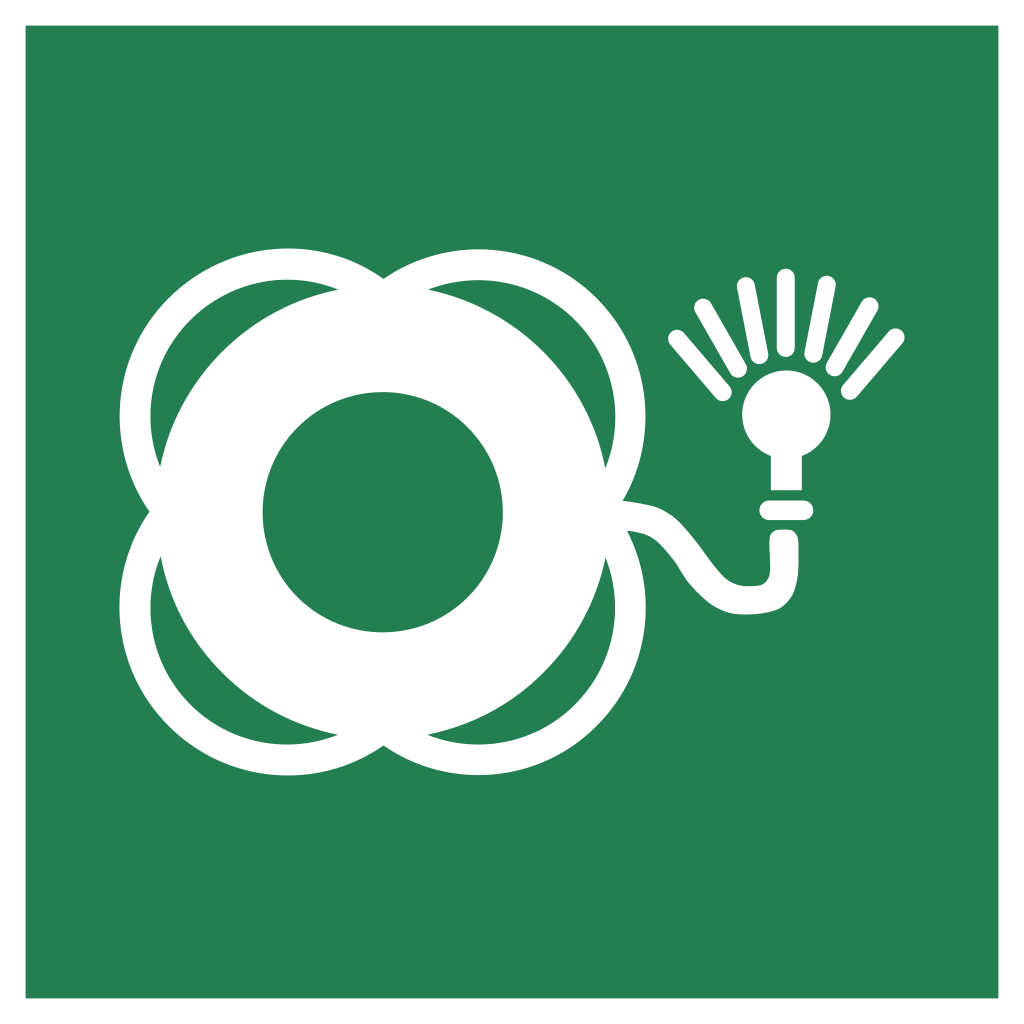
Lifebuoy with light
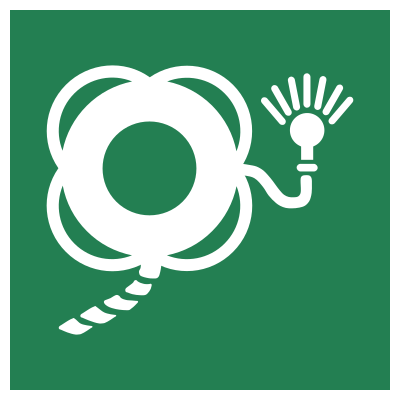
Identifies a lifebuoy with a light.
Understanding this sign
Green square or rectangular signs identify emergency escape routes, safety facilities, and rescue equipment.
Follow the complete wayfinding system and local emergency plan. A symbol alone does not establish a safe route.
What E042 Adds: Finding the Casualty at Night
E042 marks a lifebuoy equipped with a self-igniting light, shown in the pictogram as a ring with a light unit attached. The light activates automatically on contact with the water, so the buoy does not merely support the casualty; it marks their position. In darkness, fog, or heavy rain, a head in the water is effectively invisible from a moving ship within seconds, and the buoy's light becomes the only reference point the recovery effort has.
The light unit is a separate float or attachment tethered to the ring, powered by a battery and designed under the IMO LSA Code to burn continuously for at least two hours. That endurance covers the time a vessel needs to turn, run a search pattern, and manoeuvre back to the position, with margin for the rescue boat launch and pickup that follows.
Where Light-Equipped Buoys Are Stationed
SOLAS distribution logic requires that a substantial share of a ship's lifebuoys, at least half under the standard carriage rules, be fitted with self-igniting lights, and these are spread along both sides of the vessel rather than clustered in one place. Anyone who witnesses a night-time man-overboard should be within reach of an E042 or E043 station without crossing the ship.
The same reasoning drives shoreside installations that operate around the clock: ro-ro and ferry linkspans, offshore platforms and wind farm service bases, fishing harbours where landings happen before dawn, and bunkering berths. Anywhere a fall into dark water is credible, the buoy that gets thrown should be one that lights up, because shore lighting rarely reaches far enough across the water to keep a drifting casualty in view.
E042 Within the Lifebuoy Sign Family
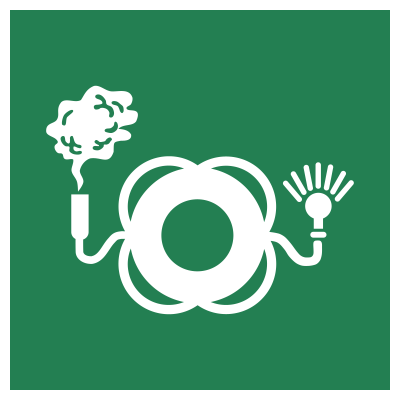
Sign selection follows the fitted equipment exactly. A bare ring is E040; add a buoyant line and it becomes E041; the light alone is E042; line and light together is E043; and the bridge-wing marker buoy with light and smoke signal is E068. Mixing these up is not cosmetic. A crew member who sprints to a station expecting a light because the sign showed one, and finds a bare ring, has lost the ability to mark the casualty's position.
Because lights are the component most likely to fail quietly, E042 signage effectively defines an inspection obligation. Battery condition, water-activation function, and secure tethering of the light to the ring should be checked on the same schedule as the buoy itself, and a station whose light is condemned should be re-signed or repaired promptly rather than left promising a capability it no longer has.
Where you will see E042
SOLAS carriage rules require at least half a ship's lifebuoys to be fitted with self-igniting lights, spread along both sides of the vessel so any witness to a night-time man-overboard can reach one without crossing the ship. Around-the-clock shoreside operations use the same stations at ro-ro and ferry linkspans, offshore platforms, wind farm service bases, fishing harbours, and bunkering berths where falls into dark water are credible.
Common questions about E042
How does a self-igniting lifebuoy light work?
Modern units are battery-powered and switch on automatically, typically via a water-contact or orientation mechanism, when the buoy is thrown overboard. Older carbide and chemical types have largely disappeared from commercial service. Under the IMO LSA Code the light must operate continuously for at least two hours and be visible around the full horizon, with flashing types meeting a minimum flash rate.
How many lifebuoys on a ship must have lights?
SOLAS requires that not less than half of a ship's total complement of lifebuoys be fitted with self-igniting lights, distributed on both sides of the vessel, with a smaller number of those additionally carrying smoke signals for release from the bridge. The exact total number of buoys depends on ship type and length, so consult the flag state requirements for the specific vessel.
Should I choose E042 or E043 for my installation?
It depends entirely on what is on the bracket. If the buoy carries a self-igniting light but no attached rescue line, E042 is correct. If a buoyant line is also fitted so a rescuer can haul the casualty back, the station is an E043 station. Survey the equipment first and order the sign second.
Do lifebuoy lights need servicing or replacement dates?
Yes. Battery-powered units carry a manufacturer expiry or replacement date, and class and flag inspections check them. A practical regime is to test activation and inspect the lanyard and housing at each routine safety round, and to replace batteries or complete units by the marked date rather than waiting for a failure during a drill.
Reference details
| Symbol code | E042 |
|---|---|
| Sign family | ISO Emergency Signs |
| Standard reference | ISO 7010:2019 / ISO 3864-1 ISO Online Browsing Platform: E042 |
| Screen color reference | #009933. Screen colors are not a production color specification. |
| Download formats | SVG reference artwork; a 1024 × 1024 pixel PNG conversion on a white canvas. |
| Record date | · How to interpret our dates |
| Page updated |
Choosing a physical sign size
Download dimensions are not installation dimensions. Select sign size, material, placement, and lighting using the applicable standard and the actual viewing conditions. Chemical label sizing follows its own rules. Read the artwork and sizing guide.
Sources and artwork credits
- Artwork source
- Wikimedia Commons file page
- Creator credited by source
- Clemenspool
- License
- CC0
- Source metadata checked
SVG files are local reference copies. PNG files are raster conversions. Check the linked file history and license terms before reuse; a source-metadata check is not certification of the artwork or a workplace installation.
Report a correction to this reference