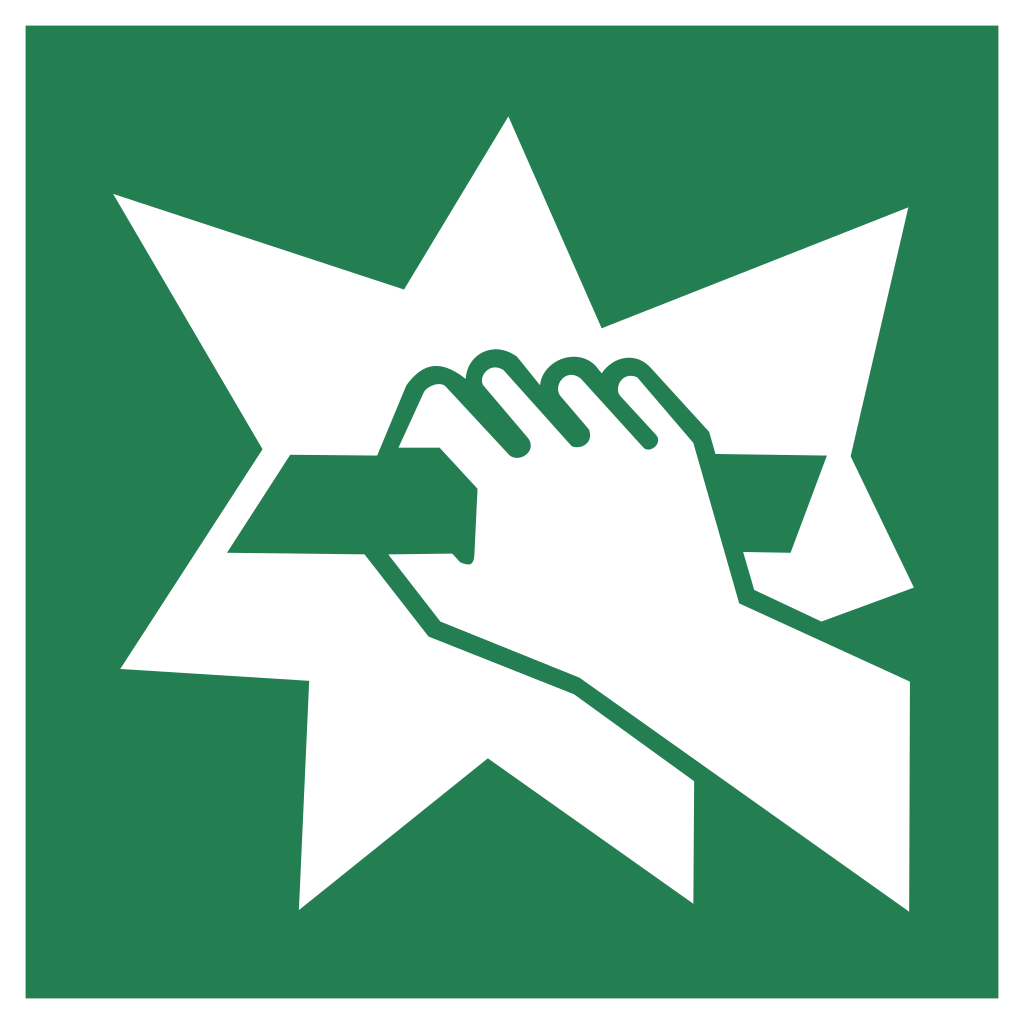
Break to obtain access
Indicates that a cover or panel is to be broken to obtain emergency access.
Understanding this sign
Green square or rectangular signs identify emergency escape routes, safety facilities, and rescue equipment.
Follow the complete wayfinding system and local emergency plan. A symbol alone does not establish a safe route.
The Meaning of Break to Obtain Access
E008 depicts a hand breaking through a panel and tells the viewer that a frangible cover must be smashed to reach an emergency device behind it. Its ISO register entry describes the function as indicating a cover which requires breaking to obtain access to an emergency exit device — typically a glazed box holding a key, a door release, or an escape mechanism. It resolves a real moment of hesitation: people are conditioned not to break property, and in an emergency that conditioning costs seconds. The green sign grants explicit permission in advance.
The break-glass arrangement itself is a compromise between two competing needs. Emergency devices must be instantly available, yet keys and releases left in the open get borrowed, lost, or misused, quietly defeating the security or safety purpose they serve. A frangible cover keeps the device present and tamper-evident during normal operation while adding only a single decisive action to the emergency sequence.
Where the Sign Is Used
The most common application is the break-glass key box beside a door that must stay locked in normal use but openable in an emergency — plant rooms, roof access doors, gates on escape routes, and rail or transit facilities. Others include glazed covers over emergency door release handles, protected stop controls, and cabinets holding escape equipment on vessels and offshore installations. In each case E008 sits directly on or immediately beside the cover, leaving no doubt about which panel to break.
A related pairing appears on buses, coaches, and trains: windows designated as emergency exits are broken with a dedicated hammer, and ISO 7010 provides a separate sign, E025, for that emergency hammer. Where a hammer is the intended breaking tool for a marked cover or window, both signs should appear together so the passenger finds the tool and the target in one glance.
Design and Compliance Notes
Anything signed with E008 must actually be breakable by the people expected to break it. Covers should use safety glazing or purpose-made frangible plastic that yields to a firm strike without producing dangerous shards, and the device behind must be reachable through the opening without lacerating a reaching hand. Facilities occasionally replace broken covers with ordinary rigid acrylic or add padlocks after a false activation; both changes silently convert an emergency provision into scenery while the sign continues to promise access.
Because breaking a cover is a one-way act, housekeeping and audit matter. Inspections should confirm the key or device is present behind every glazed panel, that replacement covers are stocked, and that any box opened during drills or incidents is restored promptly. Where the protected item is an exit device on an escape route, local fire codes govern whether a locked-plus-break-glass arrangement is permitted at all, so the configuration should be agreed with the fire authority rather than improvised.
Where you will see E008
Break-glass key boxes beside plant room doors, roof access doors, and locked gates on escape routes are the commonest placements, along with rail and transit facilities. It also marks glazed covers over emergency door release handles and protected stop controls, and cabinets holding escape equipment on vessels and offshore installations, sitting directly on or beside the cover to be broken.
Common questions about E008
What does the break to obtain access sign mean?
It marks a frangible cover — usually a glass or thin plastic panel — that you are meant to smash in an emergency to reach the device behind it, such as a key, a door release, or an escape mechanism. The sign is advance permission: breaking the panel is the intended action, not vandalism.
Why are emergency keys kept behind glass instead of in the open?
An openly accessible key tends to disappear — borrowed for convenience, taken by mistake, or removed maliciously — and its absence is only discovered during the emergency. A break-glass box keeps the key visibly in place, makes any interference obvious, and still allows access within seconds when it is genuinely needed.
Is E008 the same as a break-glass fire alarm point?
No. A manual fire alarm call point is marked with F005 from the red fire safety family, and operating it raises the alarm. E008 is a green escape-related sign marking a cover that must be broken to reach an emergency exit device. They often look similar physically, which is exactly why the correct pictogram on each matters.
Do I need a hammer sign next to the break to obtain access sign?
Only if a hammer is the intended means of breaking. Where a designated emergency hammer is provided — common for vehicle and train windows — mark it with the dedicated ISO 7010 hammer sign (E025) and position it within reach of the panel. Covers designed to be broken by hand or elbow need no additional sign.
Reference details
| Symbol code | E008 |
|---|---|
| Sign family | ISO Emergency Signs |
| Standard reference | ISO 7010:2019 / ISO 3864-1 ISO Online Browsing Platform: E008 |
| Screen color reference | #009933. Screen colors are not a production color specification. |
| Download formats | SVG reference artwork; a 1024 × 1024 pixel PNG conversion on a white canvas. |
| Record date | · How to interpret our dates |
| Page updated |
Choosing a physical sign size
Download dimensions are not installation dimensions. Select sign size, material, placement, and lighting using the applicable standard and the actual viewing conditions. Chemical label sizing follows its own rules. Read the artwork and sizing guide.
Sources and artwork credits
- Artwork source
- Wikimedia Commons file page
- Creator credited by source
- Bloody666
- License
- CC0
- Source metadata checked
SVG files are local reference copies. PNG files are raster conversions. Check the linked file history and license terms before reuse; a source-metadata check is not certification of the artwork or a workplace installation.
Report a correction to this reference